Award-Winning Wedding Photographer Qualities: Top 10
- Jul 31
- 11 min read
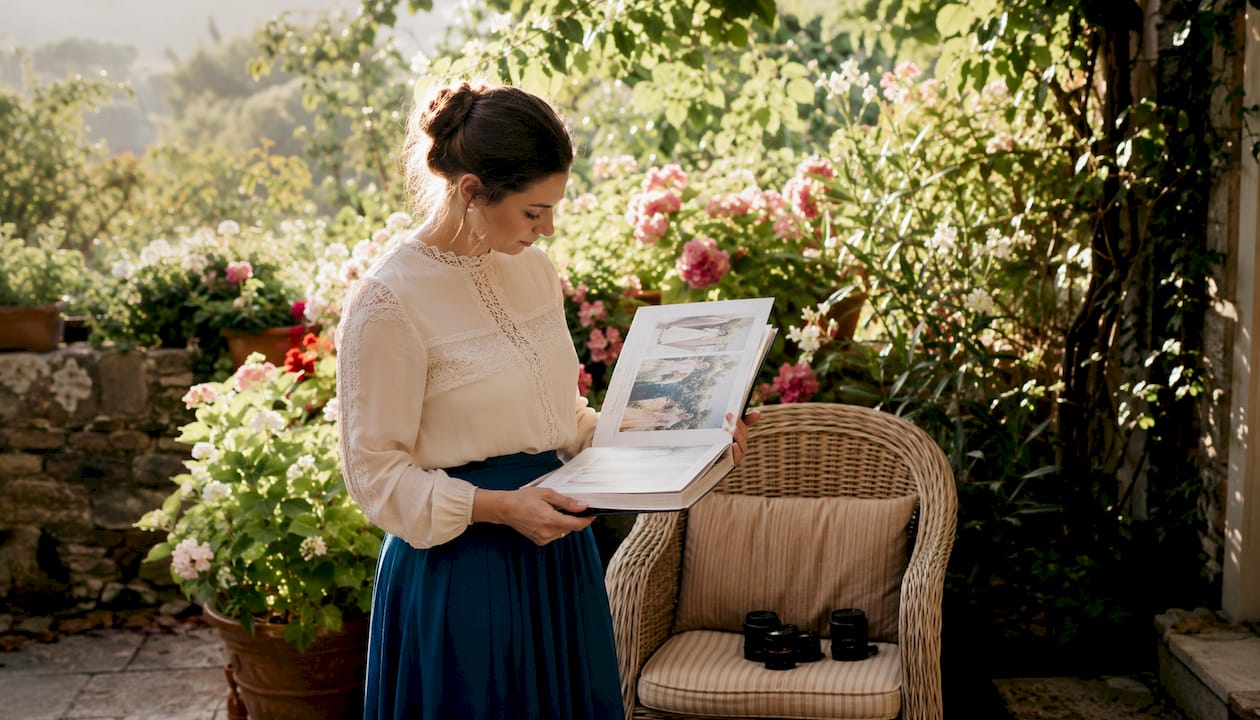
An award-winning wedding photographer combines technical mastery, consistent storytelling, and verifiable trust signals across every wedding they shoot. Before your first consultation, request a full delivered gallery from a recent event at a similar venue. That single ask separates photographers who can produce one great shot from those who deliver 400 consistently strong images on your actual day.
Three trust signals worth naming immediately: peer-judged awards (not directory badges), full-wedding galleries from comparable venues, and published features in recognized wedding media. If a photographer can hand you all three, you are already in a strong position.
Full gallery request: Ask for 2–3 complete, delivered galleries, not curated highlight sets.
Peer-judged awards: Confirm the contest name, judging panel, and public winner archive.
Published work: Look for features in wedding blogs, magazines, or editorial platforms.
Table of Contents
1. What are the top qualities of award-winning wedding photographers?
2. How to evaluate a photographer’s portfolio and confirm style consistency
3. Technical skill and backup planning that award-level work demands
4. Communication and people skills that separate good from award-winning
5. What wedding photography awards actually mean and how to verify them
6. Packages, contracts, and logistics to confirm before you sign
7. Consultation questions and red flags that predict a bad experience
8. What award-winning looks like in practice: Pixelgroves as an example
What actually matters when you are choosing a wedding photographer
Pixelgroves covers Florida weddings with award-winning photography and video
1. What are the top qualities of award-winning wedding photographers?
The qualities that consistently appear in photographers who win peer-judged awards and earn repeat referrals are not mysterious. They are specific, verifiable, and worth checking before you sign anything.
Consistent experience across venue types. Years of shooting different venues, lighting conditions, and cultural ceremonies build the instincts that carry a photographer through anything unexpected.
Storytelling and composition. Award-level images tell a sequence, not just a moment. Look for galleries where the ceremony, portraits, and reception feel like chapters of the same story.
Lighting mastery. Handling backlit ceremonies, dim reception halls, and mixed indoor-outdoor light without flash artifacts is a technical skill that separates good from great.
Technical problem-solving. Broken timelines, sudden rain, a venue with no windows — experienced photographers adapt without losing image quality.
People skills and direction. Guests who feel comfortable in front of a camera produce natural expressions. That comfort comes from the photographer’s personality and direction style.
Professionalism and reliability. Showing up on time, communicating clearly before the wedding, and delivering on schedule are baseline requirements, not bonuses.
Verified awards and publications. Peer-judged contest wins and editorial features are evidence of external validation, not self-promotion.
Client testimonials and full galleries. Reviews that mention specific moments and full galleries that hold up start-to-finish are the most honest proof of quality.
Backup workflows and redundancy. Dual-card cameras, backup bodies, and offsite file storage protect your images from equipment failure.
Clear contracts and transparent pricing. A photographer who explains every line of their contract and answers pricing questions directly is one you can trust on the day itself.
The easiest qualities to verify remotely: portfolio consistency, published features, and client reviews. The ones that require a conversation: people skills, workflow habits, and how they handle contingencies.
2. How to evaluate a photographer’s portfolio and confirm style consistency
A highlight reel tells you what a photographer is capable of on their best day. A full gallery tells you what you will actually receive.
Request full galleries from at least two recent weddings, ideally from venues with similar lighting conditions to yours. Ask specifically for same-season examples if your wedding is in a challenging light environment (midday outdoor, candlelit indoor). If the photographer has shot your venue before, that gallery is the most relevant evidence you can see.
What to request:
2–3 complete, delivered galleries (not password-protected highlights)
Same-venue or same-season examples when possible
Sample albums or prints to assess final product quality
Delivery timelines from past clients (ask how long after the wedding they received files)
Whether a second shooter was present and what their role was
Red flags in portfolios:
Only 20–30 curated images with no full gallery available
Inconsistent editing style across different weddings (heavy presets on some, natural on others)
Missing low-light ceremony shots or dark reception coverage
No behind-the-scenes or candid sequences, only posed portraits
When you look at a full gallery, ask yourself whether the last 50 images hold the same quality as the first 50. That gap is where consistency lives.
What to request | Why it matters |
Full delivered gallery (400+ images) | Reveals average quality, not just peak shots |
Same-venue or same-season sample | Shows performance in your actual conditions |
Sample album or print | Confirms final product quality beyond digital files |
Delivery timeline from past clients | Sets realistic expectations for your own turnaround |
Second-shooter presence | Clarifies coverage depth and team workflow |
Questions to ask when requesting full galleries:
“How many images do you typically deliver per wedding?”
“Can I see a gallery from a venue with similar lighting to mine?”
“Was a second shooter present, and are their images included?”
3. Technical skill and backup planning that award-level work demands
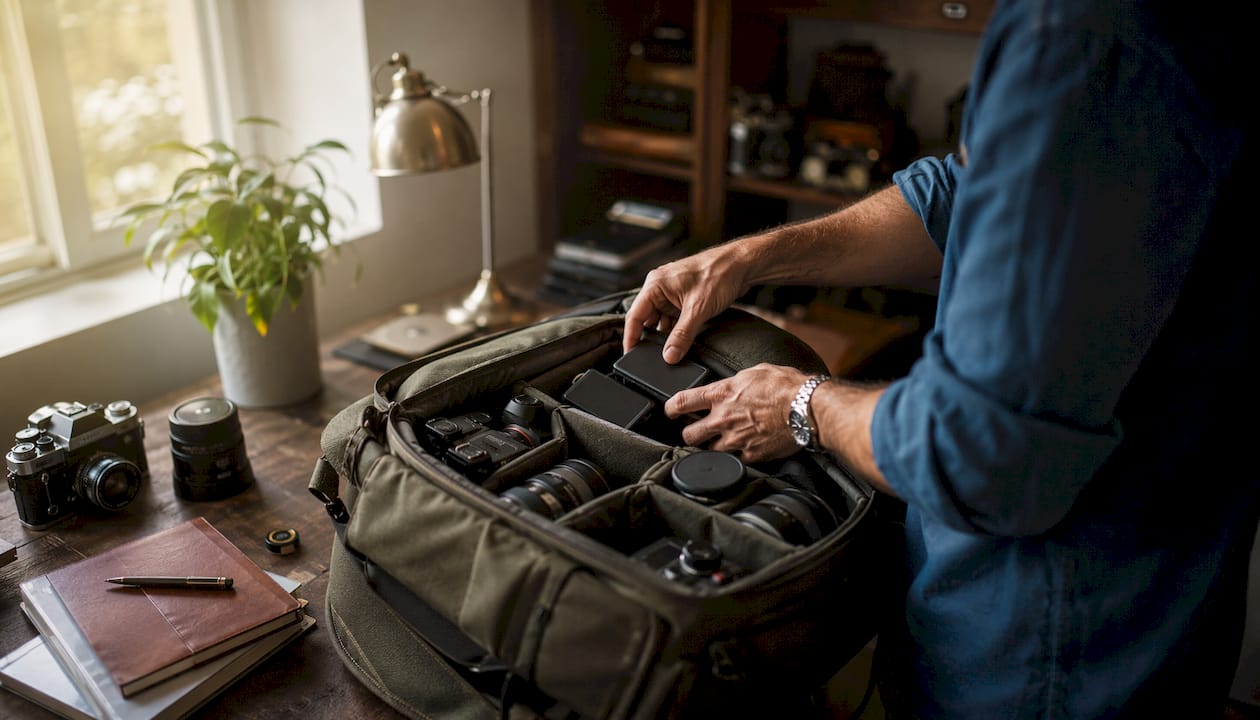
Experience, not gear, is what produces consistent results under pressure. That said, the right equipment and a solid backup plan are non-negotiable at the professional level.
Technical checklist to confirm:
Dual-card recording on primary camera bodies (images write to two cards simultaneously)
At least two camera bodies capable of shooting in low light without significant noise
A range of lenses covering ceremony (70–200mm), portraits (85mm or 50mm), and wide reception coverage (24–35mm)
Flash technique for receptions that avoids harsh shadows and blown highlights
RAW file capture for maximum post-processing latitude
Offsite backup within 24 hours of the wedding
Backup and contingency questions to ask:
“What happens if your primary camera fails during the ceremony?”
“Do you carry a backup body and lenses on every wedding?”
“How do you back up files on the wedding day and after?”
“If you are ill or injured before the wedding, what is your substitute plan?”
“How do you handle a timeline that runs 45 minutes late?”
Pro Tip: Ask specifically whether the photographer backs up files to a second drive on-site before leaving the venue. Photographers who do this as standard practice are protecting your images from the moment they are captured, not just after they get home.
A photographer who hesitates on any of these questions or gives vague answers about substitutes is a real risk. The best professionals have a named backup shooter they trust and a written contingency plan they can share.
4. Communication and people skills that separate good from award-winning
Technical skill gets you sharp, well-lit images. People skills get you genuine expressions, a calm timeline, and guests who actually enjoy being photographed.
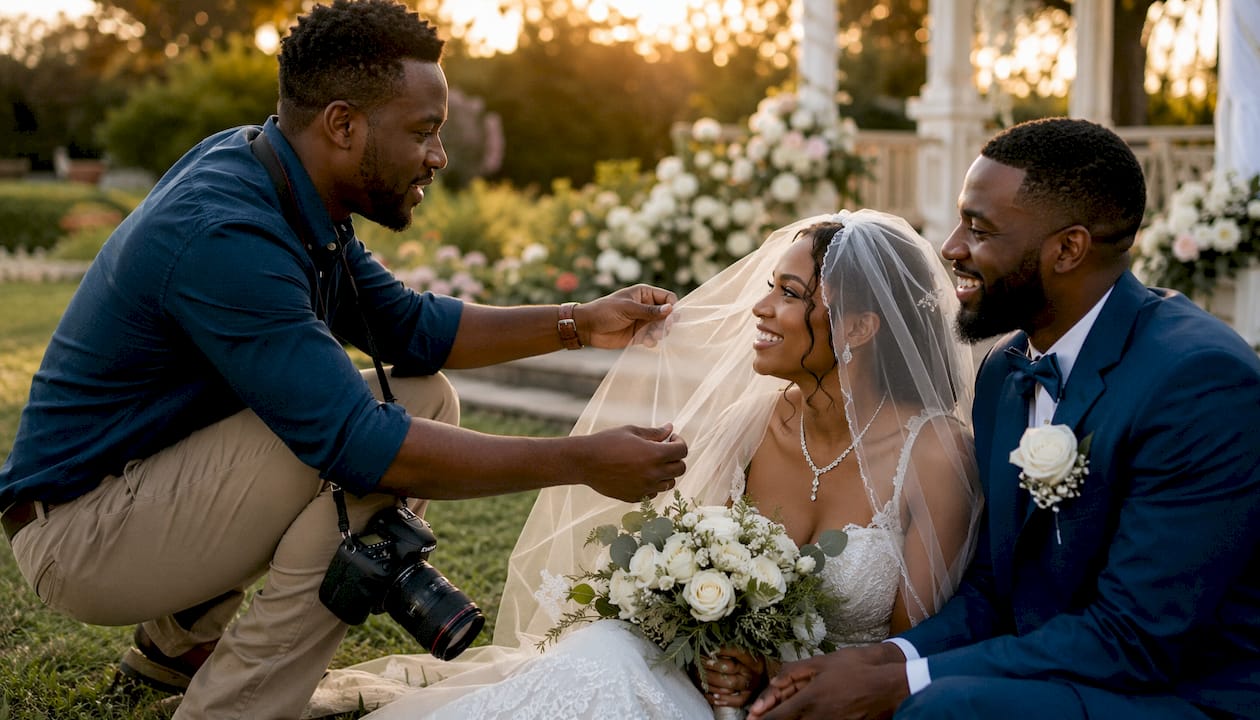
Clear communication, patience, and reliability are repeatedly cited as the traits that drive client satisfaction and referrals. A photographer who sends a detailed pre-wedding questionnaire, confirms vendor timelines two weeks out, and arrives at the venue early to scout light is doing the work before the day even starts.
During your consultation, pay attention to how they listen. Do they ask about your family dynamics before building a portrait list? Do they explain how they handle a nervous bride or a reluctant uncle? Those specifics reveal more than any portfolio.
Questions that reveal people skills:
“How do you direct guests who are uncomfortable in front of the camera?”
“What does your pre-wedding planning process look like?”
“How do you coordinate with the officiant and venue coordinator on the day?”
Pro Tip: Watch how the photographer responds when you ask something they cannot immediately answer. A professional who says “I will check and get back to you by tomorrow” is more trustworthy than one who improvises a confident-sounding non-answer.
The photographers who win awards for emotional storytelling are almost always the ones their clients describe as calm, organized, and genuinely present. That is not a coincidence.
5. What wedding photography awards actually mean and how to verify them
Not all awards are equal. The difference between a peer-judged competition and a paid directory badge is significant, and awards carry different weights depending on how they are structured.
Three categories of photography awards:
Peer-judged competitions. A panel of working photographers evaluates submitted images against published criteria. Winners are listed in a public archive. These carry the most credibility.
Entry-based recognition. Any photographer who submits and meets a minimum standard receives recognition. Less selective, but still shows engagement with the professional community.
Paid directory badges. A business pays for a listing or “best of” placement. These are marketing tools, not editorial judgments. Treat them as brand awareness, not proof of quality.
Verification steps:
Ask for the contest name, year, and category of the award.
Search the contest’s website for a public archive of winners and confirm the photographer’s name appears.
Check whether the contest publishes its judging panel and entry rules.
Ask whether the winning image was entered by the photographer or selected by an editor.
Request the entry image set to see the work that was actually judged.
Judging panels at credible competitions reward images that combine visual beauty, emotional impact, and technical precision. A single strength — say, a beautiful composition with poor exposure — rarely wins at the top level. When a photographer’s award history shows wins across multiple categories or years, that pattern is a stronger signal than a single entry.
6. Packages, contracts, and logistics to confirm before you sign
The practical side of hiring a wedding photographer is where most surprises happen. Confirming these details before you sign protects you from misunderstandings that are genuinely difficult to resolve after the fact.
Package details to confirm:
Total hours of coverage and whether travel time counts against them
Number of photographers included (lead plus second shooter)
Specific products included: digital files, albums, prints, engagement session
Turnaround time for the full gallery and any rush delivery options
How files are delivered (online gallery, USB, download link) and for how long they are hosted
Digital rights: can you print freely, share on social media, and use images commercially?
Contract clauses to review:
Cancellation and rescheduling terms, including what happens if the photographer cancels
Retainer amount, payment schedule, and final payment due date
Re-editing or color-grading policy after delivery
Image ownership and licensing terms
What constitutes delivery (number of images, format, resolution)
Insurance and business legitimacy:
Ask for proof of general liability insurance and equipment insurance. A photographer who carries both is protecting you as much as themselves. Asking for a business name and EIN is reasonable for any vendor you are paying thousands of dollars, and a professional will not hesitate to provide it.
Good wedding photographers treat pre-event preparation as part of the job: venue scouting, equipment testing, and timeline coordination all happen before the wedding day. A contract that reflects that level of preparation is a sign you are working with someone who takes the commitment seriously.
7. Consultation questions and red flags that predict a bad experience
A 30-minute consultation reveals more than a year of Instagram posts. Come prepared with specific questions and listen for the answers that make you feel confident versus the ones that make you want to follow up.
Questions to ask in every consultation:
“Can I see two full, delivered galleries from weddings in the past 12 months?”
“Who shoots with you, and can I see their work separately?”
“What is your backup plan if you cannot make it to my wedding?”
“How do you handle a timeline that runs significantly late?”
“What is your turnaround time, and what does the delivery process look like?”
“Can I review a sample contract before I commit?”
“Do you carry liability and equipment insurance?”
Red flags that should disqualify a photographer immediately:
Refuses to show full galleries or claims they are all “private”
Cannot name a specific backup shooter
No written contract or resistance to providing one before payment
Evasive answers about insurance or business registration
Pricing that is dramatically below market with no clear explanation
Negotiable concerns (worth discussing, not dealbreakers):
Turnaround time that is slightly longer than you hoped
A package that does not include an album (can often be added)
A style that is close but not an exact match to your inspiration board
Personality traits like patience and genuine care for the couple are what separate a technically skilled photographer from one you will actually enjoy spending 10 hours with on your wedding day. If the consultation feels transactional rather than collaborative, that dynamic rarely improves.
8. What award-winning looks like in practice: Pixelgroves as an example
Pixelgroves holds the 2025 Best of Florida Wedding Photographer Award, a peer-recognized accolade that reflects consistent performance across Florida weddings. That kind of recognition is verifiable: you can ask for the award listing, the contest name, and the year, then confirm it independently.
What makes Pixelgroves a useful model for couples vetting any photographer is how its proof points map directly to the checklist above. Full wedding galleries are available on request. The team covers documentary, editorial, light and airy, and candid styles, which means you can evaluate style consistency across different wedding types rather than a single aesthetic. Client testimonials reference specific moments and deliverables, not just general satisfaction.
For couples planning Florida weddings, Pixelgroves also offers engagement and proposal shoots, full-day photo and video packages, and photo booth rentals. Requesting a sample contract and a quote alongside the gallery evidence gives you a complete picture before any commitment.
Items to request from any photographer (modeled on Pixelgroves’ proof points):
Two full galleries from recent weddings at comparable venues
Award listing with contest name, year, and a link to the public archive
Sample album or print to assess final product quality
At least two client references who can speak to delivery and communication
Proof of general liability and equipment insurance
Key Takeaways
Award-winning wedding photographers are defined by consistent results across full galleries, verifiable peer-judged credentials, and professional workflows that protect your images from the moment they are captured.
Point | Details |
Request full galleries | Ask for 2–3 complete delivered galleries, not highlight reels, to assess true consistency. |
Verify awards independently | Confirm the contest name, judging panel, and public winner archive before treating an award as proof. |
Confirm backups and insurance | Dual-card cameras, a named backup shooter, and liability insurance are non-negotiable at the professional level. |
Review the contract before paying | Cancellation terms, image rights, turnaround time, and delivery format must be in writing before you sign. |
Pixelgroves as a benchmark | Pixelgroves holds the 2025 Best of Florida Wedding Photographer Award and provides full galleries, sample albums, and verifiable award listings on request. |
What actually matters when you are choosing a wedding photographer
The conventional advice is to “find someone whose style you love.” That is true, but it is the easy part. Style is visible in 30 seconds on Instagram. What takes real effort to evaluate is consistency, and consistency is what you are actually paying for.
A photographer can produce one extraordinary image at every wedding and still deliver a gallery where 200 of the 400 shots are forgettable. Award-winning work is not about peak moments. It is about the floor: how good is the weakest image in a full gallery? That is the question a highlight reel is specifically designed to prevent you from asking.
The other thing couples underestimate is communication. A photographer who responds to emails in 12 hours, sends a detailed timeline two weeks before the wedding, and coordinates with your venue coordinator without being asked is doing invisible work that shows up in the final images. Calm, organized photographers produce calmer, more natural moments. The chaos of a poorly managed timeline reads in faces.
If you have to make a tradeoff between a slightly higher budget for a photographer with verifiable awards and full-gallery evidence versus a lower price with only a highlight reel and vague backup plans, the math is straightforward. You cannot reshoot your wedding.
Pixelgroves covers Florida weddings with award-winning photography and video
Couples who have worked through the checklist in this article know exactly what to ask for. Pixelgroves makes that conversation easy. The team holds the 2025 Best of Florida Wedding Photographer Award and covers the full range of wedding styles, from documentary and candid to editorial and light and airy, with full-day photo and video packages built for Florida venues.
[
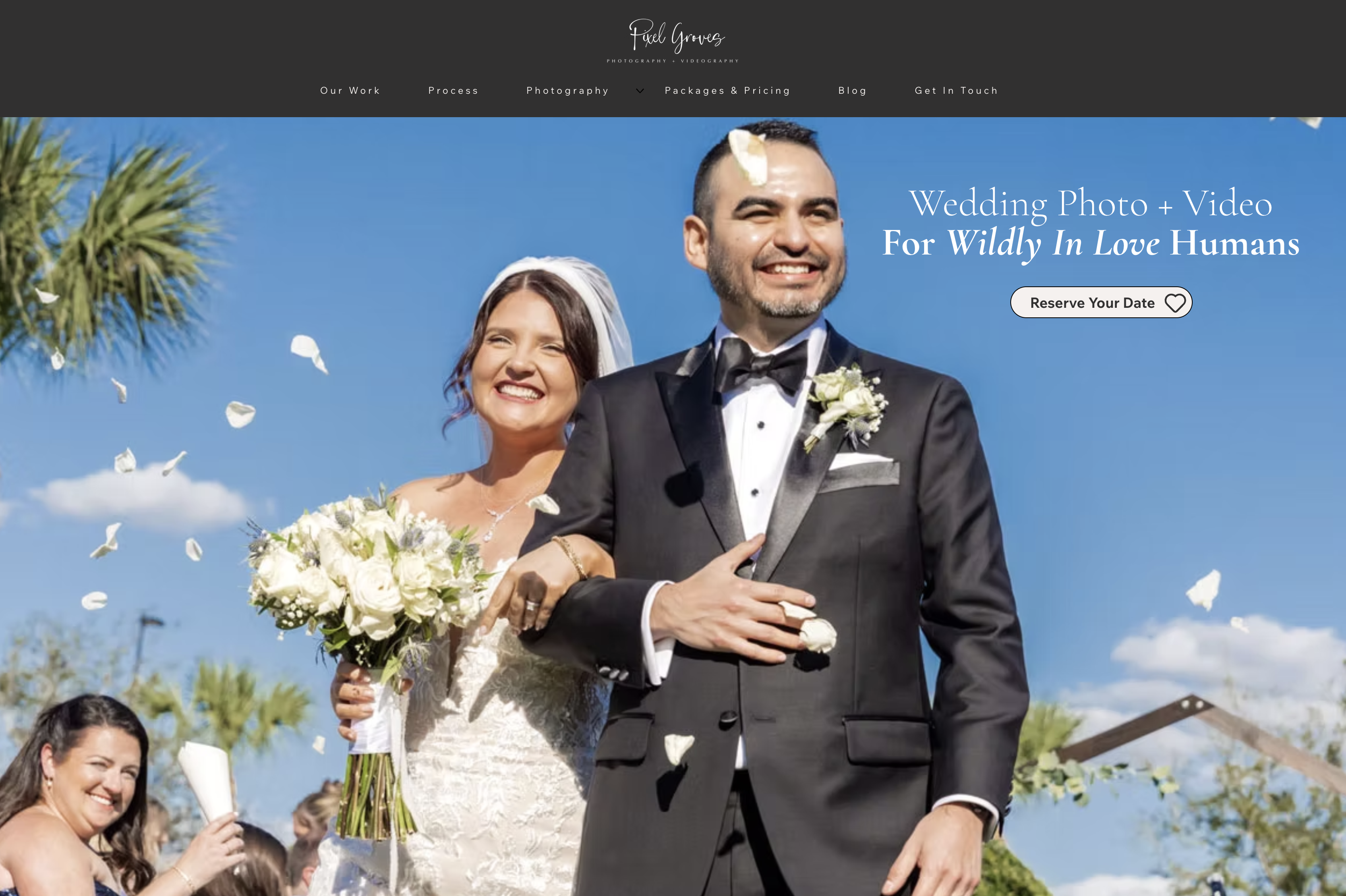
When you reach out, ask for two full galleries from comparable venues, a sample album, the award listing, insurance proof, and a contract draft. Pixelgroves provides all of it. Browse wedding photography styles and packages to see the work, then check pricing and packages to find the coverage that fits your day. Schedule a consultation to confirm availability for your date.
Useful sources for further reading
Top 10 Traits You Want in Your Wedding Photographer — HuffPost; covers client care, communication, and the traits professionals cite most.
How to Pick the Right Wedding Photographer — Fstoppers; explains why full galleries matter more than highlight reels.
What Do Good Wedding Photographers Do? — Fearless Photographers; details pre-event preparation, storytelling, and post-processing expectations.
Wedding Photographer Traits Every Bride Looks For — ShootDotEdit; covers communication, patience, and reliability as drivers of client satisfaction.
What Is a Wedding Photography Milestone Award? — Pixelgroves; explains how milestone awards work and how to verify them.
Why Wedding Photos Require Experience, Not Gear — Pixelgroves; makes the case for experience and planning over equipment.
How to Choose Award-Winning Photos for Competitions — St. Louis Birth & Baby; explains judging criteria and what panels look for in competition entries.
World’s Best Wedding Photographers: Top 10 Qualities — Judith Rae; a practitioner’s breakdown of the qualities that define top-tier wedding photographers.
Recommended
Comments