What Is a Getting Ready Timeline for Your Wedding?
- 11 minutes ago
- 8 min read
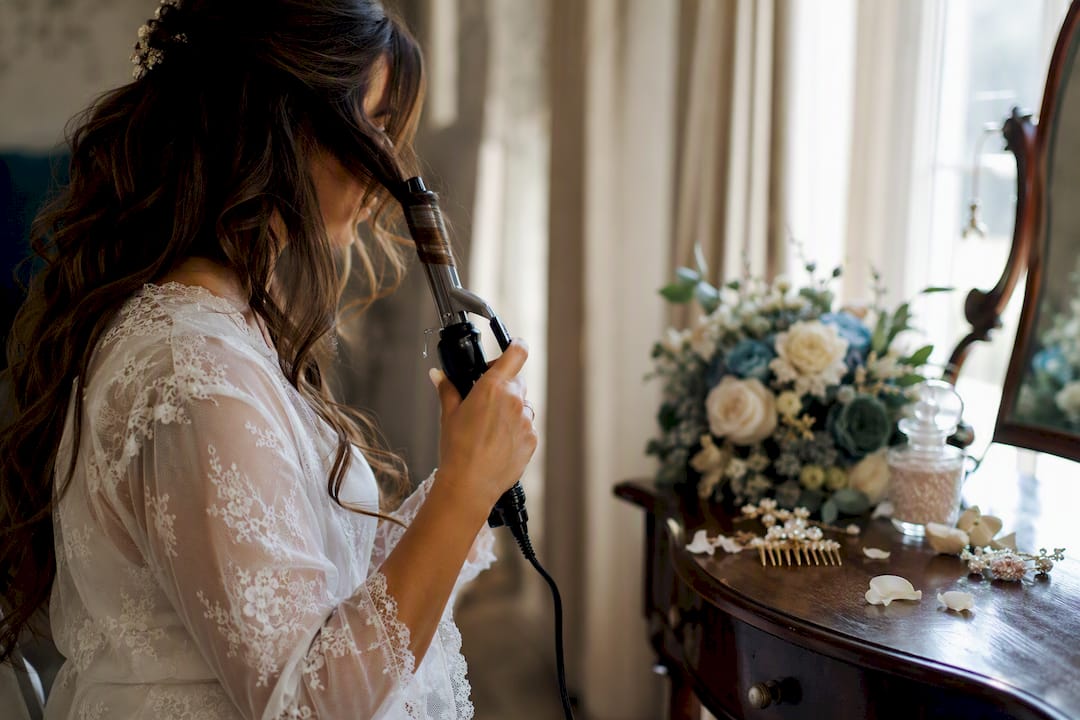
A getting-ready timeline is a minute-by-minute schedule for your wedding morning, mapping out hair, makeup, dressing, and photos from wake-up to walking down the aisle. The rule of thumb: start several hours before your ceremony, depending on how many people need hair and makeup. The method behind every good one is the same: work backward from your ceremony time, then pad each block with buffer time so one late curling iron doesn’t unravel the whole morning.
Key Takeaways
A stress-free wedding morning comes down to starting early enough, staggering services correctly, and protecting three specific buffers before you ever walk out the door.
Point | Details |
Start window | Begin hair and makeup 3.5 to 5 hours before the ceremony, depending on party size. |
Per-person timing | Budget 30 to 45 minutes per bridesmaid and 60 to 90 minutes total for the bride. |
Photographer arrival | Have your photographer arrive 60 to 90 minutes before dress-in for balanced coverage. |
Buffer strategy | Build in three buffers: before dress-in, before departure, and during transit. |
Emergency prep | Pack a kit with pins, stain wipes, and chargers, and assign a dedicated timeline keeper. |
Where can you find more getting-ready timeline resources?
The Perfect Getting-Ready Timeline for Your Wedding Day — Brides
Wedding Getting-Ready Timing Guide — Tov Studio Photo
Complete Timeline for Getting Ready on Your Big Day — Tiny Luxe Weddings
How to Plan a Stress-Free Wedding Getting-Ready Timeline — Junebug Weddings
Wedding Morning Getting Ready Guide — Plan A Wedding
Bridal Hair Inspiration and Styling Tips — Joel C Ma Hair Studio
Table of Contents
What Does a Getting-Ready Timeline Cover, and Why Does It Matter?
A getting-ready timeline coordinates everything that happens before you leave for the ceremony: hair and makeup appointments, detail photos of the dress and rings, a first look if you’re doing one, dressing, and the drive to your venue. It tells your photographer when to show up, your bridesmaids when to arrive, and your stylists how much time they actually have.
Skip this step and you get one of two outcomes. Either the morning turns into a scramble where nobody knows what’s next, or your photographer shows up with nothing to shoot because everyone’s already dressed and posed on the couch. A well-built schedule protects the moments that make wedding galleries memorable: the quiet minute before your mom zips up the dress, the nervous laugh while your maid of honor fixes your veil.
Breathing room is the real payoff. Junebug Weddings notes that even an extra 30 to 45 minutes built into the morning can shift the entire tone from frantic to relaxed, and that calm shows up in your photos. Tense shoulders and rushed expressions are hard to edit out later.
What Does a Sample Getting-Ready Timeline Look Like?
Here’s a working schedule for a 4:00 PM ceremony with a bridal party of four, based on standard industry timing guidelines:
8:00 AM — Wake up, eat a real breakfast, tidy the space for photos.
9:00 AM — Hairstylist arrives; hair services begin for the first bridesmaid.
9:30 AM — Makeup artist arrives and starts on the same bridesmaid, staggered 30 minutes behind hair.
10:00 AM to 12:30 PM — Bridesmaids rotate through hair and makeup, roughly 30 to 45 minutes each per service.
12:30 PM — Photographer arrives to capture dress, invitations, rings, and candid prep shots.
1:00 PM to 2:00 PM — Bride’s hair and makeup, scheduled in the middle of the lineup so there’s time to adjust before photos.
2:15 PM — Everyone finishes hair and makeup with a buffer for touch-ups.
2:45 PM — Bride dresses, with 20 to 30 minutes reserved for this alone.
3:15 PM — First look or bridal party portraits, if scheduled.
3:40 PM — Load the car with a transit buffer built in.
4:00 PM — Ceremony.
For a ceremony at a different time, shift every block by the same number of hours. A 2:00 PM ceremony pushes wake-up to around 6:00 AM. A larger party of six or more needs either an earlier start or a second stylist, since the math simply doesn’t compress. Treat the dress-in and transit blocks as fixed minimums no matter what time you’re working with.
How Much Time Should You Budget Per Person?
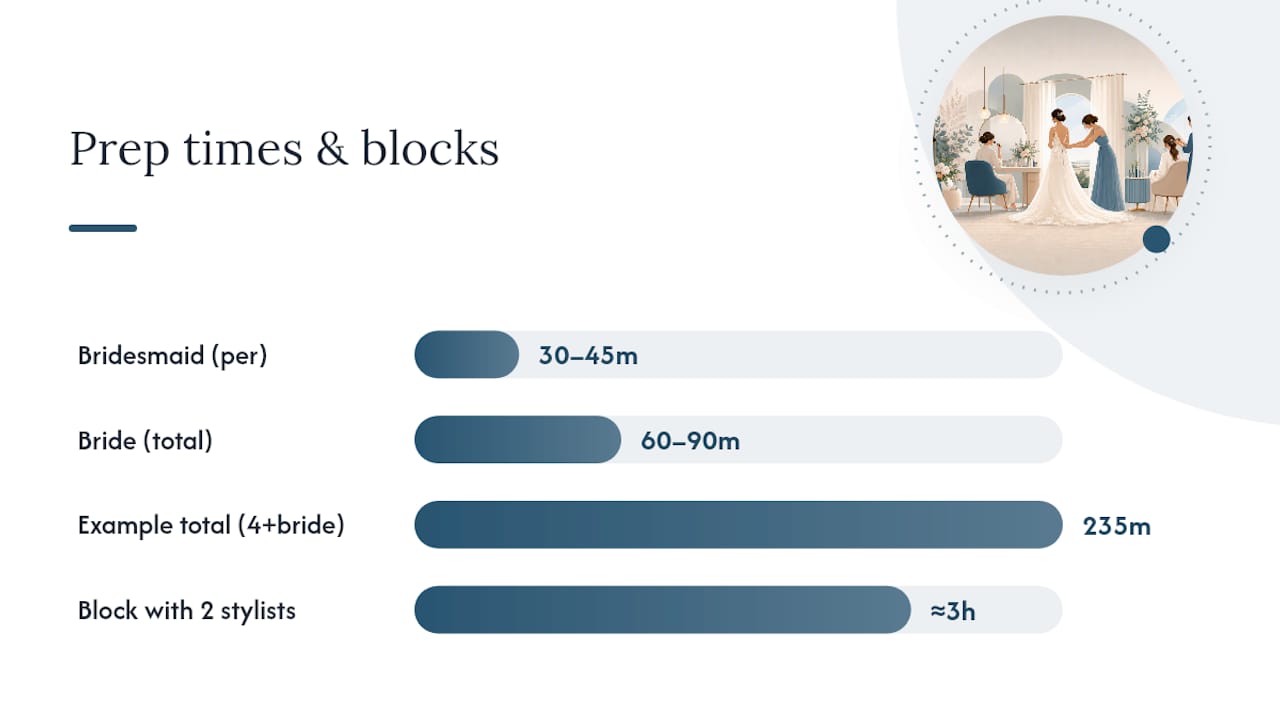
The numbers here are more forgiving than most couples assume, but they still need to be calculated, not guessed. Plan on 30 to 45 minutes per bridesmaid for hair or makeup, and 60 to 90 minutes total for the bride’s hair and makeup combined, according to Brides.
The formula for your total getting-ready block:
(Sum of everyone’s individual service minutes) ÷ number of stylists working, plus a buffer = your required time block.
Say you have four bridesmaids at 40 minutes each for hair and makeup combined, plus the bride at 75 minutes, with one hairstylist and one makeup artist working simultaneously. That’s roughly 235 total minutes of styling split across two artists, which lands around 3 hours with reasonable overlap, before you add any buffer.
If that math pushes your start time earlier than anyone wants to wake up, the fix isn’t cutting corners. It’s hiring a second stylist. Many bridal parties of five or more bring in an assistant hairstylist specifically to run two chairs at once, cutting the total block nearly in half. Where you place the bride in that lineup matters too. Scheduling her in the middle or second-to-last slot, rather than first or dead last, leaves room to fix anything before the ceremony without rushing.
When Should Your Photographer Arrive?
Photographer arrival time determines what actually makes it into your gallery, and the three common windows produce very different results. Short coverage, around 90 minutes, catches the tail end of prep and dressing but misses the detail shots and candid chaos earlier in the morning. Standard coverage, 2 to 2.5 hours before departure, is the sweet spot most couples land on. Early or full coverage, 4 or more hours, documents nearly the entire morning from empty dress bag to final touch-up.
For most weddings, aim to have your photographer arrive 60 to 90 minutes before you dress. That window is enough to capture flat-lay detail shots, the bridesmaids finishing hair and makeup, and genuine candid moments, without paying for hours of coverage before anything photogenic is happening. If detail shots and the full emotional arc of the morning matter more to you than budget, early coverage is worth the extra cost. If you’re working with a tighter photography package, standard coverage still gets the shots that matter most.
What Buffers Do You Need, and What Mistakes Should You Avoid?
Three buffers are non-negotiable, and skipping any of them is the single most common reason wedding mornings run late. Build in 30 to 45 minutes between the moment hair and makeup wrap up and when the bride starts dressing. Add another 15 to 30 minutes between getting dressed and actually walking out the door. Then include a transit buffer, at minimum 10 to 15 minutes beyond your GPS estimate, for traffic, parking, or a forgotten bouquet.
The mistakes that blow up timelines are predictable. Starting too late because someone underestimated how long six people take to get ready. Booking only one stylist for a party of six. Scheduling too many separate photo moments back to back with zero cushion between them.
If you’re already running behind, don’t try to claw back every minute. Cut optional photo moments first, like extra detail shots, before touching the dress-in buffer or transit time. Those two protect you from arriving late to your own ceremony.
What Should Be on Your Night-Before Checklist and Emergency Kit?
Handle these the night before, not the morning of: steam or press the dress, pack the emergency bag, print a one-page vendor contact sheet with every phone number, and load the car so nothing gets left behind in the morning rush.
A stocked emergency kit saves real time when something small goes sideways. According to Plan A Wedding, the essentials are:
Bandages and blister pads
Safety pins and a small sewing kit
Stain remover wipes
Extra bobby pins
Breath mints
Phone chargers
Pain reliever and antacid
Lint roller
Pro Tip: Assign the kit to someone who isn’t the bride, usually a bridesmaid or the day-of coordinator, and name one person as the official timeline keeper who announces transitions out loud so nobody has to guess what’s next.
How Do You Build Your Own Getting-Ready Timeline?
Start with your ceremony time and work backward through five steps:
Set your ceremony time as the fixed anchor point.
Subtract your transit buffer, including drive time plus 10 to 15 extra minutes.
Subtract your dress-in block, 20 to 30 minutes minimum.
Allocate hair and makeup blocks using the formula above, based on party size and stylist count.
Add the three buffers from the section above, then that final number is your wake-up time.
For a small party (bride plus 2 to 3 people), plan roughly 3.5 hours before departure and a single hairstylist and makeup artist can usually keep pace. For a large party (bride plus 4 or more), plan closer to 5 hours and budget for a second stylist to avoid a bottleneck.
Once your draft is built, share it with your photographer, videographer, and timeline keeper at least a week out. If your groom’s side needs its own version, a groom prep timeline runs on a similar but shorter structure.
What Do Photographers Actually Need From You?
Pixel Groves asks couples for a shot list, a confirmed arrival time, and a getting-ready space with real natural light well before the wedding date. Schedule the bride’s hair and makeup in the middle of the lineup so there’s still time for a relaxed first look or portraits before dressing. Bringing home the 2025 Best of Florida Wedding Photographer Award comes from timelines built this way. For shot planning, see our wedding photography shot list guide.
Pro Tip: If natural light is limited in your getting-ready room, ask your photographer for their preferred window or lighting setup when you confirm arrival time, not the morning of.
Ready to Lock In Your Wedding Morning Plan?
A timeline only works if the person shooting it understands how you built it. Pixel Groves works directly with couples across Florida to align photography and videography coverage with your actual getting-ready schedule, not a generic template. Browse wedding photography styles to see how coverage windows fit your morning, or check pricing and packages to plan your budget around the arrival time that captures what matters most to you.
The Real Problem With Most Wedding-Morning Advice
Most getting-ready guides treat the timeline like a math problem: add up the minutes, work backward, done. The math matters, but it’s not what actually breaks on wedding mornings. What breaks is the assumption that everyone will move at the pace the spreadsheet says they will.
The conventional advice undersells buffer time because buffers feel like waste until the morning you need one. A 30-minute cushion before dress-in isn’t padding. It’s the difference between a calm bride and one who’s sweating through her makeup while someone hunts for a missing garter.
If you take one thing from this guide, prioritize the dress-in block over almost everything else. It’s short, it’s easy to protect, and it produces some of the most valuable photos in the entire gallery. Everything else, the exact wake-up minute, the precise order of bridesmaids, bends without consequence. That one block doesn’t.
Sources
The Perfect Getting-Ready Timeline for Your Wedding Day — Brides
Wedding Getting-Ready Timing Guide (Coverage, Vendors, Buffer 2026) - Tov Studio Photo
Complete Timeline for Getting Ready on Your Big Day - Tiny Luxe Weddings
How to plan a stress-free wedding getting-ready timeline — Junebug Weddings
Wedding Morning Getting Ready Guide: A Peaceful Hour-by-Hour Timeline | Plan A Wedding
Recommended
Comments