Why an Experienced Wedding Team Reduces Stress
- 2 days ago
- 7 min read
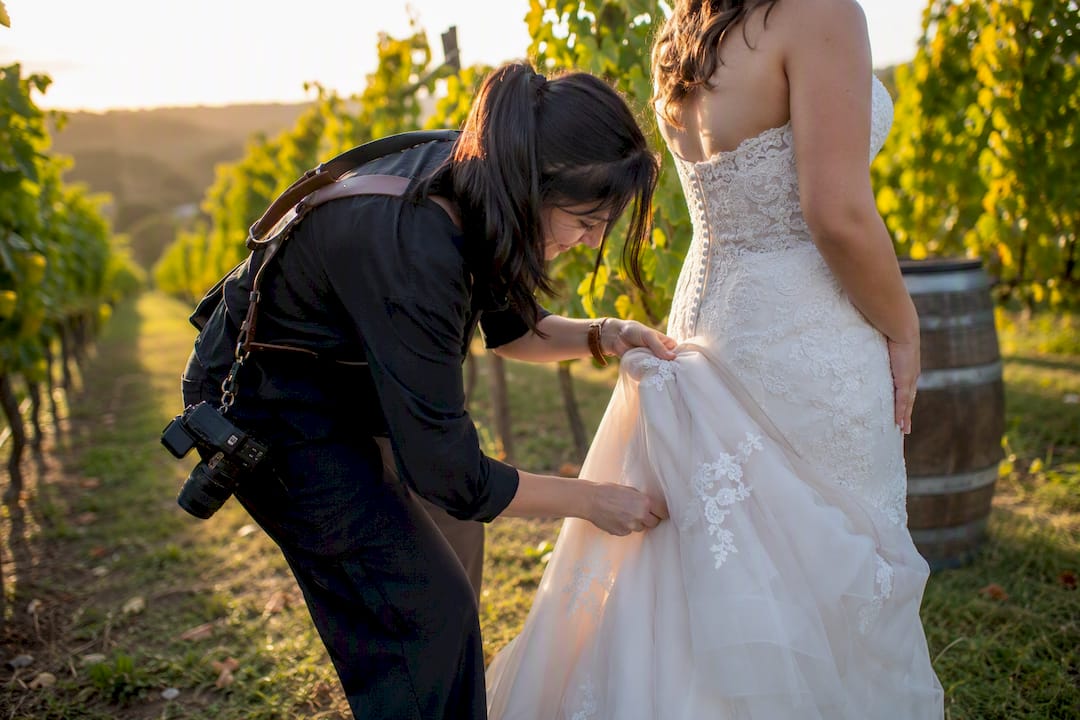
Yes. Hiring an experienced wedding photography and videography team measurably lowers both planning stress and wedding-day stress, and it comes down to three things: coordination, contingency planning, and pattern recognition built from experience. A team that has shot 200 weddings has already seen your bustle jam, your rain delay, your uncle who won’t stop talking during toasts. They know what to do before you even notice something is wrong.
Coordination: pros quietly manage timing and family logistics so you don’t have to.
Contingency: backup gear, second shooters, and weather plans exist before you need them.
Anticipation: experienced photographers troubleshoot pressure using rehearsed workflows, not improvisation.
Pro Tip: On your first call with any vendor, ask what went wrong at their last wedding and how they fixed it. The answer tells you more than any portfolio.
The couples who report the least stress on their wedding day are almost always the ones who hired vendors with the most repetitions under their belt, not the ones with the fanciest gear.
Key Takeaways
An experienced wedding photography and videography team reduces stress through coordination, contingency planning, and rehearsed responses to problems couples never see.
Point | Details |
Coordination is a hidden benefit | Experienced teams fix bustles, cue family members, and manage timing without pulling you into logistics. |
Backup plans prevent panic | Second shooters, backup gear, and weather contingencies stop small problems from becoming visible ones. |
Full galleries reveal true skill | Ask for complete wedding galleries, not highlights, to see how a team performs over an entire day. |
Turnaround windows set expectations | Sneak peeks in — and full galleries in 4 weeks prevent post-wedding anxiety. |
Pixel Groves builds this in | Full-day coverage, second shooters, and equipment backups come standard on Pixel Groves packages. |
Table of Contents
How Does an Experienced Team Actually Reduce Stress?
The mechanics are less mysterious than they sound. Experienced photographers and videographers act as a second layer of event management, even though that’s not technically their job description.
Coordination is the biggest one. A seasoned photographer will fix a bustle that’s come undone, cue the DJ that the couple is ready for their entrance, or nudge grandma into position for a family photo, all without ever pulling you into the logistics. Photographers who handle these moments well often solve problems that have nothing to do with photography at all.
Timeline management matters just as much. Anyone can build a schedule that looks good on paper. Experienced teams build one that survives contact with reality, padding in buffer time around hair and makeup, knowing golden hour portraits take 20 minutes longer than couples expect, and structuring the reception so key moments don’t get rushed.
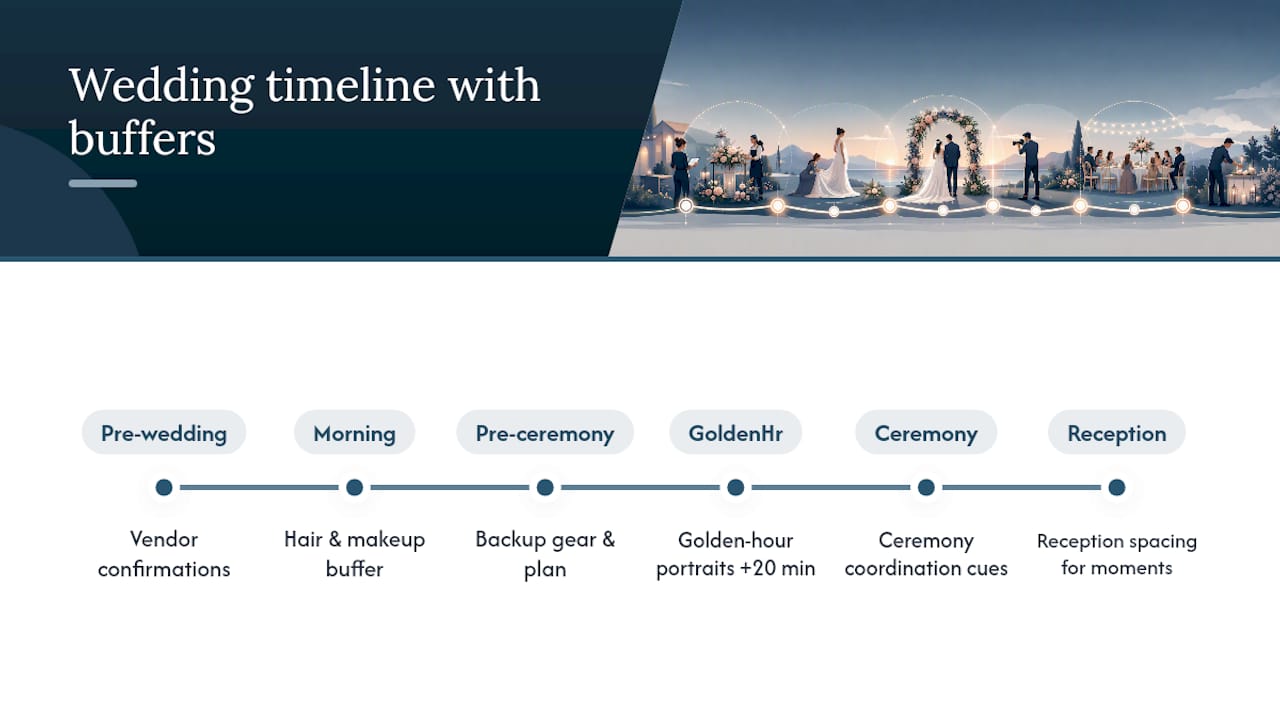
Vendor communication happens mostly behind the scenes. A practiced team reaches out to the planner, caterer, and DJ ahead of time to confirm timing, so you’re not the one relaying messages between five different people the week of your wedding.
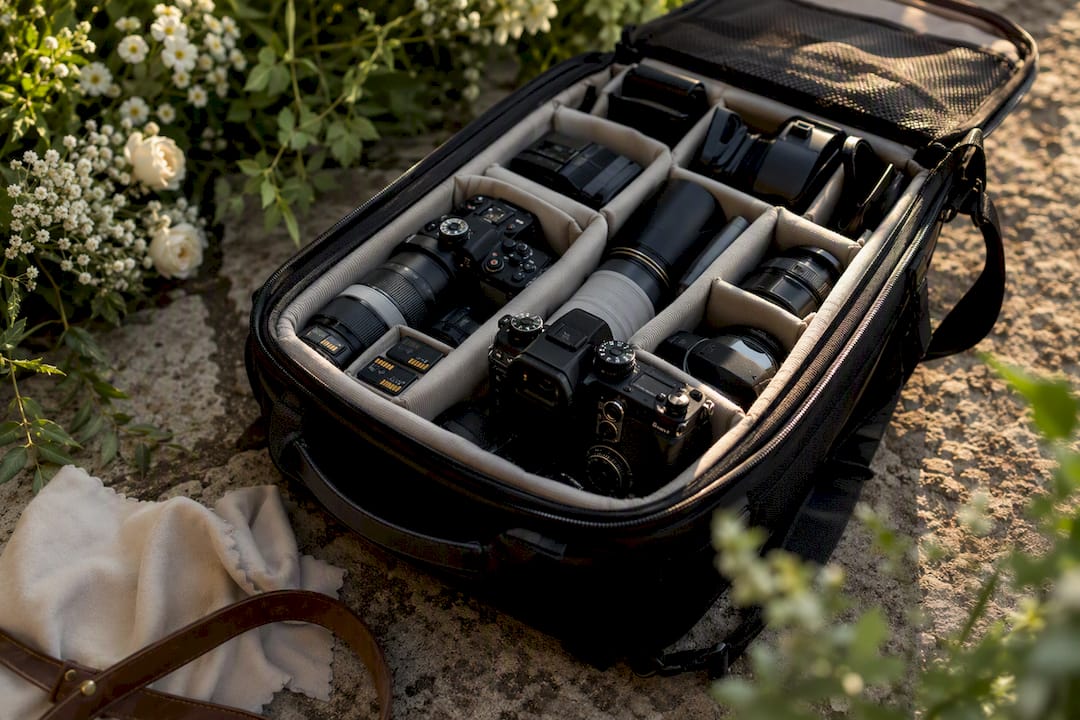
Contingency planning is where experience really shows. That means a second camera body in the bag, a backup shooter on call, and a mental plan for what happens if it rains. This overlaps with equipment redundancy: two shooters, two card slots, two of everything that could fail.
Here’s a real pattern that plays out constantly: a reception hall’s lighting dies twenty minutes before the first dance. A newer photographer might scramble and let panic show. A seasoned one already has an off-camera flash rigged and shooting within ninety seconds, and the couple never even hears about the outage until they see the story later.
Pro Tip: Ask a vendor to describe their backup plan for a specific scenario, like “what if your card corrupts mid-ceremony?” A confident, specific answer beats a vague reassurance every time.
Preparation and repetition are what let experienced photographers stay calm when a timeline slips. That composure is contagious, and it’s a big reason couples report feeling less anxious around veteran teams.
What Should You Check Before Hiring a Photography Team?
Vetting isn’t about finding the most polished Instagram feed. It’s about confirming the team has handled a full wedding day, start to finish, more than once.
Ask for full wedding galleries, not just highlight reels. Full-gallery samples reveal how a team performs during the unglamorous stretches, like dinner service or the fifteen-minute lull before speeches.
Confirm second shooter availability. Two sets of eyes cover the ceremony and reception simultaneously, which matters more than most couples realize until they’re missing a shot of Dad’s reaction during vows.
Request a sample timeline from a similar wedding size and venue type.
Verify insurance and backup equipment. Most reputable venues require vendor liability insurance anyway, so this should be an easy yes.
Review the contract for coverage hours, deliverables, and cancellation terms, including what happens in a force-majeure situation like a hurricane.
During the initial call, ask about responsiveness and past problem-solving before you get anywhere near contract terms. How quickly and clearly a vendor communicates before booking tends to predict how they’ll communicate on your wedding day.
Red flags worth taking seriously: vague answers about backup plans, reluctance to show a complete gallery, or slow replies during the booking process. Strong signals: specific answers about past mishaps, a written contract with clear deliverables, and photographers who ask you detailed questions about your day, not just your budget.
What Happens on the Wedding Day With a Pro Team?
Expect a schedule that runs quietly in the background rather than one you have to manage. A typical flow looks like getting-ready coverage in the morning, family portraits scheduled with buffer time, the ceremony itself, a golden-hour couple’s session, and then reception coverage through the first dance and cake cutting. Your team handles the choreography of that day, not you.
Concretely, that means directing group shots so Aunt Linda isn’t standing in the back for six photos in a row, adjusting for harsh midday sun by moving the group under a pergola, and absorbing a fifteen-minute schedule slip without ever mentioning it to you. A second shooter or videographer covers the groom getting ready while the lead photographer is with the bride, so no simultaneous moment gets missed.
Knowing these windows ahead of time prevents the anxious “why haven’t I heard anything” spiral that hits a lot of newly married couples in week two.
Which Questions Separate Solid Vendors From Risky Ones?
A short list of questions, asked early, filters out most of the risk:
“What’s your backup plan if your main camera fails mid-ceremony?”
“Do you bring a second shooter, and what do they cover?”
“Can I see three complete galleries from weddings similar to mine?”
“What’s the most stressful situation you’ve handled, and how did it end?”
Vague or defensive answers to any of these are the clearest red flag there is. If a photographer says “I’ve never had an issue” instead of describing an actual contingency, that’s evasion, not confidence. A better script from you: “I’d love a specific example, even a small one, of a plan not going perfectly and how your team adjusted.” Cross-check the answer against testimonials or reviews mentioning composure under pressure, and read the contract’s backup and cancellation language before you sign anything.
Pro Tip: A vendor’s contract language about backups tells you more than their sales pitch does. If the contract is silent on equipment failure or vendor no-shows, ask why before you book.
A Concrete Example: How Pixel Groves Applies This
Pixel Groves builds coordination and contingency planning directly into how it operates weddings: pre-event vendor outreach, a second shooter on every full-day package, and backup equipment on-site as standard, not an upsell.
A recurring note from Pixel Groves clients is that nothing seemed to go wrong on their wedding day, which usually means the team quietly handled the one thing that did.
Services that map directly to stress reduction include full-day coverage, second shooter add-ons, engagement sessions, equipment backups, and liability insurance, recognized in 2025 with the Best of Florida Wedding Photographer Award.
What Clients Tell Us After the Wedding
The most common line we hear afterward is some version of “we hardly noticed anything went wrong.” That’s not luck. It’s the direct result of coordination, backup planning, and a calm, experienced hand managing pressure behind the scenes.
Ready to Book a Team That Handles the Pressure for You?
Pixel Groves is built around the exact mechanisms this guide covers: a second shooter on full-day packages, backup equipment on every shoot, and pre-wedding timeline reviews so nothing gets left to chance on the day itself. If you’ve read this far because you’re worried about missed moments or a vendor who freezes under pressure, that’s precisely the gap this team closes.
[

Couples who want documentary-style storytelling, editorial portraits, or a light and airy aesthetic can browse wedding photography styles to see which fits their day. If budget planning is your next step, the pricing and package breakdown shows exactly how add-ons like a second shooter or faster turnaround affect cost and coverage. For couples still building their vendor lineup, pairing your photography booking with an experienced partner in other categories, like the coordinated service approach at Lady Beauty, follows the same logic: fewer surprises when everyone on your team has done this before. Check available wedding dates and get a quote directly through Pixel Groves before your preferred weekend books up.
Sources
Recommended
Comments