Grand Exit Photo Coverage: What Couples Need to Know
- 4 days ago
- 13 min read
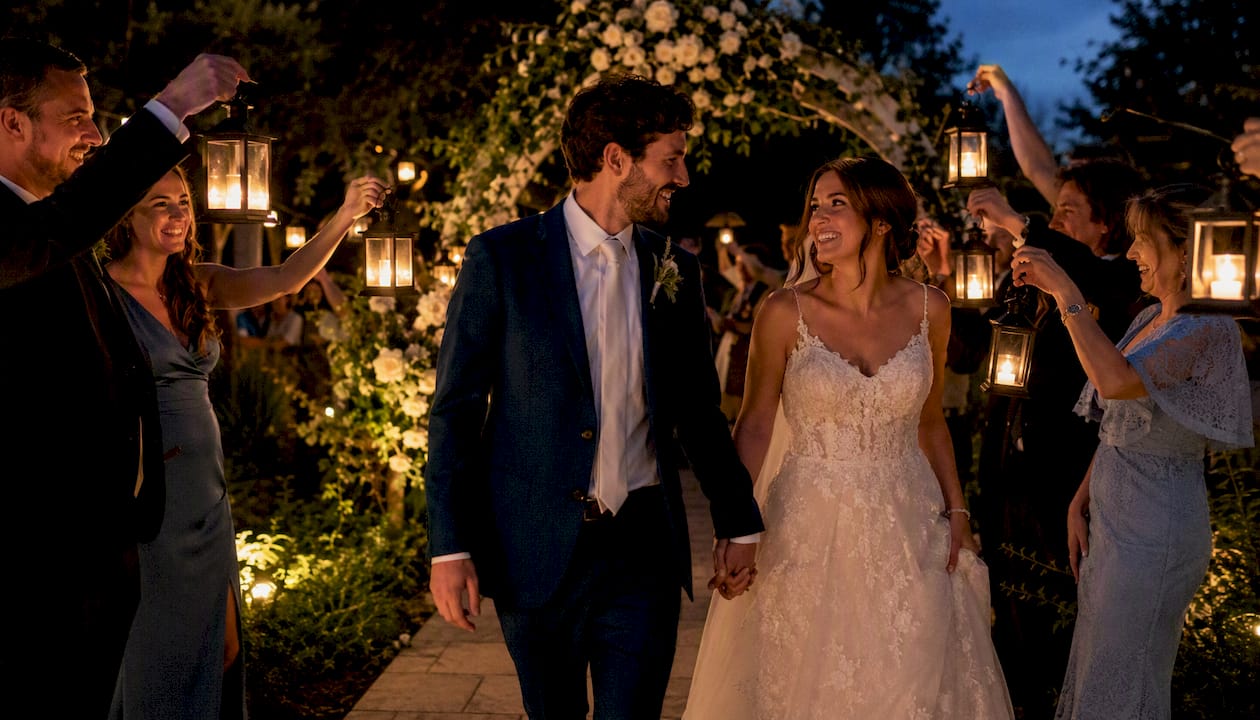
Grand exit photo coverage is the photographer time and approach dedicated to capturing your final send-off at the end of the reception. Whether guests line up with sparklers, bubbles, or confetti, this moment closes your wedding album. The core decision you face is simple: do you extend your photographer’s hours to cover the real exit, or do you stage a “faux exit” earlier in the evening when light and crowd energy are easier to control?
Three things to sort out before you book:
Extra hours or faux exit? A true grand exit often runs past your photographer’s contracted end time, which means overtime fees. A faux exit, staged well before the reception ends, avoids that cost and usually produces better images.
Permit and venue check: Sparklers, cold sparks, and confetti cannons each require venue approval and, in some cases, a fire marshal permit. Confirm before you commit to an exit type.
Next step: Ask your photographer two questions right now: What is your overtime rate, and do you offer a faux exit option?
Table of Contents
What is grand exit photo coverage, and how does it differ from a photo exit?
What exit type photographs best? Ideas, pros, cons, and safety notes
How photographer coverage and timing affect your exit photos
Venue rules, permits, and safety: what to confirm before you plan
How photographers get great exit shots: lighting, settings, and staging
A planning checklist and sample timeline for the week of the wedding
Pixelgroves covers the exits other photographers leave to chance
What is grand exit photo coverage, and how does it differ from a photo exit?
A grand exit is the end-of-night send-off where guests form a tunnel, cheer, and create a visual frame as the couple walks or runs through. The photographer captures the crowd reaction, the couple’s emotion, and the atmosphere of the whole evening coming to a close. It is spontaneous, high-energy, and genuinely hard to replicate.
A “photo exit” or “faux exit” is the same visual concept, scheduled earlier. The couple slips away from the reception for 10–15 minutes, guests line up, and the photographer shoots the send-off while there is still ambient light and a full crowd. Then everyone goes back inside and the party continues.
When a true grand exit works best:
Outdoor venues with good ambient lighting after dark
Receptions that end before 10 PM
Venues that allow sparklers or cold sparks without a curfew
When a faux exit is the smarter call:
Receptions running past 10 PM with no outdoor lighting plan
Venues with strict cleanup or noise curfews
Guests who tend to leave early (a faux exit at 9 PM guarantees a full tunnel)
A real-world example: a couple books a venue that closes at midnight. By 11:30 PM, half the guests have gone, the DJ is packing up, and the lighting is a mix of harsh overhead fluorescents and phone flashlights. A faux exit at 9:45 PM, while the dance floor is still packed and the string lights are glowing, produces dramatically better images. Photographers frequently recommend this approach when the reception timeline is likely to run late.
True grand exit vs. faux exit: which one is worth the cost?
Factor | True grand exit | Faux exit |
Atmosphere | Authentic end-of-night energy | Controlled, replicable |
Lighting | Challenging after 10 PM | Predictable, often better |
Guest presence | Depends on how late it runs | Guaranteed full crowd |
Photographer hours | Usually requires overtime | Fits within standard package |
Venue restrictions | Higher risk of conflicts | Easier to plan around |
Album impact | Raw, emotional closure | Cleaner, more consistent images |
The honest trade-off: a true grand exit can produce the most emotionally charged photos in your album, but only when the conditions cooperate. Overtime costs, poor lighting, and a thinning crowd can undercut all of that. A faux exit is not a compromise. Many of the best grand exit shots in documentary wedding photography galleries are staged moments that read as completely authentic on camera.
Photographers typically charge overtime by the hour or as a flat exit add-on. Ask for both options in your quote so you can compare.
What exit type photographs best? Ideas, pros, cons, and safety notes
The exit type you choose shapes everything: the camera settings your photographer needs, the permits your venue requires, and how much cleanup you pay for afterward.
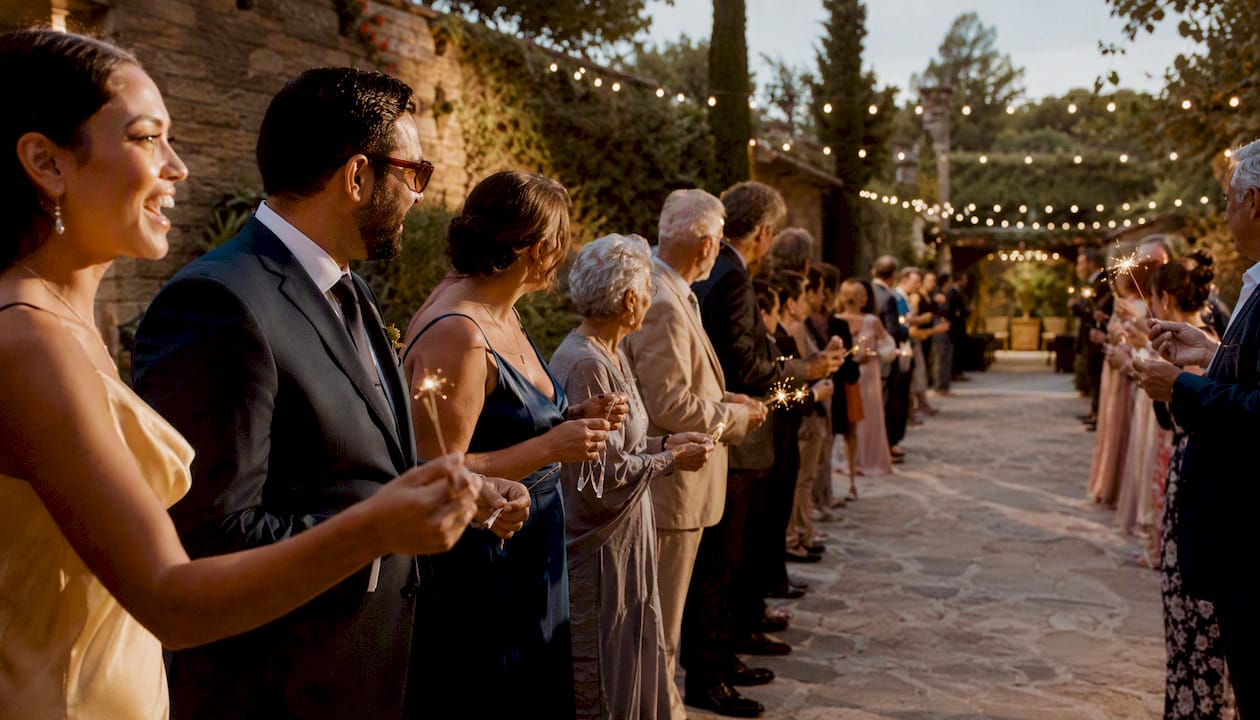
Sparklers: The gold standard for night exits. Light trails photograph beautifully with a slower shutter speed, and the warm glow flatters skin tones. Downsides: they require venue permission, create heat and ash, and need a designated cleanup plan. Always use long sparklers (they burn longer) and keep a bucket of sand nearby. Never use them indoors.
Bubbles: Venue-friendly, safe for all ages, and they catch light in a way that reads as soft and romantic on camera. The limitation is that bubbles disappear fast, so timing is tight. Best for daytime or early-evening exits.
Confetti and petals: Colorful bursts that photograph as vivid splashes of movement. Biodegradable options are widely available and recommended when your venue is outdoors. Many venues charge a cleanup fee for confetti, and some ban it entirely indoors. Confirm before you order.
Glow sticks: A low-cost, venue-friendly alternative that works well for night exits. The color is less nuanced on camera than sparkler light, but a tunnel of glowing hands reads well in wide shots.
Cold sparks (indoor sparkler machines): High visual impact, no open flame, and increasingly allowed at venues that ban traditional sparklers. They still require vendor approval and often a licensed operator. The photographic result is dramatic: a cascade of silver sparks framing the couple.
Getaway car: A classic that photographs as a silhouette moment. Works best when the car is distinctive (vintage, convertible, decorated) and the photographer can position for a backlit or wide-angle shot as the couple drives away.
Confetti cannons with biodegradable fill: A high-impact option that balances photogenic drama with manageable cleanup. The burst is instantaneous, so your photographer needs to be ready before the trigger is pulled.
For venue-restricted or low-budget weddings: ribbon wands, dried lavender tosses, and paper fans all photograph well in daylight and carry zero cleanup fees. They are not as dramatic as sparklers, but they are reliable and universally permitted.
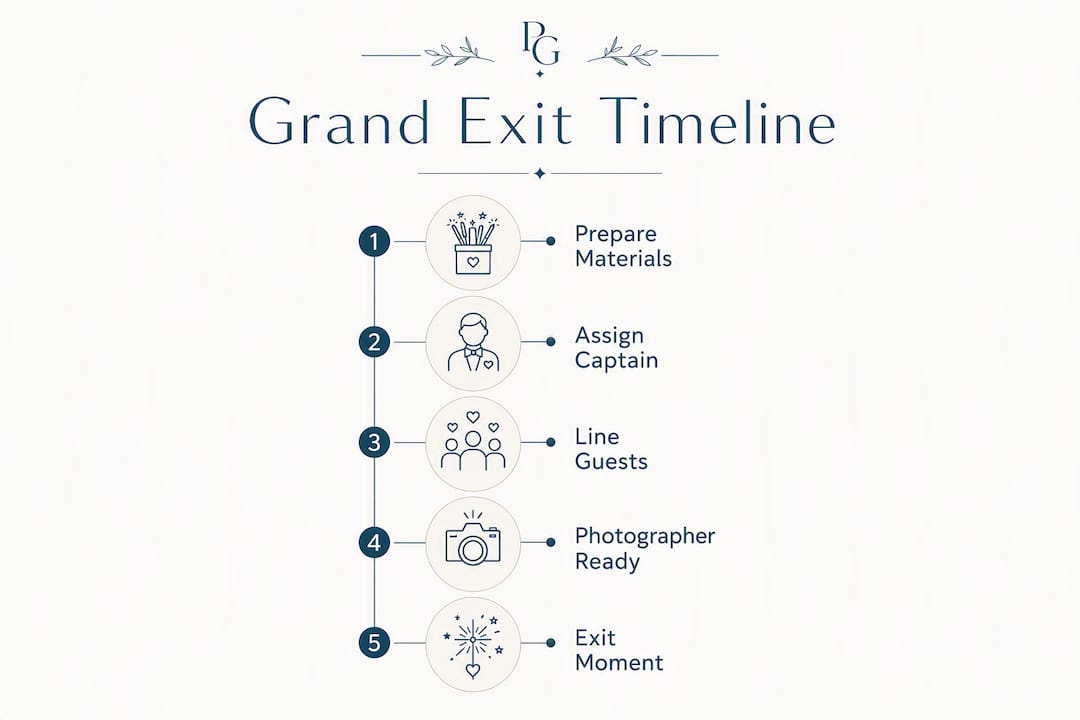
Pro Tip: Assign one guest as the “exit captain.” Their job is to hand out exit materials, line guests up on both sides, and signal the photographer when the tunnel is ready. This single step cuts confusion and gives the photographer a clean 60-second window to work.
How photographer coverage and timing affect your exit photos
The standard wedding photography package runs several hours. A reception that ends at 11 PM with a true grand exit often pushes past that window, which is where overtime kicks in.
Sample evening timeline with exit coverage
Time | What happens | Who is responsible |
9 PM | MC announces faux exit or final dance | MC / DJ |
9:10 PM | Exit captain distributes materials, guests line up | Designated guest or coordinator |
9:15 PM | Photographer stages lighting, positions second shooter | Lead photographer |
9:20 PM | Exit moment captured (3–6 minutes of active shooting) | Lead + second shooter |
9:30 PM | Photographer wraps exit coverage, couple returns | Photographer |
11 PM | Reception ends (photographer already done) | Venue staff |
A planned send-off typically runs 3–6 minutes of active shooting. That sounds short, but it is enough for dozens of usable frames when the staging is right.
Booking options to ask about:
Hourly overtime: The most common structure. Ask for the per-hour rate and whether there is a minimum (usually one hour).
Flat exit add-on: Some photographers offer a fixed fee to stay an extra 30–60 minutes specifically for the exit. Often cheaper than a full overtime hour.
Second shooter: For exits with wide crowd shots and close-up couple moments simultaneously, a second shooter is worth the cost. Ask whether one is included or available as an add-on.
For staged first-look planning parallels that apply directly to faux exit logistics, the same pre-event staging principles apply: confirm the location, test the light, and brief the couple on where to stand.
Suggested contract language: “Photographer will provide coverage through the grand exit or faux exit, whichever occurs first, with overtime billed at $[rate] per hour in 30-minute increments. Exit coverage includes a minimum of [X] delivered images.”
Venue rules, permits, and safety: what to confirm before you plan
Skipping this checklist is how couples end up with a banned exit type the night of the wedding. Go through it with your venue coordinator at least four weeks out.
Sparklers: Does the venue allow open flame? Is there a fire marshal permit requirement? Where is the designated sparkler zone (always outdoors, away from fabric draping)?
Cold sparks: Does the venue require a licensed operator? Is there a vendor approval process?
Confetti and petals: Is confetti banned indoors? Is there a cleanup fee? Are biodegradable materials treated differently?
Smoke or haze machines: Many venues ban these due to fire alarm systems. Confirm before booking a cold-spark vendor who uses haze for effect.
Guest access paths: Is the exit path wide enough for a two-person tunnel? Are there trip hazards (steps, uneven pavers) that need lighting?
Cleanup responsibility: Who cleans up exit materials? Is there a vendor fee, or can your coordinator handle it?
Noise curfew: Does the venue have an outdoor noise restriction that affects when the exit can happen?
Insurance: Some venues require the exit vendor (cold-spark operator, pyrotechnics) to carry their own liability insurance. Ask for a certificate of insurance.
For outdoor venues on public or protected land, the Leave No Trace principles apply: pack out all materials, use biodegradable options, and leave the site as you found it.
How photographers get great exit shots: lighting, settings, and staging
Your photographer handles the technical side, but knowing what they need helps you set up the conditions for it.
For sparkler exits: The photographer typically uses a shutter speed in the 1/30–1/60 range to capture light trails without full blur, a wide aperture (f/1.8–f/2.8), and an ISO of 800–3200 depending on ambient light. Off-camera flash or a second shooter with a speedlight fills the couple’s faces so they do not go dark against the sparkler glow. High-speed sync (HSS) is useful when mixing flash with a faster shutter.
For confetti exits: A faster shutter (1/500 or above) freezes the confetti mid-air. The photographer positions slightly below eye level so the confetti falls into the frame above the couple. Front fill flash keeps faces lit without washing out the color burst.
For car exits: The silhouette shot works best when the photographer is positioned with the car’s headlights or a backlight source behind the couple. A longer lens (85mm–135mm) compresses the scene and keeps the background clean.
Staging tips for the couple:
Walk slowly. The instinct is to run, but slow movement gives the photographer more frames and cleaner expressions.
Look at each other, not the camera, for at least the first pass. The candid glance photographs better than a posed smile.
Do a second pass if the exit allows it. The first pass is often the warmup.
Pro Tip: For sunset or twilight exits, position the tunnel so the couple walks toward the light source. The backlit silhouette with guests framing the sides is one of the most consistently striking exit compositions.
What to ask your photographer before booking exit coverage
Bring these questions to your photographer consultation or add them to your pre-wedding questionnaire.
What is your overtime rate, and is it billed by the hour or in 30-minute increments?
Do you offer a flat exit add-on, or is overtime the only option?
Will you or a second shooter cover the exit?
What is your backup plan if the venue bans our chosen exit type the day of?
What lighting equipment do you bring for night exits?
Who is responsible for confirming permits and venue rules — you or us?
How many exit images should we expect in the final gallery?
Can we request a faux exit in advance, and how do we schedule it in the timeline?
Sample shot list to include in your contract:
Wide crowd shot showing the full tunnel
Mid-distance shot of the couple walking through
Close-up kiss or look mid-exit
Detail shot of exit material (sparklers, confetti, bubbles) in motion
Silhouette of couple leaving in getaway car (if applicable)
Candid crowd reactions during the exit
Suggested contract clauses:
Guaranteed coverage window for the exit (specify time or trigger event)
Overtime rate cap (maximum additional hours)
Minimum delivered exit images
Delivery timeline for exit images specifically
A planning checklist and sample timeline for the week of the wedding
The week before is when small logistics fall apart. Use this to close the gaps.
Week-of checklist:
Confirm exit type and materials are purchased or rented
Verify venue permit or approval in writing
Assign an exit captain and brief them on their role
Share the exit timeline with your MC, coordinator, and photographer
Test your exit material (light a sample sparkler, check the confetti cannon)
Confirm photographer overtime or faux exit is in the contract
Sample 30-minute exit block
Time | Action | Person responsible |
T-30 min | Exit captain collects materials, does a dry run of lineup | Exit captain |
T-15 min | MC announces upcoming exit to guests | MC / DJ |
T-10 min | Photographer moves to exit position, sets lighting | Photographer |
T-5 min | Guests line up, exit captain distributes materials | Exit captain |
T-minus | Couple exits; photographer shoots 3–6 minutes | Lead + second shooter |
T+10 min | Cleanup begins; photographer wraps | Venue staff / coordinator |
The MC announcement is the most skipped step and the one that matters most. Guests who do not know the exit is happening drift away or stand in the wrong place. A 30-second announcement two songs before the exit fills the tunnel every time.
For more on how exits fit into the guest experience and why participation shapes the final photos, the guest-flow planning principles apply directly here.
How Pixelgroves approaches grand exit coverage
Pixelgroves treats the grand exit as a planned editorial moment, not an afterthought. Here is how the team structures it.
Staffing and gear:
Lead photographer covers the couple at mid-distance; second shooter captures crowd reactions and wide establishing shots simultaneously
Off-camera flash on a stand or handheld by the second shooter fills faces during sparkler and night exits
85mm and 35mm lenses cover both compressed silhouettes and wide environmental shots
A backup speedlight stays in the bag for venues where a stand is not practical
What Pixelgroves asks couples to do before the wedding:
Confirm the exit type and venue approval in writing, then share it with the team
Designate an exit captain (a reliable friend or the coordinator) and introduce them to the photographer
Prepare a small safety kit for sparkler exits: a sand bucket, a water bucket, and a clear path
Agree on a faux exit time if the reception runs past 10 PM
What to expect in the gallery:
A minimum of 20–30 exit images delivered, covering wide, mid, and close-up frames
Edited images that match the overall album style (light and airy, documentary, or editorial depending on your package)
Browse the Pixelgroves process page to see how coverage windows and add-ons are confirmed before the wedding day.
Should you book grand exit coverage?
Yes, if the final send-off matters to you and your budget allows it. A true grand exit with overtime coverage delivers the most emotionally authentic close to your album. A faux exit, planned at the right moment in your reception timeline, delivers nearly identical images at a lower cost and with more control.
The next step is a single conversation with your photographer: ask for the overtime rate, confirm whether a faux exit is an option, and check your venue’s permit requirements for your chosen exit type. Those three answers tell you everything you need to decide.
Key Takeaways
Grand exit photo coverage is worth planning deliberately: the difference between a memorable album closer and a blurry afterthought comes down to timing, venue prep, and one honest conversation with your photographer.
Point | Details |
Define your exit type early | Choose between a true grand exit and a faux exit based on your reception end time and venue rules. |
Confirm permits before you commit | Sparklers, cold sparks, and confetti each require venue approval; get it in writing at least four weeks out. |
Ask the right contract questions | Request overtime rate, minimum hours, second-shooter cost, and a guaranteed exit coverage window. |
Stage the guest lineup | Assign an exit captain and have the MC announce the exit two songs early to guarantee a full tunnel. |
Pixelgroves exit add-ons | Pixelgroves offers second-shooter coverage, off-camera flash for night exits, and faux exit scheduling as package add-ons. |
The detail most couples miss about grand exits
The conventional wisdom is that a true grand exit is always the more authentic choice. After working with couples across Florida, the Pixelgroves team sees something different: the most memorable exit images almost never come from the last five minutes of a reception. They come from moments that were planned to look unplanned.
A faux exit is not a shortcut. It is a decision to give your photographer the conditions they need to do their best work: good light, a full crowd, and a couple who is not exhausted from four hours of dancing. The couples who resist staging it are often the ones who end up with dark, thin-crowd exit photos that get buried at the back of the gallery.
The detail most often overlooked is the second pass. After the couple walks through the tunnel once, the photographer has the warmup shot. The second pass, 30 seconds later, is where the real image usually lives. Brief your exit captain to hold the crowd for a second run. Almost no planning guides mention it, and it costs nothing.
Common mistakes and quick fixes:
No permit check: Call the venue coordinator, not just the sales contact. They know the actual fire-code rules.
No exit captain: Without one, guests mill around and the lineup takes five minutes. With one, it takes 60 seconds.
Couple moves too fast: Slow down. The photographer needs at least three to four seconds of clean movement per pass.
Wrong exit material for the venue: Confirm indoors vs. outdoors restrictions before purchasing anything.
Pixelgroves covers the exits other photographers leave to chance
Most photographers treat the grand exit as the last item on a long checklist. Pixelgroves builds it into the coverage plan from the first consultation, which means no scrambling for overtime approvals at 10 PM and no guessing about whether the venue allows sparklers.
[

The team brings off-camera flash, a second shooter for simultaneous crowd and couple coverage, and a pre-wedding checklist that walks you through permits, exit captain assignment, and material prep. If your reception timeline is likely to run late, Pixelgroves will recommend and schedule a faux exit at the right moment so the images hold up regardless of what the clock says.
For couples in Florida ready to add exit coverage to their package, review the photography styles and packages Pixelgroves offers, then check current pricing and availability to request a consult and add exit coverage to your contract before your date books out.
Useful sources
Planning your grand exit is easier with the right visual references and venue guidance. These resources are worth bookmarking:
Grand Exit Wedding Pictures — WPJA: Documentary and fine-art exit galleries showing the full range of staging options and lighting approaches.
How to Get the Best Grand Exit Photo — Mint Springs Farm: Practical exit ideas with notes on venue-friendly options and cleanup.
Creative Wedding Exit Ideas — Pixelgroves: Pixelgroves’ own inspiration guide for exits that photograph well in Florida venues.
Wedding Photo Inspiration: Your Creative 2026 Guide — Pixelgroves: Broad visual reference for couples building their full wedding photography plan.
Wedding Decor with Crystal Prisms: A Styling Guide — CrystalPlace: Reflective decor ideas that can add visual texture to exit tunnels and lighting setups.
Leave No Trace Seven Principles — National Park Service: Relevant for outdoor venue exits; guidance on biodegradable materials and site cleanup.
Recommended
Comments