Groom Prep Timeline: A Photographer's Scheduling Guide
A groom prep timeline is a photographer-focused schedule that tells every vendor when to arrive, which moments to capture, and how long coverage should last. Your photographer should arrive 60–75 minutes before the ceremony or first look to cover details, assisted dressing moments, and portraits without rushing. A shareable one-liner for vendor emails: “Photographer arrives at [TIME], covers details and dressing from [TIME] to [TIME], departs for ceremony/first look at [TIME].”
Quick-start checklist to hand vendors:
Photographer arrival window (60–75 minutes before ceremony/first look)
Location of detail items (watch, cufflinks, boutonniere, shoes)
Names of two to three VIPs to photograph with the groom
Room reset requested before photographer arrives
Departure time for ceremony or first look
Pro Tip: Paste the one-liner above into your vendor group chat the week of the wedding. It takes 30 seconds and eliminates the most common morning miscommunication.
Table of Contents
Sample groom prep timelines: 30, 60, and 90 minutes
Practitioners recommend budgeting 45–75 minutes for complete groom coverage. Below are three templates built around that range. Pick the one that fits your package, then fill in the actual clock times.
Duration | What’s covered | What gets cut |
30 min | Quick detail set, jacket on, 10–15 min portrait | Group shots, family pairings, candid interactions |
60–75 min | Full details, assisted moments, one group toast, portraits, 1–2 family pairings | Extended group staging |
90 min | Complete detail set, paced portraits, multiple VIP pairings, staged group photos, buffer time | Nothing — this is the full coverage window |
Scheduling notes:
Add 15–20 minutes of buffer before the first look or ceremony departure.
If the groom and bride are getting ready at separate locations, book a second shooter rather than have one photographer drive between rooms. Driving wastes time and guarantees missed moments.
Outdoor group portraits after the getting-ready session add another 20–30 minutes to the schedule.
For most Florida weddings, the 60–75 minute template hits the right balance. The 30-minute version works only when the ceremony is the coverage priority and groom prep is genuinely secondary. The 90-minute version pays off at larger weddings with multiple groomsmen, a father of the groom moment, and a groomsmen group photo.
What should your photographer actually capture during groom prep?
A well-built wedding photography shot list for groom prep runs in three tiers. Share this with your photographer before the wedding.
Must-capture (collect these first, before anyone else is in the room):
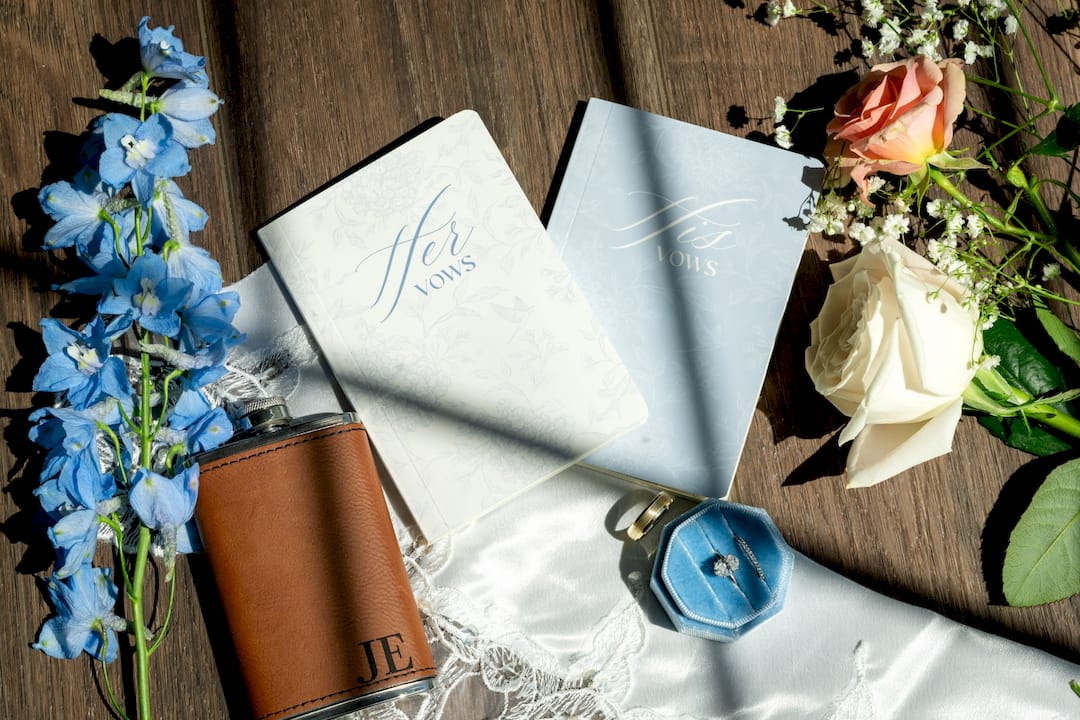
Watch, cufflinks, shoes, boutonniere laid flat on a clean surface
Tie or bow tie, jacket, pocket square as a styled flat lay
Invitation suite or any sentimental item the groom wants documented
High-priority (schedule these into the first 30 minutes):
Father or best man pinning the boutonniere
Jacket being placed on the groom’s shoulders
Tie or bow tie adjustment by a VIP
Groom reading a letter from the partner
A toast or quiet moment with the best man or father
Can skip when coverage is short:
Full groomsmen group lineup (save for post-ceremony)
Extended candid hang time
Repeat portrait setups in multiple locations
Re-enactable moments are worth noting. If the groom is already dressed when the photographer arrives, two or three key moments can be re-enacted naturally: jacket on, tie adjustment, boutonniere pin. These look genuine on camera and give the photographer the assisted shots the timeline missed.
When should your photographer arrive, and how do you coordinate vendors?
Work backward from your ceremony or first look time. Budget about 45–75 minutes of dedicated groom coverage, then add a 15–20 minute buffer before departure. That puts photographer arrival roughly 60–75 minutes before the groom needs to leave the room.
Numbered coordination steps to complete before the wedding:
Confirm photographer and videographer arrival times in writing, 48–72 hours before the wedding.
Share the room address, floor, and suite number with every vendor.
Assign one point person (best man, coordinator, or family member) who holds the timeline and can answer vendor questions.
Ask hotel staff to reset the room the morning of, before the crew arrives.
Confirm the departure time for the ceremony or first look so the photographer knows when to wrap.
Contingency plan if the timeline slips:
Drop extended group shots first; protect the assisted moments and portraits.
Re-enact two or three key moments if the groom is already dressed on arrival.
Move the portrait session to the ceremony location if the room runs long.
Pro Tip: Put the point person’s cell number in the vendor timeline. When the photographer texts “five minutes out,” someone in the room should be ready to answer.
How to prioritize VIPs and prompt real moments during groom prep
The suiting-up sequence is where the deepest family images live. A father helping with a boutonniere or a best man straightening a tie carries more emotional weight than any posed portrait. The key is telling your photographer who those people are before the wedding day.
Before the shoot, name two or three VIPs and their relationship to the groom. Your photographer uses that list to position themselves before the moment happens, not after. A wedding photography questionnaire is the standard tool for capturing this information.
Priority order for people to include:
Father of the groom (boutonniere, jacket, quiet moment)
Best man (tie adjustment, toast, letter reaction)
Brothers or close friends (group candid, brief toast)
Mother of the groom (if present in the room)
Photographers prompt these moments with short, low-pressure directions: “Go ahead and help him with that,” or “Tell him one thing before you head out.” The groom feels supported rather than directed, and the camera catches the reaction rather than the pose. For grooms who want to feel more at ease in front of the lens, these comfort tips help before the day arrives.
Pro Tip: Tell your photographer which VIP to photograph first. If the father of the groom has a flight to catch or a health concern, that moment goes at the top of the list, not the end.
A fill-in groom prep timeline you can email to vendors
Copy the template below, fill in the brackets, and paste it into your vendor group chat or call sheet.
Fill-in timeline:
[TIME]: Photographer/videographer arrives at [LOCATION, ROOM NUMBER]
[TIME]: Detail shots begin (items staged on [SURFACE/LOCATION])
[TIME]: Assisted moments (boutonniere, jacket, tie) with [VIP NAME(S)]
[TIME]: Individual portraits
[TIME]: Group shots with groomsmen (if time allows)
[TIME]: Photographer departs for [CEREMONY LOCATION / FIRST LOOK SPOT]
Vendor call-sheet checklist:
Arrival address and suite number for each vendor
Point person name and cell number
Natural light source in the room (window direction, time of day)
Detail items location (nightstand, dresser, bag)
VIP list with names and relationships
Re-enactment preference (yes/no)
Departure time and transport details
Three short notes to add for your photographer:
“Best natural light is from the [DIRECTION] window between [TIME] and [TIME].”
“Please re-enact jacket-on and boutonniere if we run behind.”
“Details are in the black bag on the dresser.”
Confirm arrival windows 48–72 hours before the wedding and send this template at the same time. One message, everyone aligned.
Key Takeaways
A groom prep timeline works when couples communicate arrival windows, VIP names, and detail locations to their photographer at least 48–72 hours before the wedding.
Point | Details |
Photographer arrival window | Schedule arrival 60–75 minutes before the ceremony or first look to protect detail shots and portraits. |
Coverage duration | Budget 45–75 minutes for complete groom prep; the 60–75 minute template fits many typical weddings. |
VIP prioritization | Name two to three VIPs and their relationships before the shoot so the photographer positions early. |
Contingency plan | If the timeline slips, drop group shots first and re-enact boutonniere, jacket, and tie moments. |
Pixelgroves | Pixelgroves recommends confirming vendor arrival times 48–72 hours ahead and provides shareable scheduling templates for couples. |
The shot that almost never makes it into the timeline
Most couples spend real energy on the ceremony and reception timeline. Groom prep gets a line item, maybe two. What actually gets lost in that gap is not the jacket-on shot or the portrait. It is the quiet moment between a father and his son that nobody thought to schedule.
The conventional advice is to “leave buffer time.” That is true but incomplete. Buffer time without a VIP list is just empty minutes. The photographers who consistently deliver emotional groom-prep coverage are the ones who asked, before the wedding, which relationships matter most. They arrive knowing the father of the groom is the first person to photograph, not the last.
The other thing worth saying: groom prep rooms are almost always messier than expected. Garment bags on the floor, half-eaten room service, six groomsmen on their phones. The editorial images you see in galleries come from two minutes of room reset before the camera comes out. That is not a styling trick. It is a logistics decision that belongs in the vendor timeline, not left to chance on the morning of.
Pixelgroves builds your groom prep timeline with you
Pixelgroves, named 2025 Best of Florida Wedding Photographer, does not hand couples a generic schedule and call it planning. Every booking includes a timeline planning conversation where arrival windows, VIP relationships, and detail staging are confirmed before the wedding day. The 60-minute and 90-minute groom prep packages include a second shooter option for couples with separate getting-ready locations, and re-enactments are always on the table when the morning runs long.
[

Couples who want last-minute grooming details to look sharp on camera can also reference professional grooming guidance before the day. When you are ready to lock in your vendor arrival windows and coverage options, view Pixelgroves’ packages and pricing and book a planning call to get your groom prep timeline confirmed.
Recommended
Comments