Why Vows Need Professional Audio Capture at Your Wedding
Updated: 2 days ago
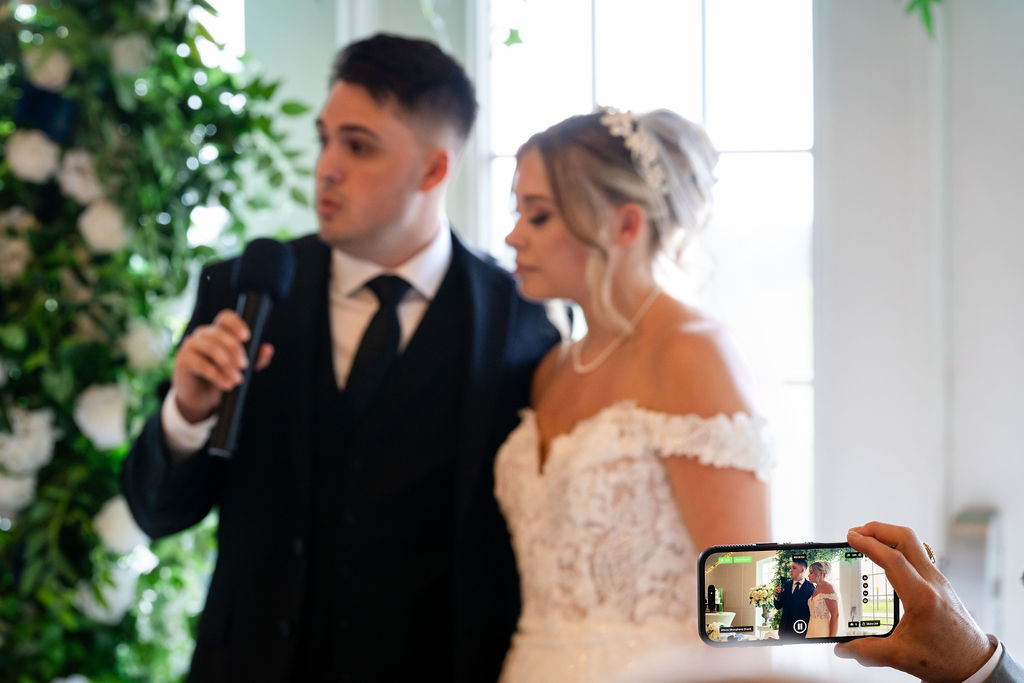
Yes, you should book professional audio capture for your vows. The emotional core of your wedding film lives in those two to three minutes of spoken promises, and a phone recording or camera mic will almost certainly fail to preserve them clearly enough to matter ten years from now.
A few things worth knowing before you read further:
Wedding audio research shows films with excellent audio are rewatched 3.9× more often after three years than films with poor audio, and poor audio significantly reduces measured emotional impact for intimate speeches.
Muffled or noise-buried vows cannot be fully recovered in post-production. What’s lost on the day stays lost.
Pixelgroves, winner of the 2025 Best of Florida Wedding Photographer Award, builds multi-source audio capture into its ceremony workflow precisely because of this.
One immediate step: Ask your venue coordinator whether a PA board feed is available, and ask any videographer you’re considering, “What are your audio backups if the primary mic fails?”
Table of Contents
Why are vows the emotional backbone of your wedding film?
Vows are the only moment in your entire wedding where both of you speak directly to each other in front of everyone you love. That specificity is irreplaceable. A first dance can be recreated in memory; the exact words you chose, the crack in your voice, the pause before you said “I do” — those details live only in the recording.
Wedding videographers consistently identify vows as the narrative spine of a wedding film. They set the pacing, establish the emotional register, and give editors the raw material to build everything else around. Without clean vow audio, a film becomes a montage of pretty images with music underneath. With it, the film tells a story.
There’s also a memory dimension most couples don’t anticipate. The emotional intensity of the ceremony often creates gaps in what you actually remember hearing. Many couples describe watching their wedding film for the first time and realizing they missed half of what their partner said. The recording isn’t a backup — it becomes the primary record.
“Vows and candid audible moments are the pieces that make a wedding film feel immersive. Audio design is central to storytelling and pacing in wedding videography — it shapes the emotional arc more than any single visual element.” Hey Love Studio
The rewatch data backs this up: films with excellent audio are rewatched 3.9× more often after three years. That’s not a marginal difference. It’s the difference between a film you return to every anniversary and one you watched once and forgot.
What does professional audio capture that phone recordings miss?
A lot, and most of it is the stuff that makes you cry.
Phone recordings and guest videos capture sound pressure from a distance. What they miss is texture: the slight shake in a voice, a quiet laugh between lines, a breath taken before the hardest sentence. Those micro-details are what make vows feel human rather than rehearsed. Strip them out and the emotional impact drops sharply.
Here’s how the options compare:
Source | What it captures | What it misses | Best use |
Phone / guest recording | General sound, ambient noise | Clarity, nuance, low-volume speech | Social sharing only |
On-camera mic | Room ambience, reference audio | Intimacy, detail at distance | Backup reference track |
Lavalier (wireless) | Close, clear speech, breath, inflection | Ambient texture | Primary vow capture |
Direct board feed | Cleanest signal from PA system | Ambient room feel | Cleanest possible track |
Multi-source redundancy | All of the above | Nothing (that’s the point) | Full professional setup |
The industry checklist standard recommends combining lavaliers with a board feed and a camera reference track. Each source covers a different failure mode: the lav catches intimacy, the board feed catches clarity, and the camera mic catches everything else as a safety net.
What you lose with a single-source setup: echoes from a large venue can swallow quiet speech entirely; wind at outdoor ceremonies can render a camera mic useless; a single wireless lav can drop signal at the worst possible moment. Any one of those scenarios means your vows are gone.
What are the practical audio options for different budgets?
A useful rule of thumb: if you have to choose between one visual upgrade and one audio upgrade, prioritize audio. You can compensate for a slightly wider shot in editing; you cannot recover muffled vows.
Here are the realistic options by budget tier:
Micro-budget (under $200 extra): Ask your venue about a board feed and bring a portable recorder like a Zoom H5 to place on the altar. This costs almost nothing if you already have a videographer and gives you a clean backup track. The limitation is that no one is monitoring levels in real time.
Mid-range ($200–$500 add-on): A single wireless lav on the officiant or groom, monitored by your videographer. This is the most common upgrade and covers the majority of ceremony audio needs. Coordinate with your officiant in advance so they’re comfortable wearing the pack.
Full professional setup ($500+ or included in premium packages): Dual lavs (one on each partner or one on the officiant), board feed capture, and a dedicated recorder on the altar. This is what Pixelgroves builds into its ceremony workflow.
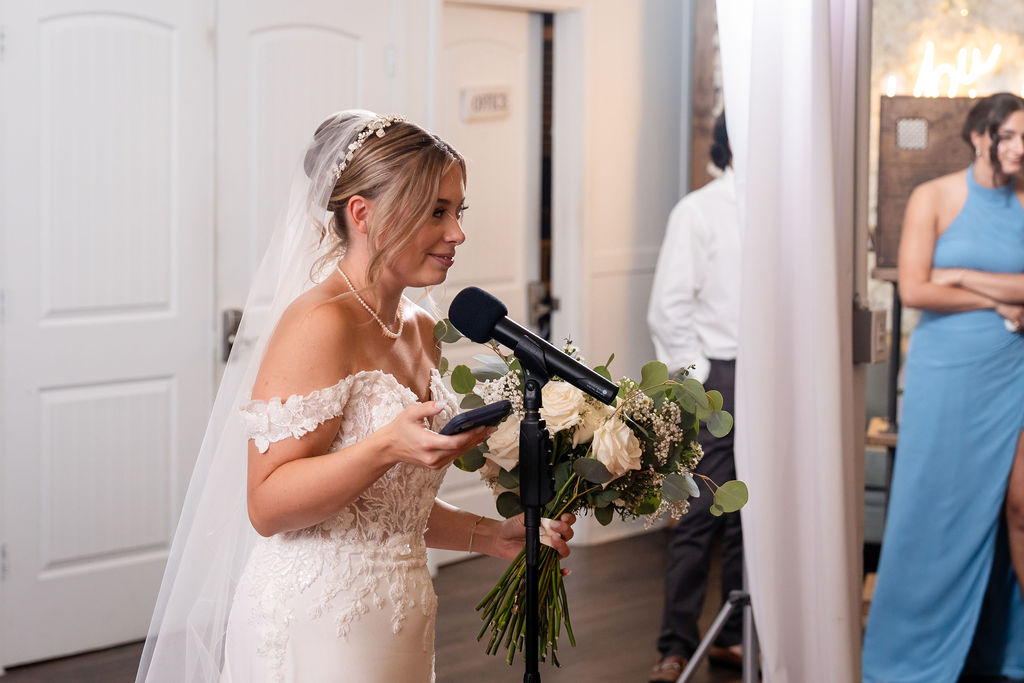
Private advance recordings are worth considering regardless of budget tier. Recording your vows separately before the ceremony, in a quiet room with a simple lav setup, gives you a clean, deliberate version that can be used as voiceover in your film or kept as a standalone keepsake.
When you’re finalizing ceremony details, it’s also worth coordinating your overall planning timeline, including personalized ceremony materials, so nothing falls through the cracks on the day.
What questions should you ask vendors before booking?
Lead with this one: “How will you capture vow audio, and what are your backups if the primary source fails?” A vendor who can answer that clearly and specifically has a real plan. A vendor who says “we use the camera mic” does not.
Follow-up questions to ask:
Do you use wireless lavalier mics, and will one be on the officiant or both partners?
Can you tap the venue’s board feed, and have you confirmed that with the venue?
How do you monitor audio levels during the ceremony?
What happens if a wireless pack drops signal mid-vow?
Do you record to a dedicated backup device independent of the camera?
Can we do a private pre-recording of our vows before the ceremony?
Will we receive raw audio stems along with the final film?
Red flags: vague answers about “doing their best,” reliance on a single camera mic, no mention of monitoring, and no backup plan.
Sample email you can send:
How does pro audio fit your wedding timeline and budget?
Adding professional audio capture requires modest extra time and a modest extra fee, but it prevents an irreversible loss. That’s the honest trade-off.
Setup type | Typical cost range | Setup time needed | What’s included |
DIY portable recorder | — | 20 min | Altar recorder, no monitoring |
Single lav add-on | $200–$300 | 20–30 min | One wireless lav, basic monitoring |
Dual lav + board feed | $500+ | 30–45 min | Two lavs, board feed, dedicated recorder |
Full pro package | Included in premium video packages | 30–45 min | All sources, real-time monitoring, redundancy |
The setup window matters. Your videographer or audio tech needs access to the ceremony space at least 30–45 minutes before guests arrive to place mics, run cable to the board, and do a soundcheck. Build that into your venue access time.
For a private pre-recording, schedule 20–30 minutes the morning of the wedding or the day before. It fits naturally into the getting-ready window and requires only a quiet room and a lav mic.
The rewatch research showing a 3.9× difference in long-term rewatch rates makes the ROI case plainly: the cost of a lav add-on is a fraction of your total wedding budget, and it protects the most emotionally valuable two minutes of your film.
What can post-production fix, and what can’t it recover?
Some fixes are possible. Lost vow clarity is often not one of them.
Noise reduction tools like iZotope RX can reduce consistent background hum, air conditioning rumble, or light wind noise. A skilled audio editor can balance levels between sources and clean up minor interference. These are real improvements.
What they cannot do: reconstruct speech that was drowned out by a loud PA echo, recover words that were spoken away from any mic, or restore a track where wind completely overwhelmed the signal. Once that audio is gone, it’s gone.
Redundancy is the only reliable defense. On-day backups to insist on:
Lav on the officiant (minimum) or both partners
Board feed recording running simultaneously
Independent recorder placed on or near the altar
Camera reference track as a final fallback
Pro Tip: Ask your videographer to deliver raw audio stems along with the final film. Separate stems mean a future editor can remix the audio if technology improves, and they give you the option to extract a clean audio-only version of your vows.
The checklist standard also recommends confirming board feed access with the venue at least two weeks out, not the day before. Venues sometimes require advance notice to patch an external recorder into their system.
How do professional audio service packages typically compare?
Most wedding videographers offer audio as part of their base package, but the depth of that coverage varies significantly. Understanding what’s actually included prevents surprises.
Entry-level packages typically include a single on-camera mic and, if you’re lucky, one wireless lav. Monitoring is often minimal, and there’s rarely a dedicated backup recorder. These packages work for small, quiet ceremonies in acoustically forgiving spaces.
Mid-tier packages usually include one or two wireless lavs, basic monitoring, and a camera reference track. Some include board feed access if the couple arranges it with the venue. This covers most ceremony scenarios adequately.
Premium packages include everything: dual lavs, board feed capture, a dedicated altar recorder, real-time monitoring throughout the ceremony, and raw stem delivery with the final film. Pixelgroves builds this multi-source approach into its Florida ceremony packages, which is why its films consistently deliver the kind of audio clarity that holds up on rewatch years later.
When comparing packages, the audio role in wedding videography is worth reading before your vendor calls. It gives you the vocabulary to evaluate what you’re actually being offered versus what sounds good in a sales conversation.
Key Takeaways
Professional audio capture for wedding vows is the single highest-ROI investment in your ceremony film, protecting emotional clarity that post-production cannot recover once it’s lost.
Point | Details |
Rewatch impact | Films with excellent audio are rewatched 3.9× more often after three years than films with poor audio. |
Irreversibility | Muffled or noise-buried vows cannot be fully recovered in editing; on-day redundancy is the only real protection. |
Minimum setup | A single wireless lav on the officiant plus a board feed covers most ceremony scenarios at a mid-range cost. |
Pre-recording option | A private advance recording takes 20–30 minutes and gives couples a clean, pressure-free vow keepsake. |
Pixelgroves approach | Pixelgroves builds multi-source audio capture into its Florida ceremony packages, including the 2025 Best of Florida Award-winning workflow. |
The thing most couples don’t realize until it’s too late
Most wedding planning conversations focus on what the day will look like. Flowers, lighting, the dress, the venue. Audio is an afterthought, if it comes up at all. That’s the gap where regret lives.
The couples who feel the sharpest disappointment about their wedding films aren’t usually the ones who wish they’d had a better photographer. They’re the ones who can’t hear what their partner said. They watch the film and see the moment, but the words are buried under room echo or wind noise or the hiss of a camera mic that was never designed for ceremony capture. The visual is there. The emotional core isn’t.
What makes this harder is that you won’t know it’s a problem until weeks after the wedding, when the film is delivered and the day is already behind you. There’s no going back to reshoot the vows.
The emotional capture guide makes a point worth sitting with: the moments that matter most in a wedding film are almost always the ones where you can hear what’s happening, not just see it. A shaky voice, a laugh mid-sentence, a long pause before the last line. Those are the details that make a film feel real rather than produced.
Booking professional audio isn’t a luxury upgrade. It’s the decision that determines whether your film is something you return to or something you watched once.
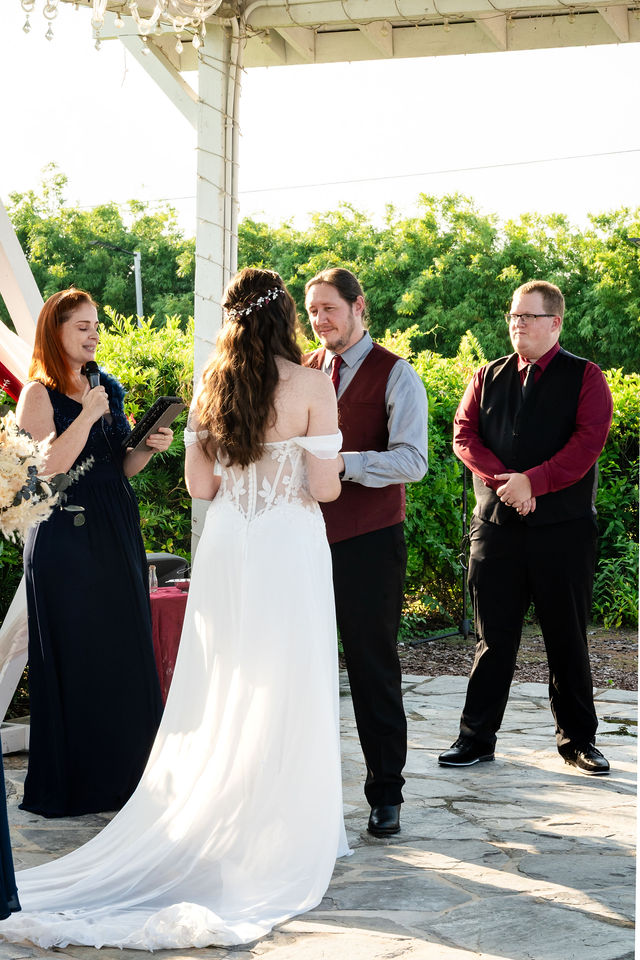
Pixelgroves captures the vows your film will be built around
Your wedding film is only as strong as its most emotional moment, and that moment is almost always your vows. Pixelgroves, winner of the 2025 Best of Florida Wedding Photographer Award, builds multi-source audio capture into every Florida ceremony package: wireless lavs, board feed coordination, and redundant recording so nothing is left to chance.
[
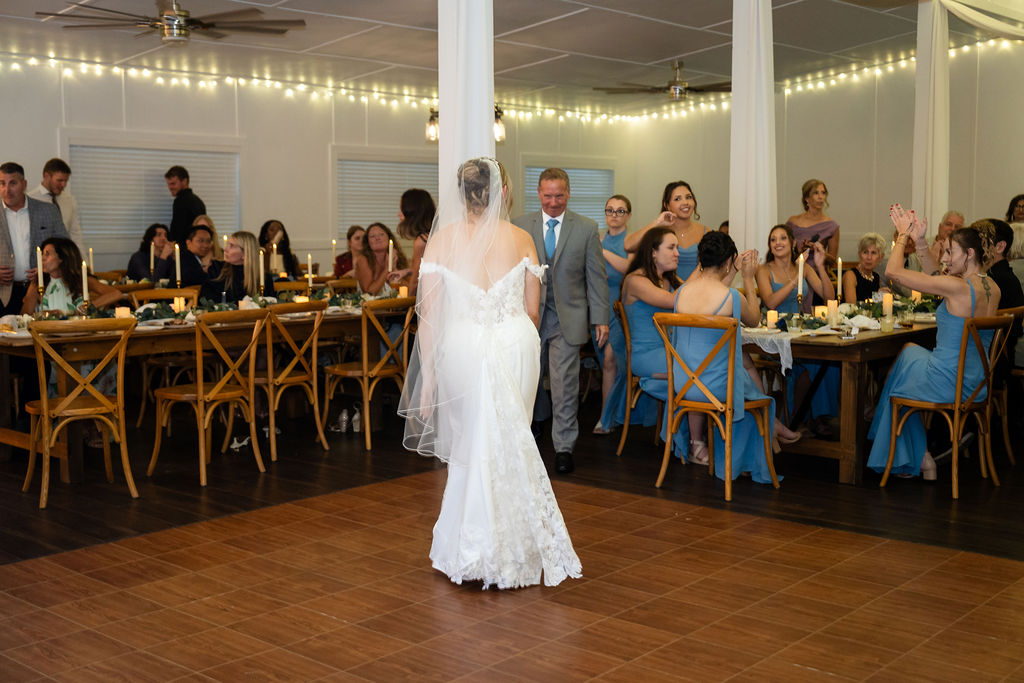
The difference between a film you rewatch every anniversary and one you watched once comes down to whether those two minutes of promises were captured with the care they deserve. Pixelgroves handles the technical side completely, from pre-ceremony soundcheck to raw stem delivery with your final film, so you’re not piecing together a plan from vendor to vendor.
Check Pixelgroves’ packages and pricing to see what’s included in each ceremony tier, or browse the wedding photography and videography styles to find the aesthetic that fits your day. Reach out directly to ask about availability for your date and to confirm whether a private pre-recording session fits your timeline.
Useful sources and further reading
The Sound of a Wedding: How Audio Quality Determines Whether Couples Treasure or Forget Their Film — OurStoria Blog
Wedding Audio Checklist: How to Get Clear Vows & Speeches in Your Wedding Video (2026 Guide)
The Importance of Recording Wedding Speeches and Vows — Starr Photo + Video
How to Record Your Wedding Vows as a Keepsake — LifeEcho blog
Must-Have Wedding Moments to Capture on Video — Hey Love Studio
For before/after audio comparisons, search “wedding vow audio before and after demo” or “board feed vs camera mic wedding ceremony” on YouTube. The difference is audible in the first ten seconds.
Recommended

Comments