15 Minute Checklist for Couples: Wedding Photo Copyright Questions

The photographer owns the copyright to your wedding photos the instant the shutter clicks, not you. This is federal law, not a policy choice any studio makes. What you receive instead is typically a personal-use license, which lets you print, share, and cherish the images forever, but doesn’t hand you legal ownership. If you want more than that, you need it spelled out in writing before you sign anything.
TL;DR:
Most wedding photographers retain copyright ownership by default, making it essential to negotiate written transfers if broader rights are needed.
The standard license given to couples usually covers personal printing, sharing on social media, and private albums but restricts commercial use and reselling.
Fee-based buyouts or exclusive licenses can transfer copyright or grant extended rights, but each agreement must be in writing to be legally valid.
Photographers can reclaim copyright through law even after a buyout, typically 35 years later, unless a formal termination notice is filed.
Couples should review all license terms, confirm high-resolution file delivery, and request explicit permission for any commercial or third-party editing needs before signing the contract.
Table of Contents
Why the Photographer Owns Wedding Photo Copyright
Copyright law doesn’t care who paid the invoice. It cares who pressed the button. The moment a photograph exists in fixed form, meaning it’s captured on a memory card or file, copyright attaches automatically to whoever created it. For a wedding, that’s your photographer, not you and not your mother-in-law who insisted on paying for the package.
The U.S. Copyright Office confirms this is baked into how authorship works under federal law. Ownership doesn’t transfer just because you hired someone or footed the bill. A signed, written agreement is required to move copyright from one party to another under 17 U.S.C. §204.
Copyright ownership bundles together several exclusive rights, and the photographer holds all of them unless a contract says otherwise:
The right to reproduce the images
The right to distribute copies
The right to publicly display the work
The right to create derivative works, like albums or edited versions
Pro Tip: Registration with the Copyright Office isn’t required for a photographer to own the copyright, but it does matter for enforcement. Registering makes it far easier to pursue statutory damages if someone infringes, which is one reason photographers care so much about protecting their portfolio.
What Your Wedding Package Actually Gives You
Most wedding contracts hand couples a personal-use license, not ownership. That license typically covers printing photos at home or through a lab, posting them on social media, building personal albums, and sharing digital files with family. It does not usually include commercial use, reselling images, heavy third-party editing, or letting a business use your photos in advertising.
A personal-use license is the industry default, and it’s not photographers being stingy. It’s rare for a full transfer to happen, and when it does, it typically comes with an added fee, according to Rocket Lawyer’s legal guide on wedding photo rights.
Here’s what’s usually allowed versus restricted:
Allowed: printing, framing, social sharing, private albums, gifting copies to family
Restricted: selling prints, using images in ads, submitting to stock sites, major re-edits by outside parties
If you need an exception, like using a photo in a small business announcement, ask before the wedding, not after. Photographers are far more flexible with a heads-up during contract negotiation than with a request six months later.
Getting Broader Rights: Assignments, Buyouts, and Exclusive Licenses
If a personal-use license isn’t enough, you have options, but each one needs to be in writing. An assignment (sometimes called a buyout) transfers copyright ownership outright. An exclusive license lets you use the images in specific ways the photographer agrees to, without transferring ownership itself. A nonexclusive license just adds permissions on top of what you already have.
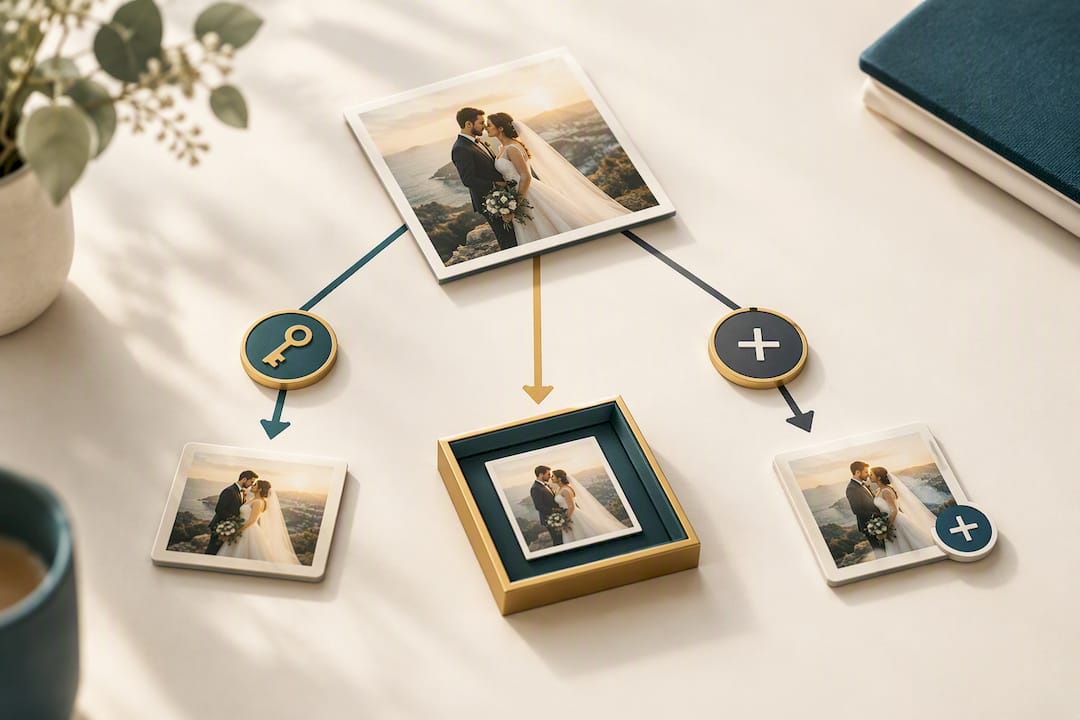
Federal law is strict here. Any transfer of copyright requires a signed writing under 17 U.S.C. §204, no exceptions for verbal promises or handshake deals.
There’s a wrinkle worth knowing about even if a full buyout sounds appealing:
Authors retain a statutory termination right, letting them reclaim transferred copyright 35 years later within a five-year window, under 17 U.S.C. §203
This mostly matters for commercially valuable images, but it’s a real limit on how permanent a buyout actually is
Buyouts typically come at an additional cost compared to standard packages, since you’re asking the photographer to give up long-term control of their own work
Your Wedding Photo Contract Checklist
Before you sign anything, walk through this list line by line. It takes fifteen minutes and can save you a frustrating call months later.
Delivery format and resolution. Confirm you’re getting high-resolution files, not just web-sized versions.
Permitted uses. Get explicit language on printing, social media, and album creation.
Commercial restrictions. Clarify what counts as commercial use if you run a business or have any public-facing brand.
Photographer portfolio rights. Decide if you’re comfortable with your images appearing on their website or Instagram.
Buyout or license fees. Ask upfront what expanded rights would cost, even if you don’t plan to use them.
Archive and retention policy. Find out how long the studio keeps your files and what happens if their business closes.
Amendment signature block. Any changes discussed after signing need a written amendment, signed by both parties.
A short script helps here. Try: “Can you give me a quote for a print release that covers unlimited personal printing?” or “What would it cost to license these images for my small business’s website?” Specific questions get specific answers, and specific answers belong in writing. Our guide on what belongs in a wedding photography contract walks through sample clauses in more depth.
Pro Tip: If you negotiate any change after the initial contract, don’t rely on a text message or email as your only record. Ask for a one-paragraph amendment, dated and signed by both parties, attached to the original agreement.
Myths That Get Couples Into Trouble
Calling a wedding shoot “work for hire” doesn’t make it one. Work-for-hire status generally requires either an employer-employee relationship or a specific written agreement meeting narrow legal categories, and a typical freelance wedding shoot rarely qualifies no matter what the invoice says.
Posting your photos to platforms with broad sublicensing terms in their fine print can also create problems, since some social networks claim wide rights to redistribute anything you upload.
Don’t assume a contract label overrides actual copyright law
Read platform terms before mass-uploading professional images
If you want wider reuse rights, ask about a limited Creative Commons license for low-resolution files instead of assuming you’re free to do whatever you want
How Pixelgroves Handles Copyright With Couples
Typically, professional wedding photographers retain copyright as the photographer, and couples receive a personal-use license covering prints, social sharing, and private albums. This common practice helps protect photographers’ portfolios used to book future weddings.
If you need more, we’re happy to talk through a print release, high-resolution file delivery, or a buyout conversation, depending on your package. Details live on our pricing page, and our engagement and proposal photography sessions follow the same licensing approach. We’ve been recognized with the 2025 Best of Florida Wedding Photographer Award, and couples consistently mention clear communication in their feedback to us.
Where to Go for More Answers
For the legal foundation, start with the U.S. Copyright Office. For contract-specific concerns, Vondran Legal’s guide on wedding photo copyright is worth a read. If you’re planning a buyout or any commercial reuse, talk to an attorney before you sign, not after.
Why Clear Contracts Protect Everyone
Photographers keep copyright because their portfolio is their business, the same reason a photography marketing service exists to help them get booked from that body of work. Couples shouldn’t chase ownership as a default goal. Instead, figure out what you actually need, extra prints, blog features, business use, and negotiate that specifically before the wedding day. A five-minute conversation now beats a confusing email exchange later. If you want flexible options, ask us directly when you book.
— Kellie
This article is general information, not a substitute for advice from a qualified lawyer. Consult a qualified legal professional about your own circumstances before acting on anything here.
Sources
FAQ
Is It Okay to Post Wedding Photos on Social Media?
Yes, in almost every standard package, since personal-use licenses typically include social sharing as a permitted use. Double-check your specific contract language, since some photographers request a watermark or credit tag when you post.
How Do I Avoid Copyright Problems With My Wedding Photos?
Read your contract before signing, and get any special permissions, like commercial use or major edits, in writing. Avoid assuming platform terms or verbal promises protect you the same way a signed agreement does under 17 U.S.C. §204.
If I Hire a Photographer, Who Owns the Copyright of the Photos?
The photographer owns the copyright by default, since federal law assigns authorship to whoever creates the image, not whoever pays for it. You typically receive a personal-use license instead of ownership unless a written transfer says otherwise.
Do I Own the Copyright of a Photograph If I Take It Myself?
Yes, if you personally take the photo, you’re the author and you own the copyright automatically. This only applies to images you capture yourself, not to photos a hired photographer takes during your wedding.
Can I Ask My Photographer for a Full Copyright Buyout?
You can ask, but expect it to cost more than a standard package, since full transfers are uncommon according to Rocket Lawyer’s guide. Get the buyout terms and price in writing before assuming it’s included.
Recommended
Comments