The Role of Photojournalism in Weddings Explained
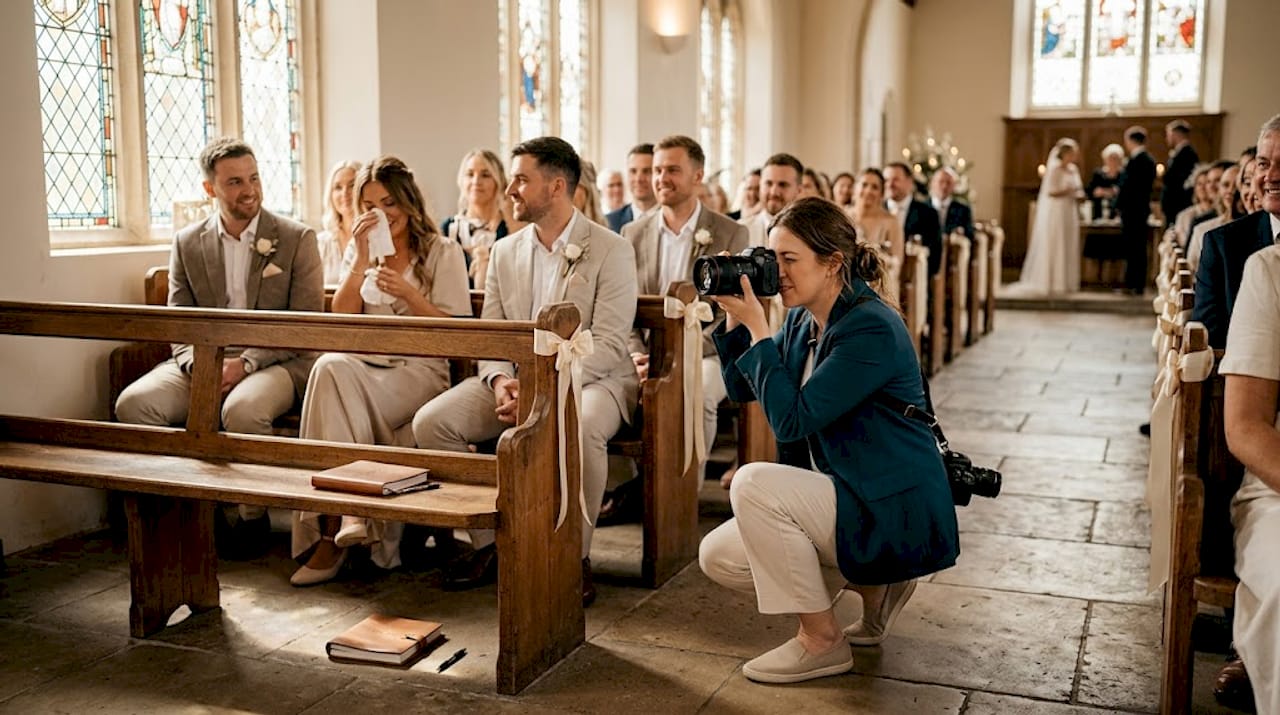
Most couples picture their wedding album as a series of carefully posed portraits. Beautiful people, perfect light, everyone saying “cheese.” But the role of photojournalism in weddings tells a completely different story. It captures your grandmother wiping a tear before the ceremony begins, your best friend laughing so hard their drink nearly spills, and the exact moment you see each other for the first time. Those are the images you will still be showing your grandchildren fifty years from now. This guide explains what wedding photojournalism actually is, how it works, and why it may be the best decision you make for your big day.
Table of Contents
Key takeaways
Point | Details |
Photojournalism captures real moments | This style documents genuine emotions as they happen, without posing or directing. |
It differs from candid photography | Photojournalists never interfere, while candid photographers may offer subtle direction. |
Storytelling is the core goal | Images form a complete narrative arc from preparations through the final dance. |
It reduces stress on your day | Without long posing sessions, you and your guests can simply be present and enjoy the event. |
Your photos become lasting heirlooms | Timeless documentary images outlast trends and grow in emotional value over decades. |
The role of photojournalism in weddings and how it began
Wedding photography was not always about story. For most of the twentieth century, it meant stiff, formal portraits on a church altar. That changed because of the journalism world.
Photojournalism grew out of wartime and press photography, a tradition focused on capturing the decisive moment: the split second that reveals everything about a scene. Henri Cartier-Bresson coined that phrase, and it became the foundation for an entirely different way of thinking about weddings. The idea was simple. Instead of asking people to perform for the camera, let the camera witness what is already happening.
The photographer who most directly popularized this for weddings was Denis Reggie. Reggie shot the wedding of John F. Kennedy Jr. and Carolyn Bessette in 1996 with small cameras and a photojournalist’s instincts. The images looked nothing like traditional wedding portraits. They looked real. That distinction made them famous, and it sparked a conversation in the wedding industry that has never stopped.
Here is what that shift gave couples:
A visual record of the emotional atmosphere, not just the decor
Images that feel like memories rather than productions
Albums that tell the story of a day rather than a checklist of poses
Photos that preserve family memories for twenty to fifty years in a way that venue costs simply do not
Pro Tip: When reviewing a photographer’s work, look for images where the subjects appear unaware of the camera. That unawareness is the clearest sign of a true photojournalist at work.
The evolution also reflected something broader happening in culture. People grew tired of perfection. Social media gave everyone a feed full of filtered images, and authenticity became the real luxury. Photojournalistic wedding coverage answered that demand directly.
How photojournalism differs from other wedding photography styles
Understanding this distinction will help you ask better questions when interviewing photographers. These three styles are often confused.
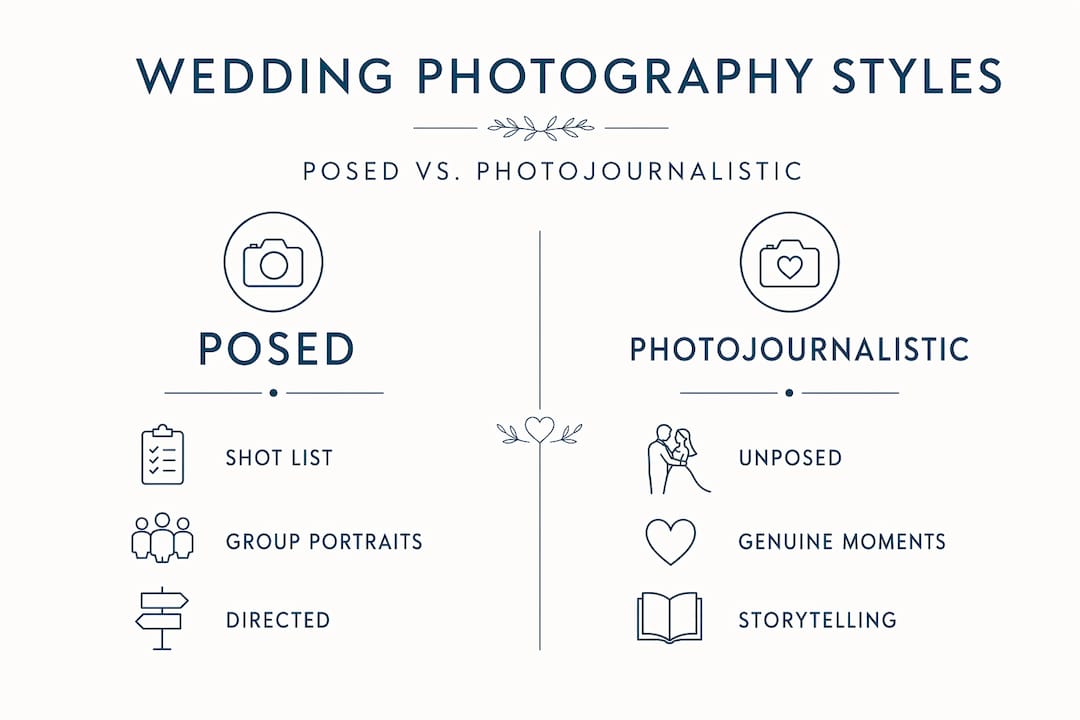
Style | Approach | Level of direction | Storytelling focus |
Traditional | Posed portraits, formal setups | High | Low |
Candid | Spontaneous shots with occasional prompts | Moderate | Moderate |
Photojournalistic | Pure observation, zero interference | None | High |
Traditional wedding photography is built around a shot list. The photographer works through family combinations, bridal party portraits, and staged romantic moments. The results can be gorgeous. But they document what people looked like, not how they felt.
Candid photography gets closer to real emotion. A candid photographer might say, “Walk toward me holding hands,” and then capture the laughter that follows. There is still a light layer of direction happening.
Photojournalism avoids any directing entirely. The photographer documents moments exactly as they occur within the full narrative context of the day. Nothing is set up. Nothing is repeated. If a moment passes, it passes forever, and the photographer trusts that the next real moment will be worth capturing too.
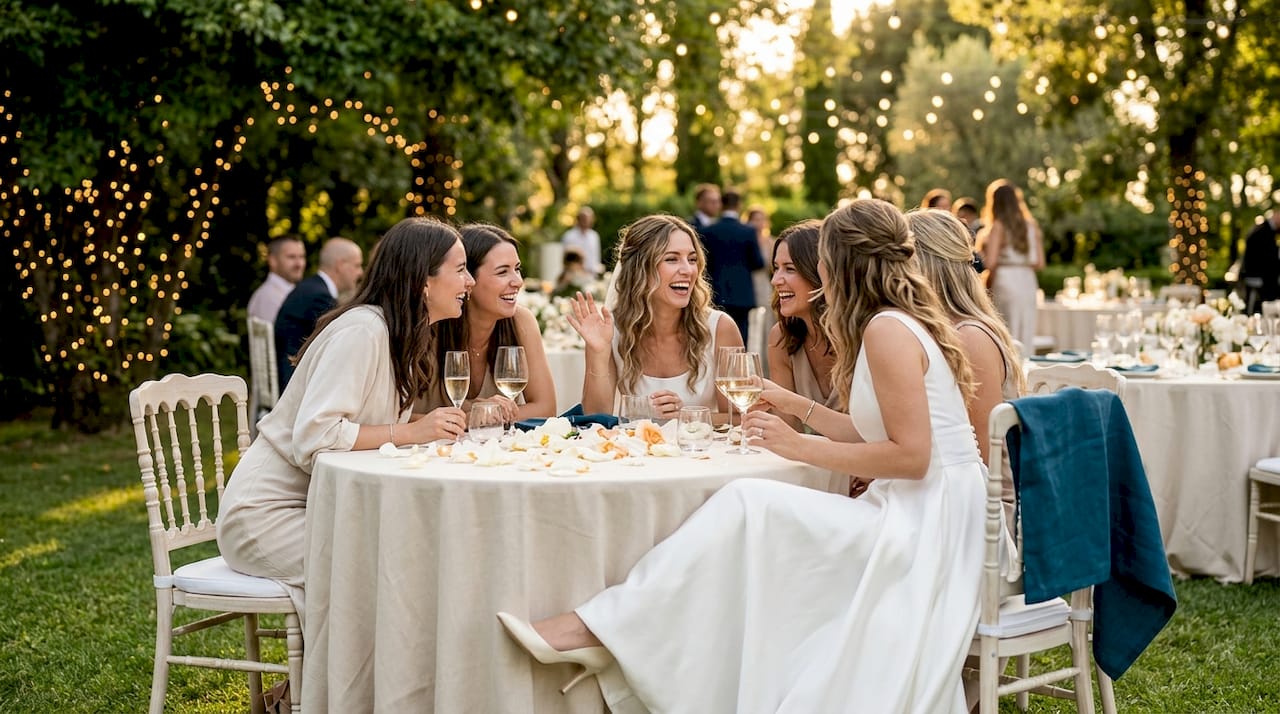
The photojournalistic approach also creates something neither of the other styles can match: a cohesive story. Your gallery flows from the quiet nervousness of getting ready, through the raw emotion of the ceremony, into the uninhibited joy of the reception. It reads like a film.
Techniques photojournalists use to capture authentic moments
A wedding photojournalist does not just point a camera and hope. The work is deliberate, even if it looks effortless.
Blending in. A skilled photographer acts as a discreet observer, knowing when to step back and become invisible. They wear neutral clothing, use quiet shutters, and position themselves where the action naturally flows rather than where they are noticed.
Anticipating peaks. Experienced photographers learn to read a room. They watch for the slight trembling of a chin before tears fall, the glance between a parent and child before a dance begins, the burst of laughter building in a group. Getting there before the moment means not missing it.
Understanding event flow. Planning expertise matters as much as camera skill. A photographer who understands ceremony timing, reception pacing, and the natural rhythm of a wedding day knows where to be and when. They are never caught on the wrong side of the room.
Thinking in sequences. A single image is powerful. A sequence of three images telling a micro-story is unforgettable. Photojournalists think in narrative arcs rather than isolated shots, building visual sentences across an entire gallery.
Delivering the story quickly. Sneak peeks within two days and full galleries that narrate the complete day reflect how seriously photographers take the storytelling mission. Timely delivery lets you relive everything while the emotions are still fresh.
Pro Tip: Ask your photographer to walk you through the narrative arc of a recent wedding gallery. If they describe it story by story rather than shot by shot, you have found a true photojournalist.
Why photojournalistic coverage benefits you as a couple
The practical benefits are real, and they compound over time.
The most immediate one is this: you get to actually be present on your wedding day. A cinematic narrative approach allows couples to stay relaxed without being pulled aside for long posing sessions. You talk to your guests. You eat your food. You dance when you want to dance. The photographer handles the documentation without asking for your attention.
Beyond the day itself, the value of photojournalistic images grows over time. Posed portraits show you how beautiful everything looked. Documentary images show you how everything felt. Decades from now, your children will not need to be told that your father cried during the ceremony. They will see his face and feel it themselves.
There is also the matter of unexpected moments. Every wedding produces them. A flower girl who falls asleep in a chair during dinner. The maid of honor catching the bouquet with a shocked expression. The elderly couple on the dance floor who has clearly been in love for sixty years. No shot list plans for these. Only a photographer trained to witness life as it unfolds will be watching when they happen.
Consider the long-term investment too. Professional photography preserves memories across generations in a way that no other wedding expense does. The flowers die. The cake gets eaten. The dress goes into storage. The photographs tell your story indefinitely.
Finally, photojournalism-style images are built for albums, wall prints, and gifts precisely because they do not feel dated. Trends in posing and styling change. Genuine human emotion does not.
How to hire the right photojournalistic wedding photographer
Knowing what to look for makes this decision much easier.
Study portfolios for emotional sequences. You are not looking for technically perfect shots in isolation. You want to see moments that flow, where one image leads naturally to the next and you feel the story building.
Ask directly about their approach. The right photographer will describe themselves as an observer or a witness. If they lead with how they direct couples, that is valuable information about what you will experience on your day.
Check how they handle the wedding day timeline. A great photojournalist does not just take pictures. They understand event flow and help you plan a schedule that creates natural breathing room between moments.
Discuss delivery expectations. Ask specifically about sneak peeks and full gallery timelines. The modern wedding photography workflow should include early previews within a few days and a complete gallery within a defined window.
Trust the process. The biggest adjustment couples make when choosing photojournalism is giving up control. That is also the biggest reward. When you stop performing for the camera, what comes through is entirely, beautifully real.
Pro Tip: During your initial consultation, describe a candid moment you hope gets captured. Notice whether the photographer talks about how they would position or create that moment, or how they would anticipate and observe it. The second answer is the one you want.
Photographers who, as Rodney Bailey describes, act as partners in day pacing and manage their own discreet presence are far more valuable than those who simply operate a camera well.
My honest take on what photojournalism actually changes
I have been around wedding photography long enough to watch this style shift from niche to normal. And what I find most striking is not the technical side of it at all.
What changes with photojournalism is the photographer’s entire orientation toward the day. You stop trying to make something beautiful happen. You start trusting that something beautiful already is happening, and your job is simply to witness it without getting in the way.
In my experience, the most powerful images I have ever seen from weddings are almost always the ones nobody planned. A father squeezing his daughter’s hand. Two friends pressed together laughing at something only they understood. The groom exhaling the moment the ceremony ends. None of those were on a shot list. All of them became someone’s favorite photograph.
What excites me most about this approach is what those images become over time. They stop being wedding photos. They become family heirlooms that tell a story long after everyone in them has aged, moved, and changed. That is not just photography. That is memory preservation at its most honest.
— Kellie
See how Pixelgroves brings this to life
If this approach resonates with you, Pixelgroves was built around exactly this philosophy. As the 2025 Best of Florida Wedding Photographer Award winner, Pixelgroves specializes in photojournalistic wedding coverage that puts real emotion first and directing last.
[
Every couple gets a personalized consultation, a photographer who understands event flow and discreet observation, and a delivery process that includes early sneak peeks followed by a full gallery. You can explore the wedding photography styles offered, browse the full portfolio of storytelling-driven images, and review pricing and packages to find what fits your day. Start the conversation early. The best photographers book quickly, and your story is worth getting right.
FAQ
What is the role of photojournalism in weddings?
Photojournalism in weddings means documenting your day as it actually unfolds, capturing real emotions, spontaneous moments, and genuine interactions without posing or directing. The result is a visual story rather than a set of portraits.
How does photojournalistic coverage differ from candid photography?
Candid photography may include light direction from the photographer, while true photojournalism involves zero interference. The photographer purely observes and reacts, letting moments develop completely on their own.
What wedding photojournalism techniques do photographers use?
Skilled wedding photojournalists blend into the background, anticipate emotional peaks, think in narrative sequences, and use their knowledge of event flow to position themselves where moments will naturally happen.
Why does photojournalistic coverage matter for long-term memories?
Posed portraits capture appearances, but documentary images capture feelings. Because genuine emotions never feel dated, these images remain powerful across decades and become true family heirlooms.
How do I find a true photojournalistic wedding photographer?
Review portfolios for emotional sequences rather than isolated beautiful shots, ask how they handle moments they cannot plan for, and look for photographers who describe their role as witness rather than director. Early booking matters since the best ones fill their calendars fast.
Recommended
Comments