Inclusive LGBTQ Wedding Photography: Expect 50–75 Edited Images Per Hour
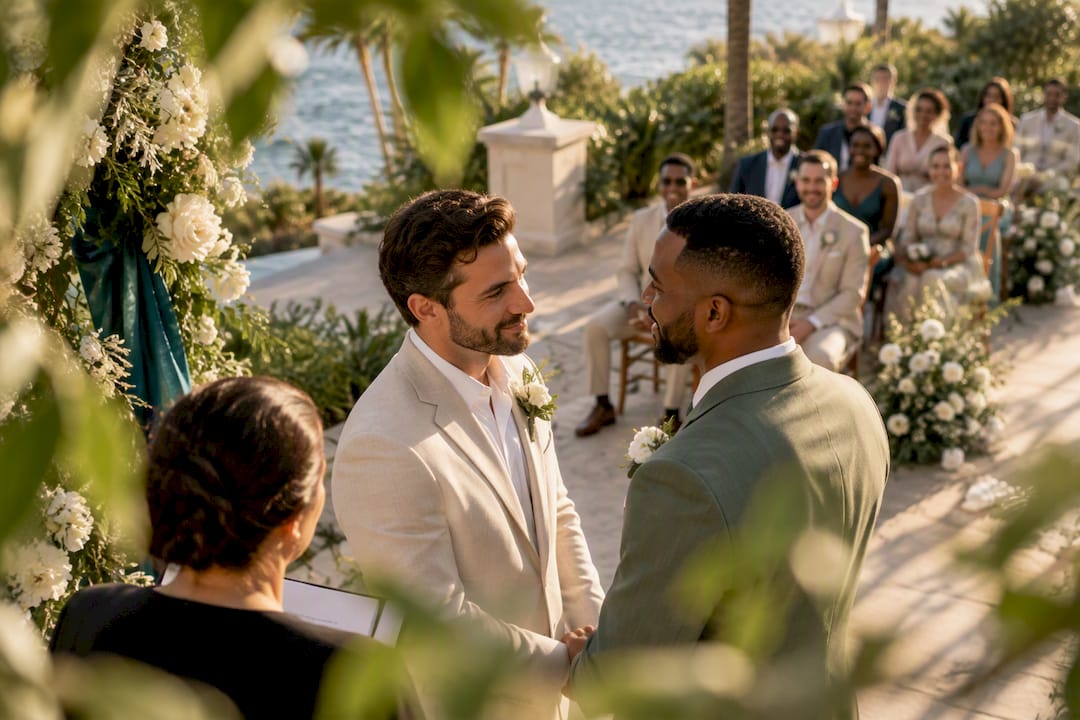
LGBTQ wedding photography means documentary-style, unposed storytelling built around allyship, not just rainbow-flag decor in the background. A couple should expect gender-neutral posing, inclusive contracts, and roughly 50 to 75 edited images per hour of coverage from a photographer who has actually shot queer weddings before, not just claims to welcome them. Pixel Groves and similar Florida-based studios build their packages around that expectation. The next step is simple: read the portfolio closely, then book a consultation.
TL;DR:
A genuine LGBTQ wedding photographer demonstrates consistent experience with diverse couples, capturing multiple weddings with varied body types and family configurations.
Portfolio organization should tell a story through different wedding phases rather than static poses, reflecting authentic moments and inclusive rituals.
Expect around 50 to 75 edited images per hour of coverage, with an eight-hour wedding providing a narrative-rich gallery, not many repetitive frames.
Photographers should use gender-neutral language in contracts, plan for family dynamics, and avoid gendered instructions during the wedding day to show true allyship.
Booking six to twelve months in advance is recommended for peak season, and a trusted vendor will have clear, inclusive policies, transparent pricing, and experience with queer-specific rituals.
Table of Contents
What Real LGBTQ Wedding Photo Portfolios Actually Show
A portfolio that proves genuine experience with queer couples looks different from one that just says “LGBTQ friendly” on a website footer. You’re looking for repetition, not a single showcase photo. Real experience shows up as multiple weddings, different body types, different family configurations, and ceremonies that don’t all look like the same stock template with the couple swapped out.
When you scroll a gallery, notice how it’s organized. Photographers who structure galleries by the arc of the day, first look, ceremony, reception, rather than by generic “poses,” tend to think in story rather than checklist. That’s the mindset you want behind the camera at your own wedding.
Look for these specific signals:
Multiple same-sex and gender-diverse couples across different weddings, not one token gallery
Extended family and chosen family represented in candid, not just formal, shots
A mix of ceremony coverage and unscripted reception moments
Editorial features or real-wedding roundups, similar to the kind Brides publishes, showing pride-flag entrances and personalized rituals
Editing pace to expect: Many specialized studios deliver somewhere in the range of 50 to 75 edited images per hour of coverage. An eight-hour wedding day should produce a gallery with real narrative depth, not a couple hundred thin, repetitive frames.
How Inclusive Photographers Actually Work on the Wedding Day
The difference between a photographer who “supports” LGBTQ weddings and one who actually knows how to shoot them shows up in the small decisions made hours before the ceremony even starts. Documentary and cinematic hybrid styles tend to serve queer weddings especially well, because candid coverage doesn’t force couples into poses built for a bride-and-groom template that was never designed with them in mind.
Allyship in practice starts with paperwork. Intake forms should ask for names and pronouns, not “bride” and “groom” fields. A photographer who fumbles this on day one of correspondence will likely fumble it worse in front of your family.
On the wedding day itself, look for these behaviors:
Quiet, direct posing prompts instead of gendered instructions like “groom, dip her back”
Advance planning conversations about which relatives may need careful handling
Accessible posing adjustments made without being asked twice
A second shooter trained to the same inclusive standard, not just the lead photographer
Sensitivity to family dynamics matters more here than in a lot of traditional weddings, since guides for photographing same-gender ceremonies consistently flag it as the area where inexperienced photographers stumble.
Pro Tip: Ask a prospective photographer to describe, step by step, how they’d handle a divided or unsupportive family member at your reception. Their answer tells you more about their actual approach than any portfolio ever will.
How to Choose an LGBTQ-Affirming Wedding Photographer
Picking the right photographer comes down to a short list of checks you can run in one email exchange or a 20-minute call. Vendors who explicitly state their commitment to the LGBTQ community, back it up with inclusive contract language, and show a portfolio full of varied queer love stories tend to be the safest bets, according to Rainbow Wedding Network’s vendor guidelines, which also recommend a video consultation before booking anything.
Run through this checklist before you sign:
Does their contract use gender-neutral language throughout, with no “bride/groom” defaults?
Have they photographed weddings similar in size and style to yours, and can they show it?
What’s their backup plan if the lead photographer is sick or the venue changes last minute?
Who owns image rights, and what usage terms apply to prints and social sharing?
Are travel fees flat, mileage-based, or negotiable for your venue?
Watch for these red flags during the conversation:
Vague or rehearsed answers about pronoun use
One “diversity” photo pulled out to answer every question about experience
Reluctance to put inclusive language in writing in the contract
Inconsistent availability answers between the initial inquiry and the follow-up call
Pose and Photo Ideas Built for Queer Couples
Good posing for queer couples starts from connection, not from a “who plays which role” script. ShootProof’s posing guidance for LGBTQ+ couples leans on flexible, gender-neutral prompts that work regardless of who’s taller, who’s leading, or how the couple identifies.
A few reliable setups:
Belly-to-back embrace: One partner behind the other, chin resting on a shoulder. Works at any height difference and reads as intimate without being staged.
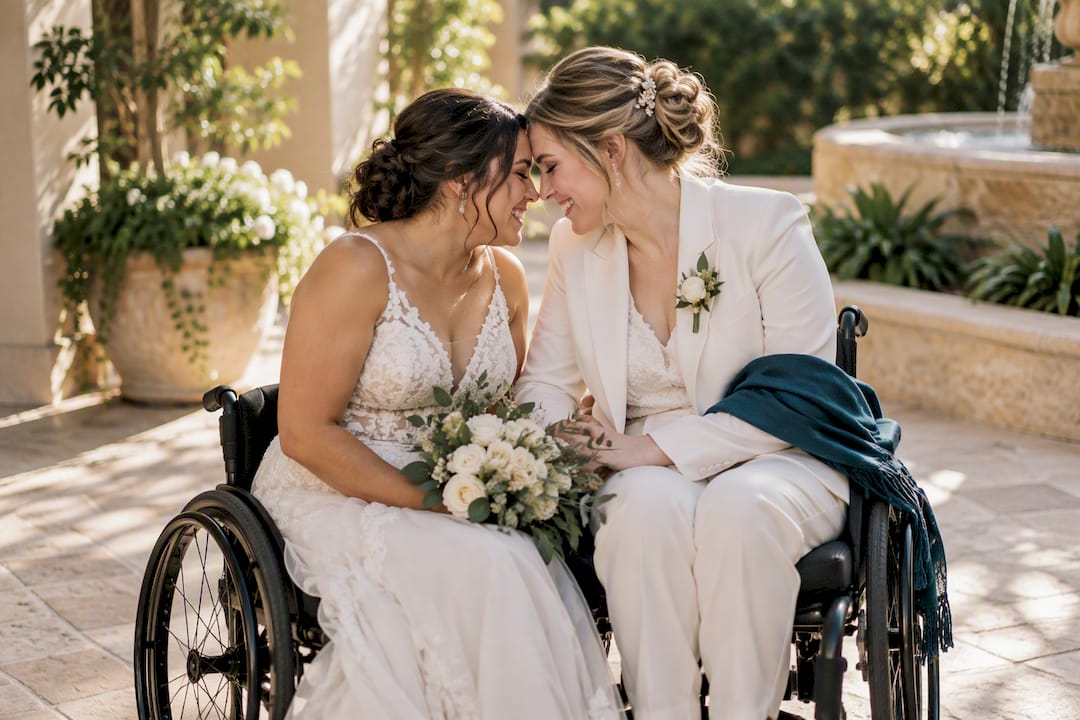
Forehead-to-forehead: Close, quiet, and forgiving of nerves. Great for a couple who feels awkward in front of a lens.
The almost-kiss: Faces close, not touching yet. Built tension photographs better than most actual kisses.
Walking hand-in-hand: Shot from behind or the side, capturing motion instead of a frozen pose.
Beyond poses, meaningful details make the gallery personal: a pride-flag entrance, a rescue dog in the wedding party, heirloom rings passed through a chosen family member, or a quiet first look shared privately before the ceremony.
For couples using wheelchairs or mobility aids, adjust the setups instead of skipping them. Seated versions of belly-to-back and forehead-to-forehead both photograph beautifully, and a good photographer offers the adjustment without waiting to be asked.
Booking Timelines, Pricing, and What Your Contract Should Promise
Book six to twelve months ahead if your date falls between October and May, Florida’s peak wedding season, when the strongest photographers get reserved early. Off-peak summer dates open up more flexibility on both calendar and price.
Expect a full-day package to include a set number of coverage hours, a defined edited-image range, and a sneak-peek delivery timeline. Many studios still lean on the same 50 to 75 edited images per hour benchmark mentioned earlier when scoping a full gallery.
Before signing, confirm:
Travel fees for out-of-county or destination venues, and whether they’re flat or mileage-based
Overtime rates if the reception runs long, locked into formals by a set time so the schedule doesn’t slip
Whether a rush or sneak-peek album is available as an add-on and at what turnaround
Backup coverage language in case of illness, injury, or equipment failure
Why Pixel Groves’ Approach Lines Up With This Advice
Some studios specialize in wedding photography and videography, built around documentary, editorial, light-and-airy, and candid styles, covering the range of approaches this guide recommends for queer weddings specifically.
Recognized for quality photography services, with client testimonials describing personalized, detail focused coverage
Offers hybrid photo and video coverage from one creative team, which keeps ceremony and reception storytelling visually consistent instead of split between two vendors with different instincts
Packages may include full-day coverage, engagement sessions, and add-ons like individual edits of ceremony and reception formalities
Hybrid coverage matters more than it sounds. When one team shoots both photo and video, couples generally deal with less vendor coordination stress, because a single creative direction guides both mediums instead of two separate crews working from two separate visions.
Understanding LGBTQ Cultural Sensitivities and Rituals in Weddings
Queer weddings often blend borrowed tradition with invented ritual, and a good photographer needs to recognize both without imposing assumptions. Some couples keep a traditional processional; others walk down the aisle together, side by side, deliberately rejecting the “who gives this person away” framing entirely.
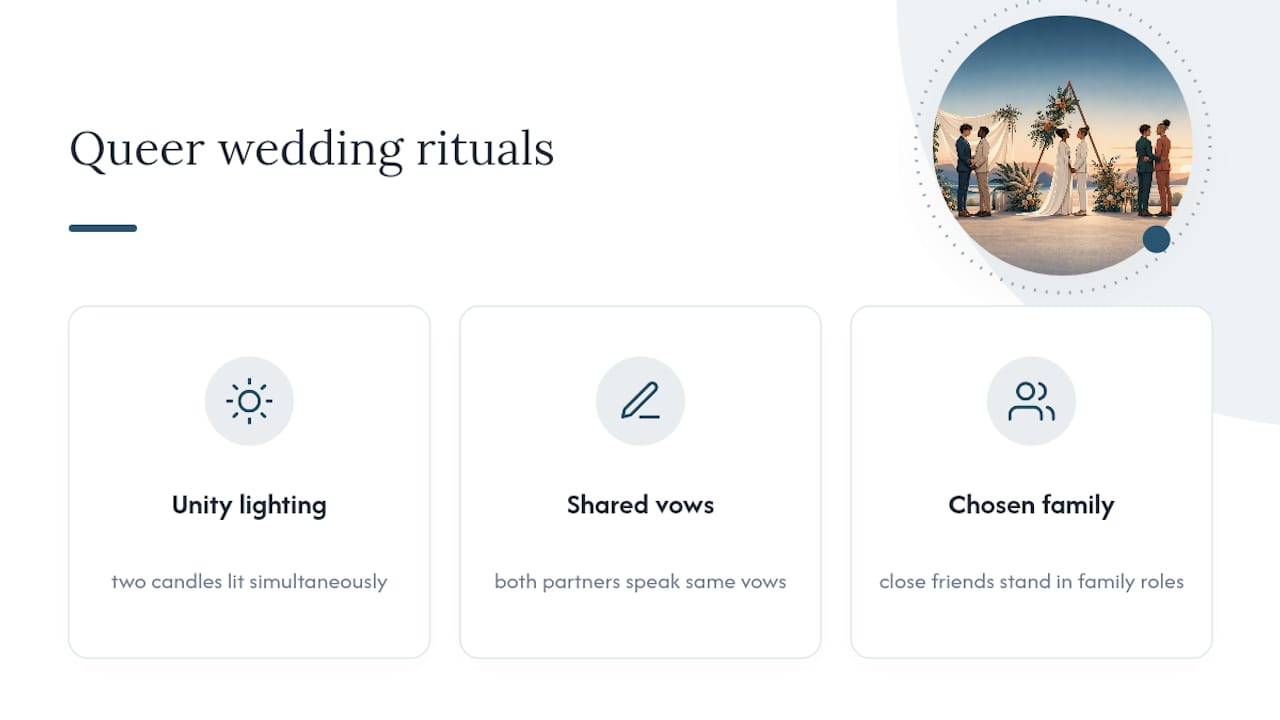
Rituals worth knowing how to document: unity ceremonies that swap a unity candle for two candles lit simultaneously, ring exchanges where both partners speak the same vows rather than alternating “husband and wife” language, and chosen-family recognition moments where close friends stand in roles traditionally reserved for biological relatives.
Pronouns matter during every one of these moments. A photographer calling out the wrong name or pronoun during a formal portrait session breaks the mood fast, and it’s a preventable mistake if the intake process asked the right questions weeks earlier. Family tension also shows up more visibly at queer weddings than many photographers expect. Some parents attend but stay visibly distant; others show up as the most enthusiastic people in the room. A photographer’s job is to document what’s actually happening, not to force a picture-perfect family reunion that doesn’t reflect reality. That distinction separates photographers who understand queer weddings from those who are simply present at one.
Legal Considerations Unique to LGBTQ Weddings
Marriage has been legal nationwide for same-sex couples since the 2015 Obergefell v. Hodges Supreme Court decision, but a few practical legal details still trip couples up during planning. Name changes after marriage follow the same process regardless of gender, but couples should confirm exact requirements with their local county clerk, since documentation needs can vary by state and by whether one or both partners are changing names.
Officiant credentials matter too. Not every state recognizes every type of ordination, so confirm your officiant is legally authorized to perform marriages in the state where you’re getting married, particularly for destination weddings.
For photography specifically, legal considerations are lighter but still worth confirming: image usage rights, model release language if photos will appear in a photographer’s portfolio or advertising, and whether the contract explicitly states nondiscrimination commitments. A contract with clear, gender-neutral language protects both parties and signals that the vendor has thought through these details before you ever asked.
Building Trust and Rapport With LGBTQ Couples
Trust starts before the camera ever comes out. A photographer who asks about pronouns, family dynamics, and comfort levels during the first consultation, rather than during a tense moment on the wedding day, is doing the relationship-building work early, when it’s easiest to get right.
Many couples say the most important quality isn’t camera skill at all. It’s whether the photographer functions as an ally who creates emotional safety, someone who notices when a couple tenses up during a pose and adjusts without making it awkward.
That kind of trust tends to build faster with photographers who’ve shot enough queer weddings that inclusive practice is automatic rather than something they’re consciously performing. A studio with years of that specific experience typically needs less orientation from the couple, because the instincts are already there: how to phrase a prompt, how to read a room, how to handle an uncle who won’t make eye contact with the couple.
Ask directly during your consultation how the photographer builds comfort with couples they haven’t met before. A rehearsed, generic answer suggests a marketing line. A specific answer, referencing an actual past client experience, suggests it’s real practice.
Post-Production Considerations for LGBTQ Wedding Photography
Editing decisions carry more weight in queer wedding photography than couples often realize going in. Skin tone correction, for instance, needs to be handled with real attention when a couple includes partners of different races, since a single default preset applied across every photo can flatten or distort tone on one partner while looking accurate on the other.
Representation continues into gallery curation. A photographer who buries the more visibly queer or “unconventional” shots at the back of the gallery, favoring conventional-looking images up front, is making an editorial choice that undercuts the couple’s actual day. The strongest editors treat every genuine moment, a same-gender first kiss, a drag performer at the reception, two mothers of the bride sharing a dance, as equally worth featuring prominently.
Respectful editing also means restraint. Retouching that smooths away visible tattoos, piercings, or gender-affirming surgical scars without being asked strips identity out of images meant to celebrate it. The goal of post-production here isn’t to make a queer wedding look like a straight one with the names changed. It’s to make the couple’s actual day look and feel exactly like what it was.
Why This Work Matters
Queer couples deserve photographers who show up ready, not photographers learning on the job at someone else’s wedding. That’s the standard this guide has tried to lay out: inclusive by default, not by accommodation. If you’re evaluating photographers right now, take the time to look closely at a full portfolio and ask direct questions in a consultation before you sign anything.
— Kellie
How Pixel Groves Fits Into Your Wedding Plans
Pixel Groves is a straightforward option for couples who want documentary-driven, allyship-minded coverage without piecing together separate photo and video vendors. The Premium, Exclusive, Orange, and Green Photography Packages cover different hour ranges and deliverables, while the hybrid photo-and-video options pair a single creative direction across both mediums so your ceremony and reception tell one consistent story instead of two mismatched ones.
[
A consultation is the fastest way to see whether the fit is right. Come ready with your wedding date, venue, estimated guest count, and any must-have moments, a specific ritual, a chosen-family introduction, a first look you want kept private. From there, Pixel Groves can walk you through which package matches your day, including add-ons like individual edits of ceremony formalities or a 24-hour sneak-peek album. Full pricing details for every photography and videography package are listed and ready to review whenever you’re ready to check availability for your date.
Sources
A few organizations and editorial outlets are worth bookmarking as you plan:
FAQ
What Makes a Wedding Photographer LGBTQ-Affirming?
An affirming photographer uses gender-neutral language in contracts and intake forms, shows a portfolio with genuinely varied queer couples, and adjusts posing prompts without relying on “bride and groom” defaults. Ask directly about their experience during a consultation, since Rainbow Wedding Network’s guidelines recommend confirming fit before booking.
How Far in Advance Should We Book Our Photographer?
Book six to twelve months ahead for peak Florida wedding season, roughly October through May, since the most experienced LGBTQ-affirming photographers fill their calendars early. Off-peak summer dates typically offer more flexibility on both scheduling and pricing.
What Does Pixel Groves Charge for Wedding Photography?
Pixel Groves’ Photography Packages range from the Green Package to the Premium Package, with full pricing listed on the Pixel Groves pricing page. Add-ons like an extra coverage hour or a 24-hour sneak-peek album are priced separately on the same page.
How Many Photos Should We Expect in Our Wedding Gallery?
Many specialized studios deliver in the range of 50 to 75 edited images per hour of coverage, meaning an eight-hour wedding day typically produces a gallery with real narrative depth rather than a thin selection. Exact counts vary by package and photographer.
What Poses Work Best for Same-Sex Couples?
Flexible, gender-neutral prompts like belly-to-back embraces, forehead-to-forehead moments, and the almost-kiss work well because they focus on connection rather than assigned roles. ShootProof’s posing guidance recommends adapting these setups for height, mobility, and comfort level rather than forcing a fixed template.
Recommended
Comments