Lock Venue Early. Use Florida's 90 Minute Sunset Window for Wedding Photos
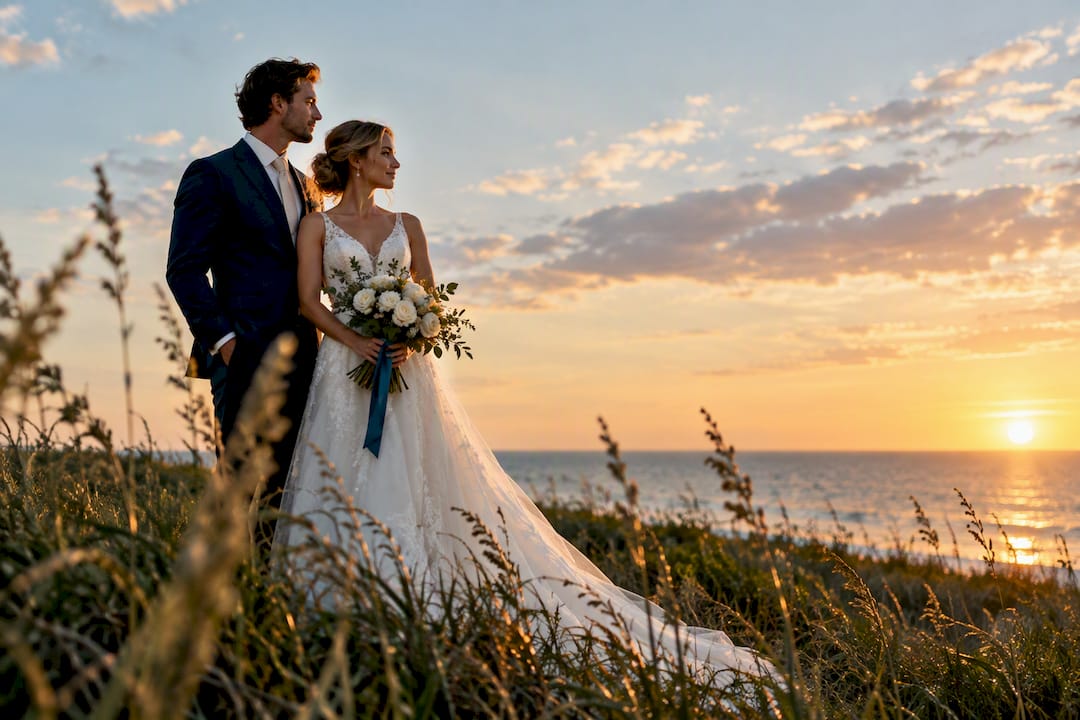
Pick your season first, then lock a venue 12 or more months out for peak dates. Hire vendors who already work in Florida conditions, get your permits filed the moment your date is confirmed, and always plan an indoor backup. Everything else in planning a destination wedding in Florida follows from those four decisions.
TL;DR:
Booking your venue 12 or more months in advance for peak season is essential, especially for Saturday dates, to secure availability and better pricing.
Vendors with local Florida experience are crucial for outdoor conditions, salt air, and weather contingencies, saving money and ensuring quality.
Applying for permits early and confirming officiant credentials, especially for public beaches and parks, prevents legal issues and delays.
Planning around sunset times with a 30 to 45-minute portrait window and scheduling a first look helps maximize your golden hour photos.
Building travel arrangements, lodging, and guest transportation into your plan reduces stress and ensures smooth arrivals, especially for island or remote locations.
Table of Contents
What Should You Look for in a Florida Wedding Venue?
Start by picking the experience, not just the postcard. A barefoot beach ceremony, a resort ballroom with air conditioning on standby, a Keys dock at sunset, and a garden estate under oak trees all deliver completely different guest experiences and completely different logistics. Beach weddings look effortless in photos but come with sand, wind, tide schedules, and public-access rules. Resorts solve weather problems but cost more per head. Historic estates and gardens split the difference.
Before you fall in love with a location, ask the venue coordinator these questions:
What’s the maximum guest capacity, and does that number change for a tented or indoor layout?
Where are the power outlets, and is a generator available for remote sites?
Is there enough parking, and how far is it from restrooms and the ceremony spot?
What’s the indoor backup option if it rains, and is it included in the rental fee?
VisitFlorida notes that Florida’s venue variety runs from luxury resorts to rustic gardens, and every one of them should have a real indoor contingency built in, not an afterthought tarp. If you’re set on a beach or public park, confirm permit rules and lead times immediately, since some counties require applications weeks or months out. Check tide charts and sunset timetables for your date, too. A gorgeous beach at low tide can vanish underwater at high tide by evening.
Pro Tip: Book well in advance for a peak-season Saturday. If your budget has flex, a Tuesday in September will save you money on nearly every line item.
How Do You Choose Vendors Who Work Well in Florida?
Local experience matters more here than almost anywhere else in the country. A photographer or florist who’s never worked a Keys dock or a barrier-island beach will be learning on your dime, and that shows up in surcharges, late arrivals, or gear that fails in salt air.
Ask every vendor you’re considering:
Do you carry backup equipment, and what’s your plan if a generator is needed?
How do you protect gear from salt air and humidity on multi-hour outdoor shoots?
What’s your travel and setup timeline for island or remote coastal venues?
What does your insurance and cancellation policy cover if a storm forces a reschedule?
Vendors unfamiliar with the Florida Keys often get caught off guard by limited power access, gear corrosion, and mosquito control needs in warmer months. That’s a real cost difference between a mainland vendor billing travel time and a local one who already owns the right rig for the conditions.
Get contingency language in writing. A contract should spell out what happens if weather forces a location change, who pays for a rescheduled date, and what backup equipment the vendor commits to bringing.
Pro Tip: Ask your photographer and caterer to coordinate delivery windows directly with each other. Overlapping setup times on a tight island site cause more delays than almost anything else.
What Legal Steps Do You Need Before the Ceremony?
Florida issues marriage licenses same-day, in person, at any county clerk’s office. Bring valid photo ID, and expect to pay a license fee that varies slightly by county. The license stays valid for 60 days from issue, so timing matters if your ceremony falls close to that window.
Waiting periods depend on residency. Florida residents face a three-day wait unless they’ve completed a state-approved premarital course, while non-Florida residents have that waiting period waived entirely, which works in most destination couples’ favor.
A few more items to check off early:
Beach and public-park ceremonies typically need a county-level permit, often with 30 to 60 days of lead time.
Apply for that permit as soon as your date and location are locked, not the month before.
Hurricane season runs June 1 through November 30, and it affects insurance quotes, backup-venue clauses, and how flexible some permits will be about date changes.
Confirm your officiant is licensed to perform marriages in Florida, even if they’re traveling with you.
When Should You Schedule Ceremony and Photo Time?
Sunset in Florida shifts by roughly 90 minutes across the year, so a 5:00 p.m. ceremony that nails golden hour in March will miss it completely in July. Pull your exact sunset time for your date before you set the ceremony schedule, not after.
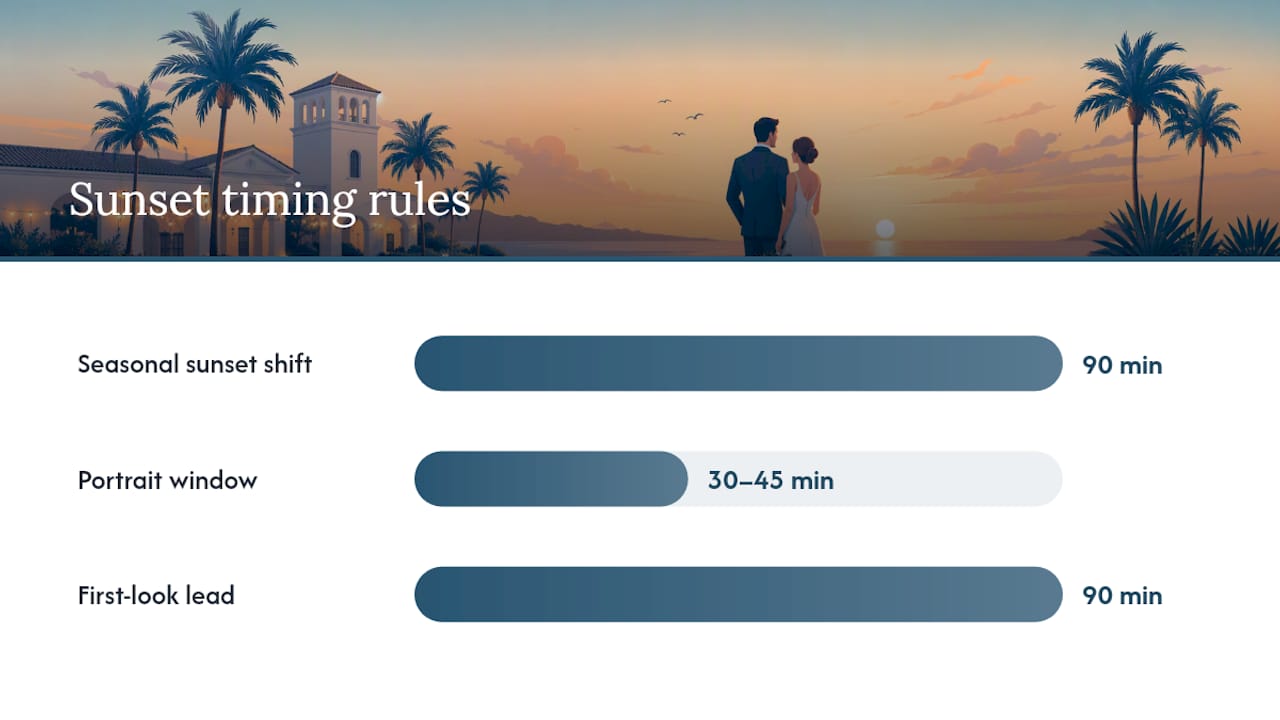
Leave a 30 to 45 minute portrait window before sunset when possible. That’s the light that makes Florida wedding photos look like magazine spreads instead of flat midday snapshots. Position the ceremony so the sun sits behind the couple rather than blinding guests and squinting the wedding party.
A few conditions worth planning around:
Ask your photographer about low-light experience, backup batteries, and rain covers for gear.
For remote or island sites, confirm generator plans if power access is limited.
Humidity and wind affect hair, makeup, and loose décor, so budget time for touch-ups between the ceremony and reception.
Give your photographer a written shot list and a tight family-photo timeline. Twenty extra minutes of “just one more combination” during formals eats directly into your sunset window.
If you want a deeper technical breakdown, Pixel Groves has covered outdoor lighting strategy for Florida ceremonies and a beach photography checklist couples can hand straight to their vendor team.
Pro Tip: Schedule a “first look” 90 minutes before the ceremony instead of doing all portraits afterward. It buys back your sunset window and gives you and your photographer breathing room.
How Do You Plan Travel and Lodging for Your Guests?
Pick a venue with reasonable access to a major airport. Miami, Fort Lauderdale, Orlando, and Tampa all have frequent flights, and choosing one of them over a harder-to-reach spot cuts guest stress significantly.
Reserve a hotel room block as soon as your date is set, and include shuttle or ride-share information in your invitations.
For Keys or island weddings, plan arrival and departure logistics carefully. The Keys stretch across 113 miles, and guests flying into Miami still face a two- to three-hour drive.
Build a wedding website that centralizes flight advice, permit notes, and a few local activity suggestions so guests aren’t texting you questions the week of the wedding.
Multi-day itineraries work especially well for island weddings, since guests have already committed real travel time and appreciate a welcome party or farewell brunch built around the main event.
What Should You Budget for a Florida Destination Wedding?
Peak season (roughly November through April) means higher venue rates, tighter vendor availability, and premium pricing across the board. Shoulder months like May, September, and early October can save real money without sacrificing much in weather reliability outside of hurricane season.
Line items that catch couples off guard:
Beach or park permit fees, which vary by county and guest count.
Vendor travel surcharges for island or remote locations.
Generator rental for sites without reliable power.
Extra setup labor for tented or backup-plan configurations.
Consider wedding insurance with named-storm coverage if you’re marrying during hurricane season, and ask every vendor for a certificate of insurance before signing. A simple worksheet, venue, catering, photography, décor, permits, and a contingency line, keeps the budget honest from the start.
What Should You Pack for Florida Heat and Humidity?
Choose breathable fabrics like linen or lightweight silk for the wedding party, and pack a second pair of sandals or flats for beach portraits since heels sink fast in sand. Use humidity-resistant makeup and anti-frizz hair products, and schedule your trial in similar heat and humidity if you can.
Bring fans and water stations for outdoor ceremonies, especially in summer months.
Build welcome bags with local snacks, sunscreen, and a simple map for out-of-town guests.
Test your beauty routine outdoors, not in an air-conditioned salon.
Pro Tip: Pack a small emergency kit with blotting papers, bobby pins, and a travel-size setting spray. Florida humidity tests every hairstyle by hour three.
Do You Need More Than a Marriage License to Marry in Florida?
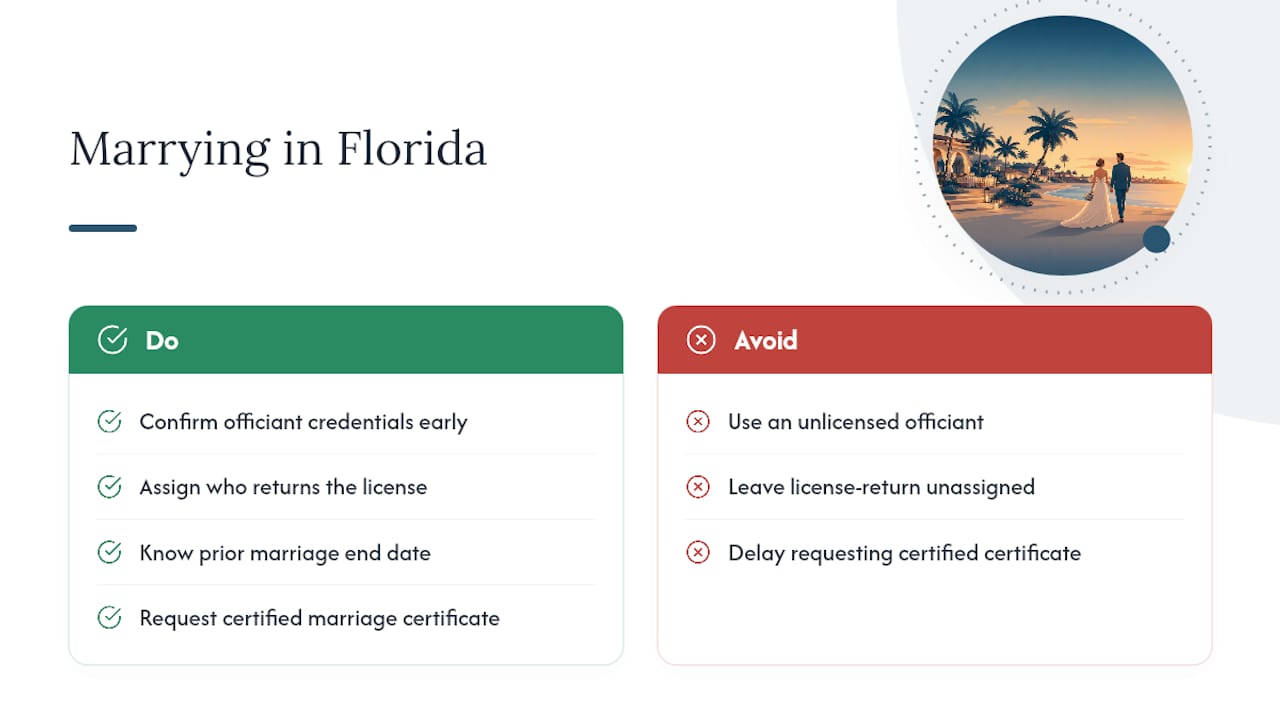
A marriage license alone doesn’t complete the legal picture. Florida requires the ceremony to be performed by someone legally authorized to solemnize marriages, which includes ordained clergy, judges, notaries public, and certain other officials recognized under state law. If you’re bringing an out-of-state officiant or a friend ordained online, confirm their credentials meet Florida’s requirements before the big day, not the morning of.
Witnesses aren’t required at the ceremony itself for the license to be valid, but the signed license must be returned to the issuing county clerk within 10 days of the ceremony for it to be recorded. That responsibility usually falls on the officiant, so confirm who’s handling it before you leave for your honeymoon.
If either partner was previously married, be ready to state the date the prior marriage ended. Florida doesn’t require the actual divorce decree at the license office, but you’ll need to know the details accurately when you apply. Name changes after the wedding go through Florida’s standard process using the certified marriage certificate, which you can request from the county clerk after the ceremony is recorded.
None of this is complicated, but missing a step, an unlicensed officiant or an unreturned license, can create real headaches months later when you’re trying to update a passport or bank account. Build a checklist item for “confirm officiant credentials” right alongside your venue and catering tasks, not as a last-minute scramble.
How Do You Handle Guests Traveling From Other Countries?
International guests bring genuine logistical questions, and addressing them early saves a lot of last-minute emails. Passport validity is the biggest one. Most countries require a passport valid for at least six months beyond the travel date, and Visa Waiver Program travelers need an approved ESTA authorization before boarding a flight to the United States.
Send a formal invitation letter to any guest who might need one for a visa application, even if it feels unnecessary for close family. Some consulates request this as standard documentation, and scrambling to write one two weeks before departure adds stress nobody needs.
Cultural expectations around weddings vary widely, and a few thoughtful touches go a long way. If your guest list includes people unfamiliar with American wedding customs, a simple one-page guide on your wedding website explaining the ceremony structure, reception timeline, and any regional traditions (a bouquet toss, a first dance, toasts) helps everyone feel included rather than confused.
Currency and connectivity matter too. Let international guests know whether hotels and venues expect cash tips, and flag which areas have reliable cell service versus spotty coverage, especially relevant in more remote parts of the Keys. A short “what to expect” section on your wedding website, covering weather, dress code, and local customs, answers most questions before they’re even asked.
What Are Your Transportation Options Around Florida?
Getting guests from the airport to the venue, and from the hotel to the ceremony, deserves its own line in your planning timeline. For mainland venues near Miami, Fort Lauderdale, Orlando, or Tampa, ride-share services are reliable and guests can largely self-manage. For anything more remote, that assumption breaks down fast.
Chartered shuttles make sense for weddings with a hotel block, since they eliminate parking headaches and keep everyone arriving together. Many couples book a shuttle loop that runs guests from the hotel to the ceremony and back to the reception venue, with a final late-night run back to lodging.
Keys weddings need extra thought. The drive from Miami International Airport down US-1 can take two to three hours depending on your final destination, and that single highway has no real alternate route if traffic backs up. Build buffer time into your rehearsal and ceremony schedules accordingly, and consider recommending guests arrive a day earlier than they think they need to.
For garden or estate venues outside major cities, confirm parking capacity directly with the venue and provide clear driving directions rather than relying solely on GPS, since rural Florida roads can confuse mapping apps. A golf cart or trolley shuttle between parking and the ceremony site is a small touch that keeps guests dry and comfortable if the venue spans any real distance.
What Small Decisions Actually Improve Your Wedding Photos?
Photographers ask for a scheduled portrait window for a reason: rushed light produces rushed photos. A first look, a protected 30 to 45 minute sunset slot, and a written family-photo list all exist to protect the images you’ll actually keep for decades.
A few small logistics pay off far more than couples expect. A shaded spot for the wedding party to wait between shots. A staggered timeline so hair and makeup touch-ups don’t collide with photo time. One person, not the couple, designated to herd family members for group photos.
For couples who want to go deeper on photographer-specific prep, Pixel Groves has additional guidance on choosing a wedding photographer with Florida experience.
— Kellie
Book a Florida Wedding Photographer Who Knows the Conditions
Hiring a photographer who already understands Florida’s light, humidity, and last-minute weather shifts removes a layer of risk most couples don’t think about until it’s too late. Pixel Groves earned the 2025 Best of Florida Wedding Photographer recognition by treating sunset timing, salt-air gear protection, and backup planning as standard practice, not an upcharge. Some providers offer wedding photography and videography, engagement and proposal sessions, and photo booth rentals for couples who want an extra layer of guest entertainment at the reception.
[
A photographer who’s shot Keys docks and mainland beach ceremonies knows how to plan around tide charts, generator needs, and that 90-minute sunset swing without missing a shot. Packages range from the Green Photography Package at 2,000 USD up through full videography and live-stream options, so most budgets have a starting point. Check current availability and package details on the Pixel Groves pricing page to lock your date before peak season fills up.
Sources
FAQ
How Far in Advance Should I Book a Florida Wedding Venue?
Book 12 to 18 months ahead for a peak-season Saturday, especially between November and April when demand and pricing tend to be higher. Choosing shoulder-season dates may offer more flexibility and lower costs.
Do I Need a Permit for a Florida Beach Wedding?
Most public beaches and parks require a county-issued permit, and lead times often run 30 to 60 days depending on the county and guest count. Apply as soon as your date and location are confirmed rather than waiting until closer to the wedding.
How Long Does a Florida Marriage License Last?
A Florida marriage license is valid for 60 days from the date it’s issued, and it’s available same-day in person at any county clerk’s office. Non-Florida residents don’t face the three-day waiting period that applies to state residents.
What Does Pixel Groves Charge for Wedding Photography?
Pixel Groves’ photography packages start at the Green Photography Package for 2000 USD, with the Premium Photography Package priced at 3000 USD. Videography, photo booth rentals, and add-ons like extra hours or a 24 hour sneak peek album are priced separately on the pricing page.
When Is Hurricane Season in Florida, and How Does It Affect My Wedding?
Hurricane season runs June 1 through November 30 and can affect insurance costs, backup-venue planning, and permit flexibility for outdoor ceremonies. Many couples marrying in this window add named-storm coverage to their wedding insurance and confirm indoor backup space with their venue in writing.
Recommended
Comments