First Touch Wedding: Photographer Framing for a Private 5–15 Minute Moment
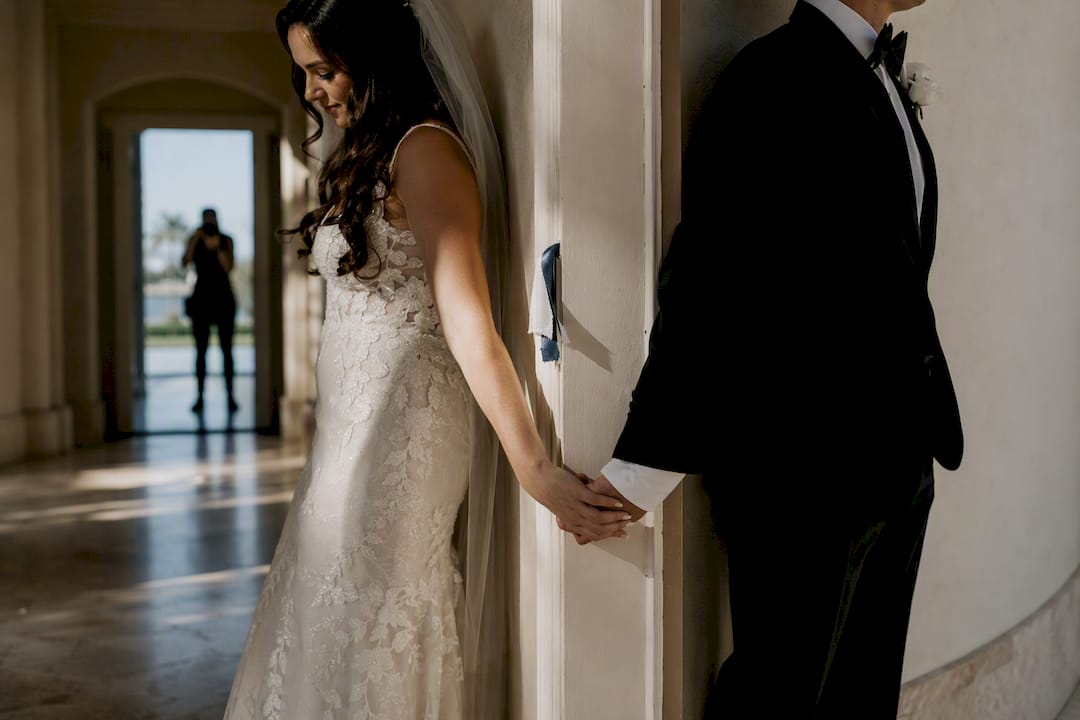
A first touch is a private pre-ceremony moment when couples connect physically, usually by holding hands or standing back-to-back, without seeing each other. It preserves the surprise of the aisle reveal while still giving you a brief period of quiet, grounding connection. The rest of this guide covers where to stage it, what to do during it, and how to help your photographer capture it well.
TL;DR:
A first touch allows couples to connect privately through gestures like handholding or exchanging letters without revealing their faces, preserving the surprise of the aisle reveal.
Timing and location are critical, with a recommended window of five to fifteen minutes just after hair and makeup and before guest arrival, to keep the moment calm and private.
Photography planning should include pre-marked positions, specific shot lists, and lighting tests at the actual time of day to ensure high-quality images without last-minute adjustments.
Keeping the space private involves scheduling the moment before guests arrive, limiting access, and briefing staff or family members to prevent interruptions.
Couples should select brief, meaningful activities like short vows, handwritten letters, or small symbolic gifts to keep the moment authentic and manageable without rehearsals.
Table of Contents
What Does a First Touch Wedding Moment Look Like?
Most couples stage a first touch in a doorway, around a corner, on a stair landing, or behind a hedge, close enough to hold hands or feel each other’s presence but positioned so neither person can see the other. It’s a growing alternative to the first look precisely because it keeps that private connection without sacrificing the moment when you finally see each other walking down the aisle.
The setup itself is simple, but what you do inside it varies a lot from couple to couple. Common elements include:
Reading short private vows or a vow card aloud
Exchanging handwritten letters
Sharing a quiet prayer or a moment of silence
Passing a small gift or keepsake through the gap
The whole thing typically runs a short period, tucked into the getting-ready schedule after hair and makeup wraps and before anyone starts seating guests.
First Touch vs. First Look: Which Fits Your Day?
The core difference comes down to when you actually see each other. A first look happens face to face, usually staged for the camera, and gives you the full visual reaction on film well before the ceremony. A first touch withholds that until you’re walking down the aisle, so the only reveal photo of the whole day happens in front of your guests.
Wedding planners generally say the choice comes down to personality and priorities rather than one option being objectively better. Consider:
Choose a first touch if: you want to preserve the traditional aisle reaction, you’re comfortable with a bit more schedule pressure, or the emotional payoff of that first visual moment matters more to you than efficient portrait time.
Choose a first look if: you’d rather calm pre-ceremony nerves early, you need extra time for formal portraits, or your ceremony start time leaves little buffer for anything else.
Photo flexibility is the other trade-off. A first look lets your photographer adjust poses and angles in real time. A first touch limits that, since neither of you can see cues, which shifts more of the creative work onto framing and preparation beforehand.
Ideas to Personalize Your First Touch
A first touch works best when it has real content, not just silence and hand holding. A few ways couples fill the moment:
Private vows. Keep them short, thirty to sixty seconds each works well, since longer vows can eat into your prep timeline and start to feel awkward without eye contact.
Handwritten letters. Read a letter you wrote weeks earlier, or trade letters and read them silently together.
A quiet prayer or moment of silence. For couples who want a spiritual anchor before the ceremony, this replaces vows or letters entirely.
A small keepsake exchange. A piece of jewelry, a flask for a quick toast, or an object with family significance passed hand to hand.
A micro-ritual. Some couples tie a literal knot, pour a bit of sand into a shared container, or complete some other tiny symbolic action they’ll finish more formally later.
None of these require rehearsal. Most couples pick one or two, keep them brief, and let the physical connection, not the scripted content, carry the moment.
Where and When to Schedule Your First Touch
Timing and location decide whether your first touch feels calm or rushed. Plan the spot ahead of time: a doorway, a corner, a stair landing, or a garden hedge near the ceremony site, somewhere close enough for touch but with a solid visual barrier between you.
A few planning steps make the difference:
Mark exact standing positions with tape or a subtle physical cue, so neither of you has to guess.
Schedule five to fifteen minutes, plus buffer, after hair and makeup finishes but before guests start arriving in numbers.
Brief your photographer, planner, officiant, and any venue staff on the exact time and location so no one wanders through.
Hand vow cards or letters to your coordinator ahead of time so they don’t wrinkle or get misplaced in a dress pocket or jacket.
Block foot traffic near the spot, whether that means a closed door, a “do not enter” sign, or a staff member posted nearby.
Building this into your getting-ready timeline early avoids the scramble that happens when a first touch gets treated as an afterthought squeezed between hair and the ceremony processional.
How to Brief Your Photographer for the First Touch
Since you can’t see each other, you can’t adjust your own poses, which means your photographer has to do the planning you’d normally handle instinctively. Designate the exact location beforehand and have your photographer pre-set lighting and framing, because there’s no chance to reposition once you’re standing there holding hands.
Photographers also recommend marking precise foot and hand positions with tape or another subtle cue, so you land in the same spot every time without visual guidance. Decide in advance whether your photographer stays visible to you both or steps out of your sightline entirely; either works, but it changes how natural your posture feels.
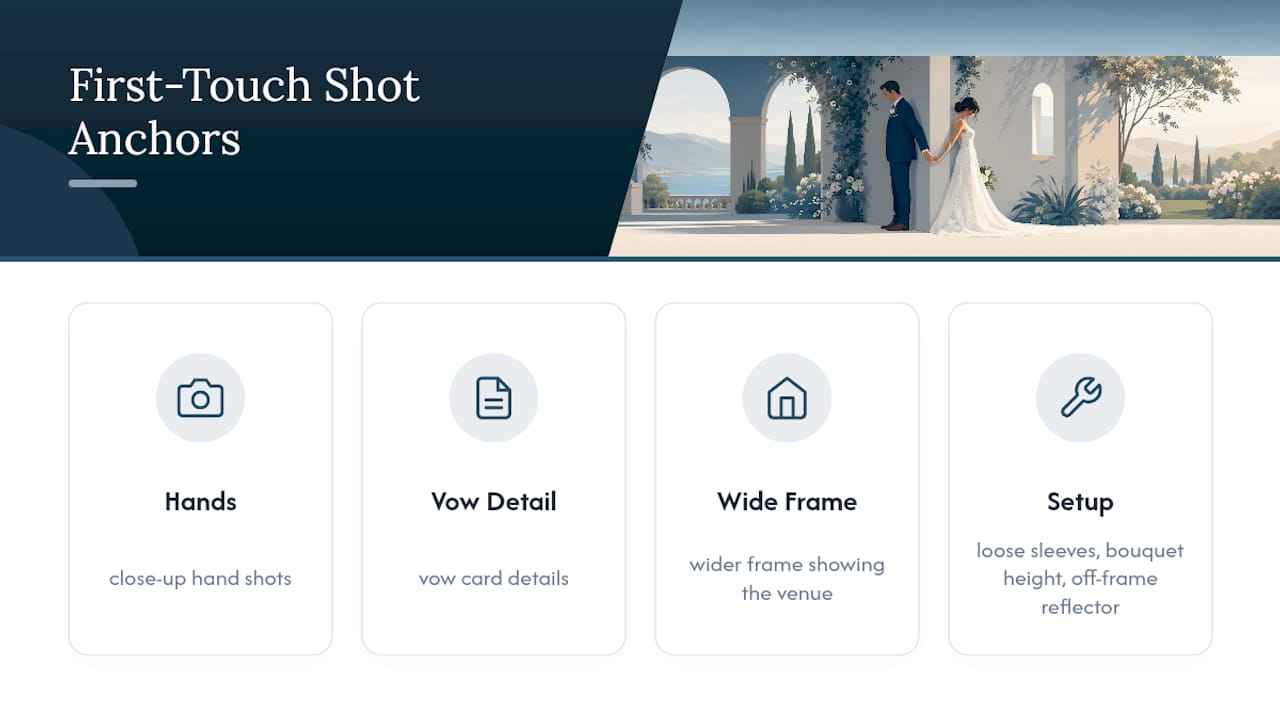
A solid shot list for this moment usually includes close-up hand shots, vow card details, and a wider frame that shows the venue around you. Loose sleeves, a bouquet held at the right height, and a reflector positioned just out of frame all help the photographer work with limited movement.
Pro Tip: Ask your photographer to test the lighting and framing at the exact time of day you’ll actually do the first touch, not an hour earlier. Light shifts fast in late afternoon, and a spot that looked perfect at 3:00 PM can go flat by 3:45.
Keeping the Moment Private
A first touch only works if it stays private, which means limiting who’s around and controlling the space. Keep the group small: your planner or coordinator, your photographer, and maybe one more helper if you need a hand with props or vow cards.
A few practical safeguards:
Schedule the moment before guests are seated, when foot traffic is naturally lower.
Post a staff member or bridesmaid near the entrance to redirect anyone walking through.
Use a closed door, a curtain, or a custom sign to mark the space as off limits without needing someone to explain it every time.
Brief family members in advance so a well meaning parent or sibling doesn’t accidentally walk in mid vow.
A little advance warning to your wedding party goes a long way toward keeping the moment intact.
Questions to Ask Your Photographer or Planner
Before the day arrives, get clear answers on a few logistics:
Where exactly will you stand, and how will positioning be marked?
What’s the full shot list for the moment, and how long will you spend shooting it?
Who manages the vow cards, letters, or gifts until the moment itself?
What privacy measures are in place, and who’s responsible for blocking foot traffic?
What’s the backup plan if hair, makeup, or travel runs behind schedule?
Also ask about delivery timelines for the images or footage, so you know when to expect a preview versus the full gallery.
Why This Moment Matters to Us
There’s something about a first touch that photographs differently than a posed reveal. You can’t perform for the camera when you can’t see each other, so what shows up in the frame tends to be the real thing: a hand gripping tighter than expected, shoulders relaxing, a breath held and released. That honesty is why we build first touch moments into wedding-day timelines whenever a couple wants one, treating the framing and lighting prep with the same care we’d give a formal portrait session. Pixelgroves has covered enough weddings to know the moment lives or dies on preparation, not luck, and that’s the piece we focus on before the couple ever takes their marks.
— Kellie
Let Pixelgroves Plan and Capture Your First Touch
Pixelgroves is the option for couples who want a first touch handled by someone who’s already solved the framing and timing problems, not figured out on the fly the morning of. Our wedding photography and videography teams build the first touch directly into your day-of timeline, pre-scanning locations for light and privacy so nothing gets improvised at the last minute. As the 2025 Best of Florida Wedding Photographer Award winner, we’ve staged this exact moment enough times to know where couples usually get it wrong: rushed timing and unplanned sightlines.
[
Browse real first touch and first look galleries from past weddings to see how the framing works in practice, then check our pricing and packages to book a date and get this moment on your timeline.
Sources
The logistics, timing, and framing guidance in this article draws on practical planning advice from Sortra’s first touch wedding guide, photography-specific staging tips from Black Bride, and creative activity ideas from Wedding Hacked. For comparison shopping, Pixelgroves also covers first look ideas and emotional wedding moment photography in more depth.
FAQ
What Is a First Touch at a Wedding?
A first touch is a private pre-ceremony moment when a couple connects physically, often by holding hands or standing back-to-back around a corner or doorway, without seeing each other before the ceremony.
Did People Used to Watch the Wedding Night Consummation?
Historically, some cultures practiced a public “bedding ceremony” where witnesses confirmed a marriage was consummated, but that tradition has no connection to a modern first touch, which is a private, consensual moment couples choose for emotional connection, not verification.
What Is the Groom’s Mom Responsible For?
Traditionally, the groom’s mother helps plan the rehearsal dinner, offers input on the guest list, and supports the couple logistically, though her role in a first touch specifically is usually limited to staying out of the private space unless asked to help with props or coordination.
What Is the 30 Minute Rule for Weddings?
The “30 minute rule” generally refers to scheduling major moments, like a first look or first touch, with at least a 30 minute buffer before the next timeline item, since first touches typically run 5 to 15 minutes but delays in hair, makeup, or travel can eat into that window fast.
Recommended
Comments