Hiring the Right Wedding Photographer and Videographer in Orlando
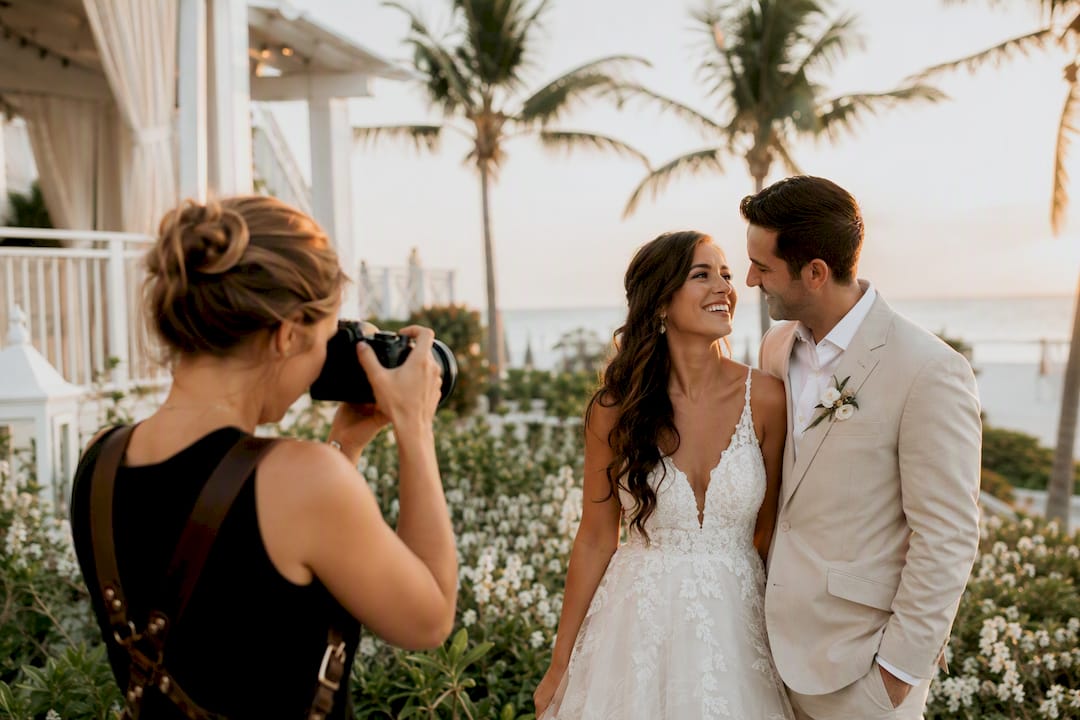
Book full-day photography and videography coverage, ideally from a team that handles both under one contract, and start requesting quotes now rather than closer to your date. For couples in Central Florida, Pixel Groves stands out as a local, award-winning option built around storytelling rather than generic package shots. Check their pricing and packages to see what fits your timeline and budget.
TL;DR:
Most couples spend between $2,500 and $8,000 on photography, and $2,000 to $6,000 on videography, making the combined budget around $3,500 to $6,500.
Booking full-day coverage with a second shooter, a documented editing timeline, and experience with your venue can significantly impact both quality and price.
The ideal timeline includes early coverage, a first look 90 minutes before the ceremony, quick portrait sessions, and buffer time for outdoor shooting near sunset.
Adding drone footage, full ceremony edits, or a highlight film can increase costs, but venue restrictions and FAA rules must be confirmed beforehand.
Start booking 9 to 12 months in advance for peak seasons, and ensure all contract details, including coverage hours and contingency plans, are clear before signing.
Table of Contents
What should you look for in Orlando wedding photographers and videographers?
How much do Orlando wedding photography and videography cost?
What’s a realistic wedding day timeline for photos and video?
Overview of top Orlando wedding photography providers: reputation, specialties, and style
How do you find and contact photography and videography teams in Orlando?
What services do Orlando photography and videography studios typically offer?
What drives the cost of photography and videography packages in Orlando?
What questions should you ask before signing with a photographer or videographer?
What’s the typical timeline for hiring and working with a photography team?
A photographer’s take on the small choices that change your photos
What should you look for in Orlando wedding photographers and videographers?
Start with the portfolio, not the price sheet. Ask to see two or three complete weddings shot start to finish, not just highlight reels, because a curated 20-photo gallery hides more than it reveals. You want to see how someone handles a rushed first look, a dim reception hall, and 40 relatives who don’t want to be organized into a group shot.
Orlando’s venue mix matters more than most couples realize. With hotel ballrooms hosting close to 30% of local weddings and the rest split between outdoor gardens, waterfront spaces, and theme park properties, a photographer who’s only shot bright, sunlit ceremonies may struggle with a dark ballroom reception. Ask specifically whether they’ve worked your venue or one like it.
Here’s what to ask on that first call or email:
“What’s included in a full-day package, and how many hours does that cover?”
“Do you bring a second shooter, and is that built into the price or an add-on?”
“What’s your turnaround time for the final gallery and edited film?”
“Do we get full usage rights to the images and footage, or are there restrictions?”
“What happens if you’re sick or unavailable on our wedding day?”
Get answers to all five in writing before you sign anything. A contract should spell out the payment schedule, exactly what you’re receiving (raw files, edited galleries, a highlight film, a ceremony-only edit), cancellation and rescheduling terms, and the overtime rate if your reception runs long.
Pro Tip: If a quote comes in dramatically lower than everyone else’s with no itemized breakdown, ask why. Missing liability insurance, no backup shooter plan, or a solo operator with no second-shooter option are the three most common reasons.
Treat vague answers, no written contract, or reluctance to show full galleries as dealbreakers. These are the same warning signs that separate a full-time studio from a weekend hobbyist with a good camera.
How much do Orlando wedding photography and videography cost?
Most Orlando couples land somewhere between $2,500 and $8,000 for photography alone, with videography running $2,000 to $6,000 depending on coverage hours and crew size. The average Orlando videographer prices out around $2,705, though full-day coverage with two shooters and a polished highlight film pushes toward the top of that range.
Photography and videography together typically eat up about 18% of total wedding spending in Florida, and with the average Central Florida wedding running near $25,000, that puts a realistic combined photo and video budget somewhere between $3,500 and $6,500 for most couples.
What actually moves the price:
Number of coverage hours (8 hours versus 10+ makes a real difference)
Whether a second shooter is included or billed separately
Editing depth: quick-turn galleries versus fully retouched, curated collections
Drone footage, travel fees, and physical prints or albums
Rush delivery versus standard 6 to 10 week turnaround
If you have to choose where to spend more, put slightly more weight on photography. Photos are the artifact you’ll display and revisit for decades; video tends to get watched heavily in year one and occasionally after that. Most studios ask for a 25% to 50% deposit at booking, with the balance due 30 days before the wedding.
What’s a realistic wedding day timeline for photos and video?
Florida light changes fast, and outdoor ceremonies dominate here, with over 60% of couples choosing outdoor celebrations across the state. That makes timing, not just talent, one of the biggest factors in how your photos turn out.
A sample day that works for most Orlando weddings:
Getting-ready coverage begins 2 to 3 hours before the ceremony, split between both partners if you have a second shooter.
First look, if you’re doing one, happens 90 minutes before the ceremony to buy time for portraits without rushing.
Wedding party and immediate family portraits run in a tight 30 to 45 minute block right after the first look.
Ceremony coverage, typically 20 to 30 minutes, needs two angles minimum if you want both wide shots and close reaction shots.
Extended family and formal portraits happen immediately after the ceremony while everyone’s already gathered.
Cocktail hour is when the photographer grabs detail shots (rings, cake, table settings) while you catch your breath.
Reception coverage should include entrances, toasts, first dance, and open dancing, with golden hour portraits squeezed in if your ceremony was outdoors.
If you’re marrying at a ballroom venue, your photographer needs to plan around artificial lighting rather than sunset timing. Outdoor and waterfront venues should build in a buffer around local sunset for portraits, since Florida’s golden hour window is short and unforgiving if you’re running late. Share this timeline with your day-of coordinator or planner so vendor transitions don’t eat into your photo windows, and give your photographer a short priority list: first kiss, ring exchange, parent reactions, and the exit shot, in that order, in case time runs short.
What add-ons are worth the extra cost?
Highlight films (3 to 6 minutes) cover the emotional beats of the day and suit most couples; full ceremony edits run longer and matter more if relatives couldn’t attend in person. Add-ons are common cost drivers, and second shooters, drone footage, and extra edited formats are the ones that push quotes toward the higher end of the range.
Drone footage adds a dramatic establishing shot but check venue rules first. About 15% of Orlando weddings happen on Disney property, where drone use is typically restricted, and many other private venues have their own airspace policies.
Highlight reel: 4 to 6 weeks turnaround, best for social sharing and family who couldn’t attend
Full ceremony edit: 6 to 8 weeks, worth it for religious ceremonies or long vows
Drone footage: confirm venue and FAA rules before booking, especially at enchanting Orlando venues with tree cover or crowds
Photo booths: usually a flat rental fee, delivered same night or next day, and easy to bundle into an existing photography package
Why Pixel Groves fits the checklist above
Pixel Groves builds its packages around exactly the vetting criteria outlined earlier: full-day coverage, second shooter availability, and a documented editing timeline rather than vague promises. The studio earned the 2025 Best of Florida Wedding Photographer Award, a credential worth weighing alongside client testimonials when you’re comparing studios rather than taking any single studio’s word for its own quality.
What separates the approach is personalization. Rather than shooting every couple the same way, Pixel Groves adapts style, documentary, editorial, light and airy, or candid, to match the couple’s story, which lines up directly with the “ask to see full weddings, not curated highlights” advice above. Their engagement and proposal shoot options also give couples a low-stakes way to test chemistry with a photographer before committing to the full wedding day package, a smart move if you’re still narrowing your shortlist.
Overview of top Orlando wedding photography providers: reputation, specialties, and style
Orlando’s photography market is dense. With over 3,000 independent wedding photographers working across Florida, reputation and specialization matter more than sheer volume of search results.
Three broad categories dominate the local market. Documentary-style studios prioritize candid, unposed moments and tend to shoot loosely structured timelines. Editorial studios lean into styled, magazine-quality compositions and often require more posed time. Light and airy studios favor bright, soft color grading that photographs beautifully in Florida’s natural light but can look flat in dim ballrooms without a videographer who knows how to compensate.
Reputation in this market comes down to three things: consistency across a full gallery (not just the best 20 shots), responsiveness during planning, and whether past clients mention the vendor by name in reviews rather than giving a generic five-star rating. A studio with strong reviews but only a handful of full galleries publicly available is worth a closer look before booking. Specialization also matters for venue type. Some studios shoot almost exclusively outdoor garden weddings; others have deep experience with theme park properties, hotel ballrooms, or waterfront venues, and that experience shows up in how confidently they handle lighting changes mid-day.
How do you find and contact photography and videography teams in Orlando?
Start with a shortlist of five to eight studios pulled from real client reviews, not just search rankings. Google Business reviews and Instagram engagement (comments, not just likes) tend to be more reliable indicators than a polished homepage, since anyone can build a nice website.
Referrals from a venue coordinator or a recently married friend carry extra weight because they’ve seen the studio work in person, not just in edited galleries. If you’re using a wedding planner or coordinator, ask for their go-to vendor list. Most maintain relationships with photographers they’ve worked alongside dozens of times and know which ones handle stress well.
Once you have a shortlist, contact each studio directly rather than filling out a generic inquiry form when possible. Direct emails or calls tend to get faster, more specific answers about availability and pricing. Ask every studio the same set of questions so you’re comparing apples to apples, and request their standard contract template before you commit, not after. A studio that hesitates to share contract terms upfront is worth crossing off the list regardless of how good their portfolio looks.
What services do Orlando photography and videography studios typically offer?
Full-service studios generally offer three tiers. Full coverage includes the entire day from getting-ready through reception exit, plus an engagement or proposal session beforehand. Partial coverage trims the day down, often skipping getting-ready shots and starting at the ceremony, which suits couples on a tighter budget. Coordination-only or “elopement” packages cover just the ceremony and a short portrait session, typically two to three hours total.
Add-on services layered on top of these tiers include second shooters, drone footage where permitted, photo booth rentals, and both digital and printed deliverables like albums. Some studios also offer rehearsal dinner or welcome party coverage as a separate line item, useful if you want documentation of the whole wedding weekend rather than just the ceremony day.
The distinction that trips up most couples is what counts as “full-day” coverage. Some studios define it as 8 hours, others as 10 or 12, and that difference alone can shift your quote by $1,000 or more. Always confirm the exact hour count attached to any “full-day” label before comparing prices between studios, since the label itself tells you almost nothing on its own.
What drives the cost of photography and videography packages in Orlando?
Coverage hours are the single biggest lever. An 8-hour package costs meaningfully less than a 12-hour one, and every additional hour typically adds a flat overtime rate on top of the base price.
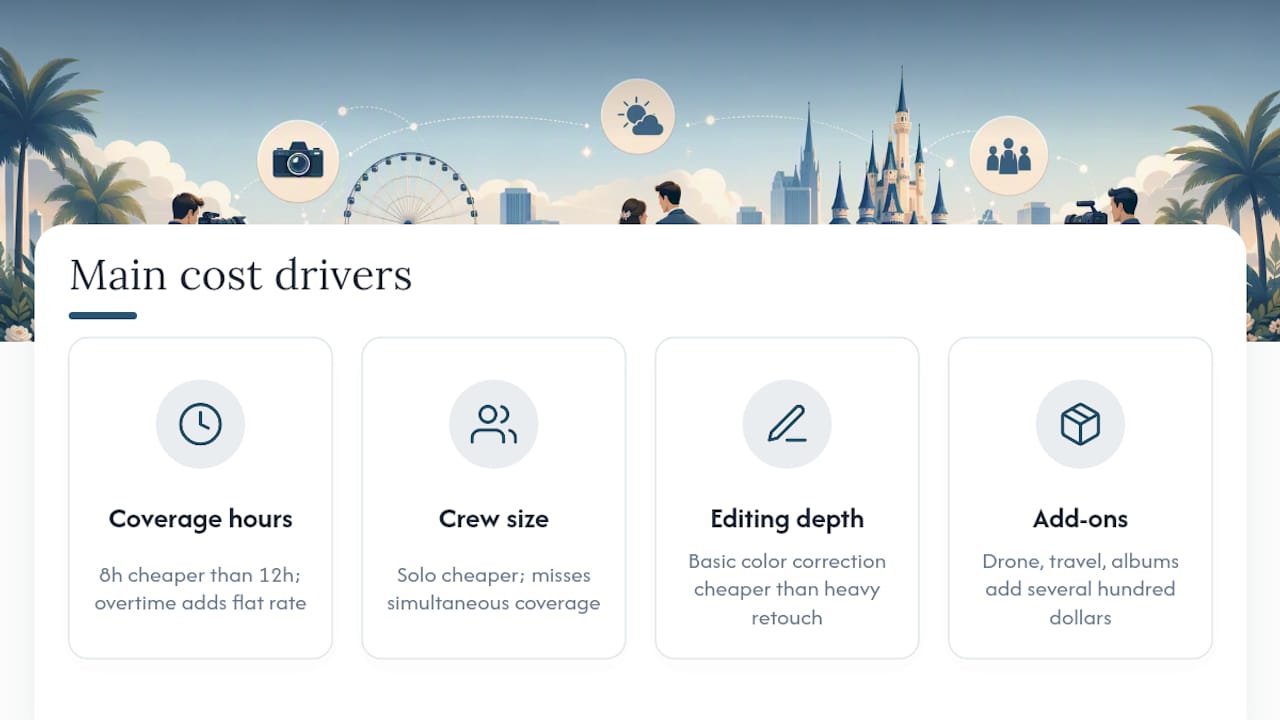
Crew size is the second major factor. A single photographer working alone costs less than a photographer-plus-second-shooter team, but that savings comes with tradeoffs: one person can’t cover the groom’s prep and the bride’s prep simultaneously, and can’t capture both a wide ceremony shot and close reactions at the same time.
Editing depth also affects price. Basic color correction and culling cost less than heavily retouched, artistically graded final galleries. Add-ons like drone footage, travel fees for destination properties, and physical products (albums, canvas prints) sit on top of the base package price and can add several hundred dollars each. As covered earlier, combined photo and video spending in Florida runs about 18% of total wedding costs, which gives you a useful anchor point when a quote seems unusually high or low relative to your total wedding budget.
What questions should you ask before signing with a photographer or videographer?
Beyond availability and pricing, ask how many weddings they shoot per weekend during peak season (fall and spring in Central Florida). A studio double-booking the same weekend needs a clear plan for which team lead covers your date.
Ask directly about their experience with your specific venue type, whether that’s a Disney-area property with drone restrictions, a downtown Orlando hotel ballroom, or an outdoor garden venue dependent on natural light. Ask what happens contractually if they’re unable to shoot due to illness or emergency, and get the backup plan in writing rather than a verbal assurance.
Confirm the payment schedule, typically a deposit at signing with the balance due 30 days out, and ask what the cancellation and rescheduling policy looks like if your date changes. Finally, ask how and when you’ll receive your final gallery and film, since turnaround times vary widely between 4 and 10 weeks depending on the season and how backed up the studio is.
What’s the typical timeline for hiring and working with a photography team?
Book your photographer and videographer 9 to 12 months out if you’re marrying during Orlando’s popular fall or spring windows, since the best studios fill their calendars early. Off-peak summer dates give you more flexibility, sometimes as little as 4 to 6 months of lead time.
After you sign the contract and pay your deposit, most studios schedule a planning call 60 to 90 days before the wedding to finalize your shot list, timeline, and any add-ons like drone footage or a photo booth. Final payment is typically due 30 days before the wedding, alongside a confirmed hour-by-hour schedule shared with the studio, your planner, and your other vendors.
After the wedding, expect a sneak peek gallery within a week or two, followed by the full edited collection in 4 to 10 weeks depending on season and studio workload. Video deliverables, especially full ceremony edits, often take a few weeks longer than photo galleries because of the added editing time.
A photographer’s take on the small choices that change your photos
The biggest lever couples underestimate isn’t the studio they hire. It’s the buffer time they build into the schedule. A rushed 15-minute portrait window during golden hour produces worse photos than an unrushed 30 minutes in flat afternoon light, every time.
Brief your bridal party ahead of time: give them a printed list of exactly which groupings you need (immediate family, extended family, wedding party) so the photographer isn’t hunting for Uncle Dave while the light disappears. For groom prep, keep the room simple and well lit near a window; overhead fluorescent lighting is the single hardest thing to fix in editing.
Always ask your photographer what their backup plan is for rain or venue lighting failures. A studio with a real contingency plan, not just a shrug, is the one you want on your actual wedding day.
— Kellie
How do you book Pixel Groves for your Orlando wedding?
Booking starts with a consultation where Pixel Groves walks through your venue, timeline, and priorities, whether that’s documentary-style candids or editorial portraits bathed in golden-hour light. Once you settle on a package, a signed contract and deposit lock in your date, followed by a planning check-in 60 to 90 days out to finalize the shot list and any add-ons.
[
Package highlights worth knowing before your consultation:
Full-day coverage options paired with engagement or proposal sessions
Second shooter availability for larger weddings or multi-location days
Documentary, editorial, light and airy, and candid style options tailored per couple
Photo booth rentals that bundle cleanly into an existing photography package
If you’ve read this far, you already know what separates a rushed, generic gallery from a wedding album you’ll actually want to display in twenty years: the right team, booked early, with a clear contract and a realistic timeline. Compare wedding photography styles against your venue and vision, then check pricing and packages to request a quote and confirm availability for your date.
Sources
Recommended
Comments