Why 10 Hours Often Beats 12: Full Day Wedding Photography for Couples
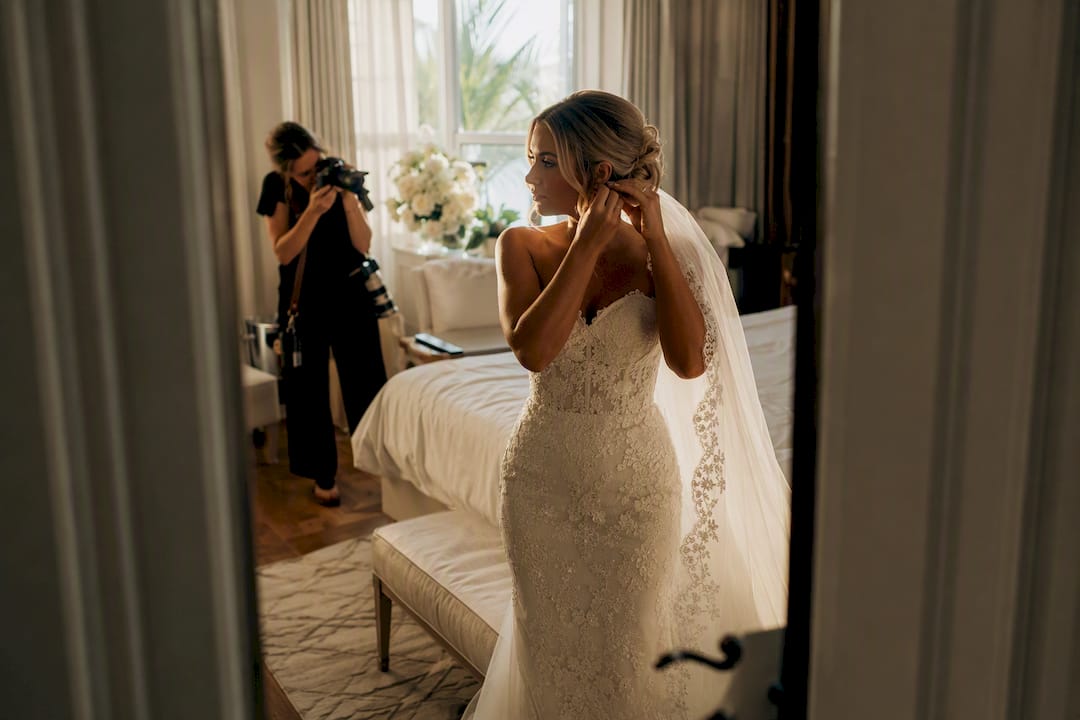
Full-day wedding photography typically means 8 to 12 hours of coverage, starting with getting-ready shots and running through the reception exit. Couples choose it when they want the complete story of the day rather than isolated highlights, and Pixel Groves, a Florida wedding photography team recognized with the 2026 Best of Florida Wedding Photographer Award, builds full-day packages around exactly that kind of continuous coverage.
TL;DR:
Full-day coverage usually ranges from 8 to 12 hours, with 8 hours being standard and 10 hours serving as a flexible middle ground.
Longer packages beyond 10 hours increase staffing needs, carry higher costs, and may include less valuable late-night shots, particularly if the timeline isn’t well planned.
Buffers of 20 to 40 minutes at each major transition are essential for staying on schedule, especially when travel time and delays are common.
Cost factors include photographer experience, demand, travel distance, deliverables, and whether a second shooter or album is included.
Couples planning multiple venues or wanting golden-hour portraits benefit most from full-day coverage, while shorter events may suffice with 8 hours.
Table of Contents
What Does a Full-Day Wedding Photography Package Include?
A full-day package should cover every phase of the wedding, not just the ceremony and a few posed portraits. When a photographer quotes “full day,” expect these blocks to be part of the deal:
Getting-ready coverage, including detail shots of the dress, rings, invitations, and shoes, a style of imagery couples increasingly plan for in advance, as seen in bohemian wedding inspiration features
Ceremony coverage plus family formals immediately after
Couple portraits, ideally scheduled around golden hour for the best light
Reception highlights: first dances, toasts, cake cutting, and the exit
Common add-ons layered onto full-day coverage include a second shooter, an engagement session bundled at a discount, a printed album, and rush turnaround for a handful of preview images. Ask your photographer which of these come standard versus which cost extra. Packages that look cheaper on paper sometimes strip out the second shooter or the album, and that changes what you’re actually comparing.
How many hours count as full-day coverage?
Photographers generally sell coverage in set blocks, and “full day” isn’t one fixed number. Here’s how the common tiers break down:
6 hours. Covers ceremony through the start of the reception. Tight, but workable for smaller or shorter weddings.
8 hours. The most common baseline for a traditional wedding: getting ready, ceremony, portraits, and several hours of reception.
10 hours. Adds meaningful buffer and captures nearly the entire reception, including most dancing.
12 hours. Covers everything from early prep through the reception exit. This is the true “full day” tier.
A 10-hour block often delivers most of what a 12-hour block does for a typical wedding, according to Tov Studio Photo’s sample timeline breakdown. The last portion of a 12-hour day tends to produce fewer uniquely valuable images, usually just more dance floor shots you already have variations of. Longer blocks also change staffing: past 10 hours, a second shooter stops being a nice-to-have and becomes close to mandatory for keeping image quality consistent late into the night.
Full-Day Coverage vs Shorter Packages: What You Gain and Give Up
Full-day coverage buys you narrative completeness. Nothing gets rushed, delays don’t blow up your shot list, and candid moments that only happen when a camera has been present for hours (a grandparent tearing up during speeches, a quiet joke between the couple mid-reception) actually get captured.
The trade-offs are real, though.
Higher total cost, sometimes significantly more than a 6 or 8-hour block
A larger vendor footprint on-site for longer, which some couples find intrusive during intimate moments
Photographer fatigue late in the day if the team isn’t staffed properly
Couples with multiple prep locations, ceremonies and receptions at different venues, or a strong attachment to golden-hour portraits get the most value from full-day coverage. Couples with a single venue, an early ceremony, and a shorter reception often do fine with 8 hours.
Pro Tip: If you’re on the fence between 8 and 10 hours, add the extra 2 hours to the back end of the day rather than the front. Reception candids and late-night dancing shots are harder to recreate than another round of getting-ready photos.
How to Build a Full-Day Wedding Timeline That Actually Works
Anchor everything to the ceremony time. Build backward for prep and forward for the reception. This is the single most reliable way to avoid a rushed schedule, per Tov Studio Photo’s timeline guidance.
Add 20 to 40 minute buffers at every major transition, hair and makeup running long, transit between venues, family formals taking longer than expected.
Confirm second-shooter hand-offs in advance. A second shooter usually covers alternate prep angles and holds coverage during the lead photographer’s meal break, so nothing goes uncovered simultaneously.
Schedule a real meal break for your photography team. A tired shooter at hour 10 produces noticeably weaker images than one who ate.
Ask your photographer directly: How many hours until you require a second shooter? What’s your buffer policy for delays? Do you build in a meal break, and does it count against my hours?
If your prep and ceremony locations are far apart, check transit time before you finalize the schedule. It’s a common way for otherwise well-planned timelines to run late.
What Drives the Price of a Full-Day Wedding Shoot?
Price on a full-day package isn’t just about hours. The biggest drivers are:
Photographer experience and demand in your market
Total hours booked and whether a second shooter is included
Travel distance to your venue
Deliverables: raw image count, edited gallery size, album inclusion, and turnaround time
Some photographers price by flat package tiers; others price hourly with add-ons stacked on top. Neither approach is inherently better, but hourly pricing makes it easier to see exactly what you’re paying for. When comparing quotes, look past the headline number and check who owns image rights, whether an album is included or an upsell, how fast you’ll get your gallery, and whether your images are backed up in more than one location. A detailed guide to coverage hours is worth reading before you sign anything, since the same hour count can mean very different deliverables depending on the studio.
A Sample Full-Day Wedding Photography Timeline
Here’s a compact 10-hour block you can adapt to your own ceremony time:
9:00 AM. Detail shots (dress, rings, invitations) and getting-ready coverage begins
10:30 AM. Groom prep and final touches, per this groom prep timeline guide
12:00 PM. First look or private vows, if planned
1:00 PM. Ceremony
1:45 PM. Family formals and wedding party portraits
3:00 PM. Cocktail hour candids
4:00 PM. Reception entrance, toasts, and dinner
6:30 PM. Golden-hour couple portraits
7:30 PM. First dances and open dancing
9:00 PM. Reception coverage ends
Shift the whole block earlier for a morning ceremony or later for an evening one. If you need to cut cost, trim from the getting-ready side first. Golden hour and the reception are where the gallery earns its keep.
Why Pixel Groves Builds Full-Day Coverage Around Buffers, Not Just Hours
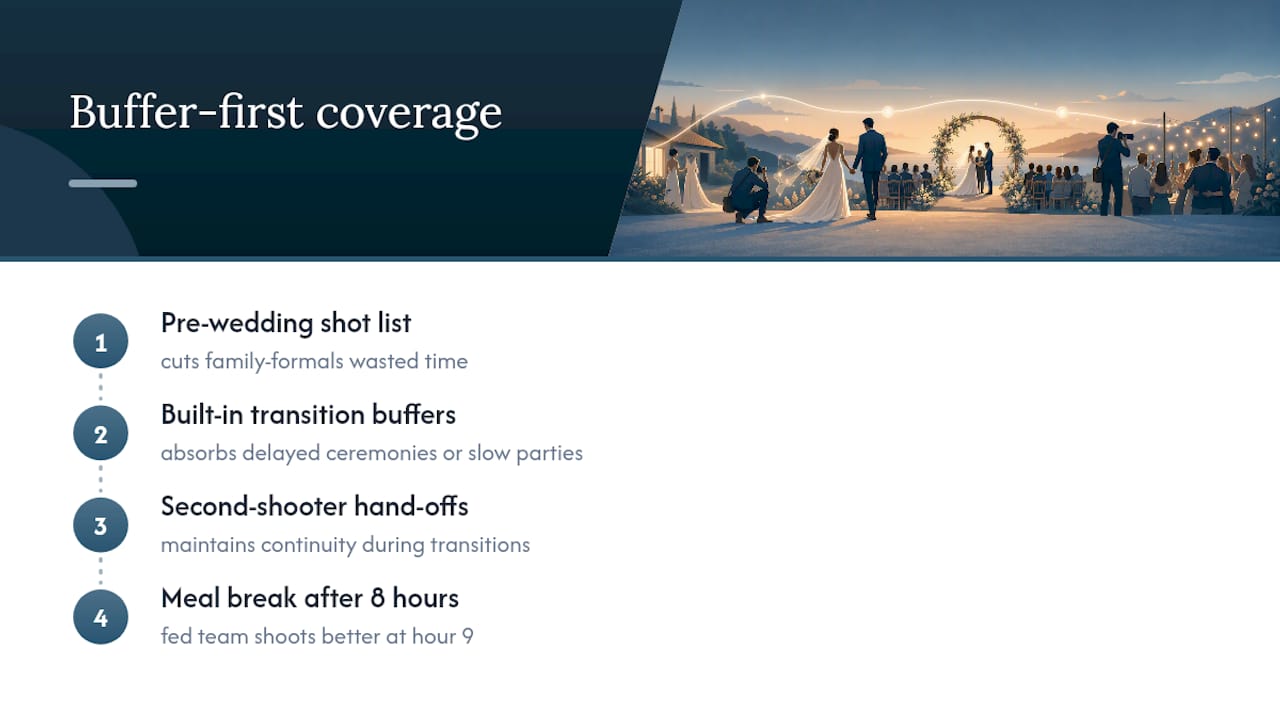
Winning the 2026 Best of Florida Wedding Photographer Award didn’t happen by treating every hour block the same. Pixel Groves structures full-day packages with built-in transition buffers and clear second-shooter hand-offs, so a delayed ceremony or a slow bridal party doesn’t cost you your golden-hour portraits.
Our process puts a meal break on the schedule for every shoot past 8 hours, because a fed team shoots better at hour 9 than a hungry one. We also walk couples through building a shot list before the wedding, which cuts down on wasted time during family formals, often the single biggest source of timeline slippage on a wedding day.
— Kellie
Ready to Lock In Your Full-Day Coverage?
Pixel Groves builds full-day packages around your actual timeline, not a generic hour count, so you get coverage planned around your ceremony time, your venue layout, and your reception flow instead of a one-size-fits-all block.
[
You can view full package details and inclusions on our wedding photography styles page, compare hour tiers and deliverables on our pricing page, and see how albums factor into value on our wedding albums page. If your getting-ready schedule includes hair and makeup, Bri Valiente Boudoir is a good reference point for how beauty prep timing typically works alongside photography coverage. Reach out through our contact form to check availability for your date and get a timeline built around your specific ceremony and reception details.
Sources
FAQ
What is a realistic budget for a wedding photographer?
Budgets vary widely by region, experience, and package inclusions, and full-day coverage with a second shooter and album typically costs more than a shorter, single-shooter package. Ask for an itemized quote so you know exactly what hours, deliverables, and add-ons are included.
Is $4,000 a lot for a wedding photographer?
Whether a price like this is high depends heavily on your market and what’s included; in many areas it falls within a normal range for full-day coverage with a second shooter and an album, while in others it’s on the premium end. Compare the hours, deliverables, and turnaround time across quotes rather than the price alone.
What is the 20 60 20 rule in photography?
This isn’t a standardized industry framework, and definitions vary depending on who you ask. If you’ve seen it referenced, it’s best to ask the specific photographer or source what they mean by it rather than assume a universal definition.
What is the 30-5 minute rule for weddings?
Like some informal rules, this isn’t a formally recognized wedding photography standard, and interpretations differ by source. Focus instead on proven planning practices, like building 20 to 40 minute buffers at transitions, which come directly from professional timeline guidance.
How many hours of wedding photography coverage do I actually need?
Most traditional weddings are well served by 8 to 10 hours, while weddings with multiple venues, longer receptions, or a strong focus on golden-hour portraits benefit from a full 12-hour block. A 10-hour block typically captures the vast majority of what a 12-hour day delivers, making it a strong middle-ground choice.
Recommended
Comments