Engagement vs. Wedding Shoot: Key Differences Explained
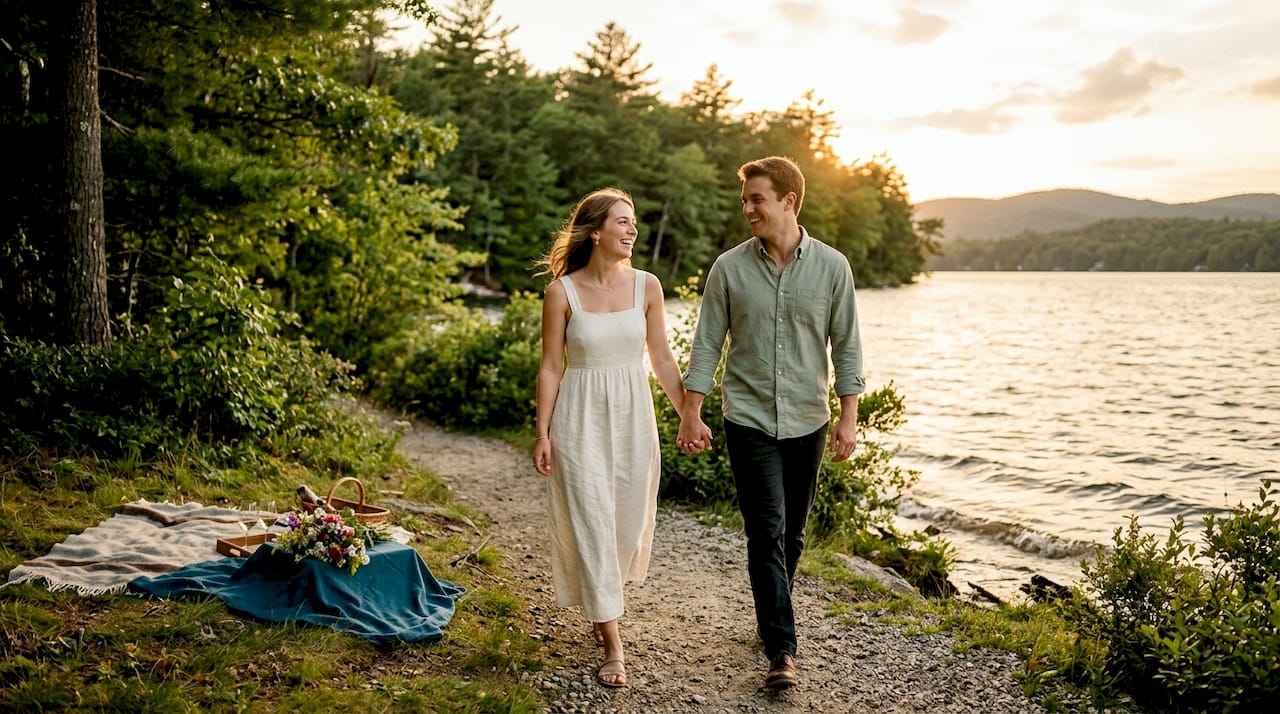
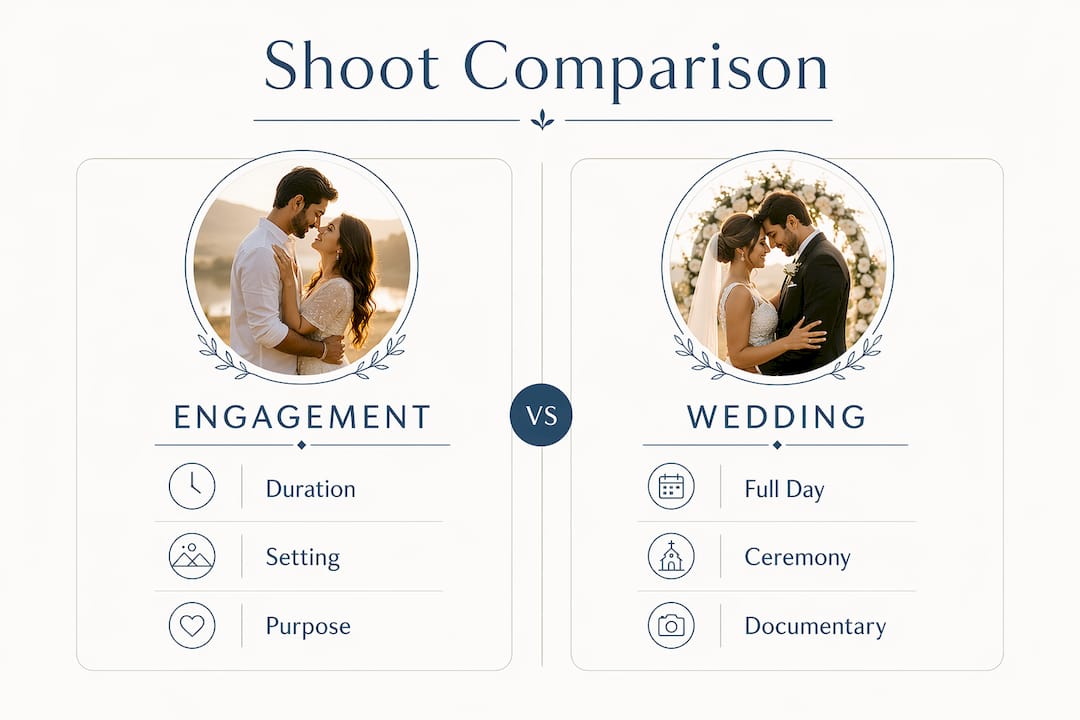
The difference between engagement and wedding shoot photography is defined by purpose, scope, and timing. An engagement shoot captures relaxed, creative portraits of you as a couple in a setting that feels personal and unhurried. A wedding shoot documents your entire wedding day, from the ceremony and portraits to the reception, with a structured timeline and a much broader emotional range. Understanding both sessions helps you plan smarter, spend wisely, and walk away with photos that tell a complete story.
What is the difference between engagement and wedding shoots?
An engagement shoot is a dedicated portrait session, typically lasting one to three hours, focused entirely on the two of you. There is no ceremony to document, no family formals to coordinate, and no reception timeline to chase. The goal is to produce images that feel authentic to your relationship, whether that means a sunset walk on the beach, a coffee shop you both love, or a field outside the city. These photos serve a practical purpose too: save-the-dates, wedding invitations, social media announcements, and even decor at your venue.
A wedding shoot, by contrast, is a full-day operation. Wedding photography covers the ceremony, couple portraits, bridal party formals, and reception, spanning anywhere from six to twelve hours depending on your package. The photographer must anticipate emotional peaks, manage shifting light conditions, and work within a fixed schedule. The two sessions share the same medium but almost nothing else in terms of logistics, pressure, or storytelling scope.
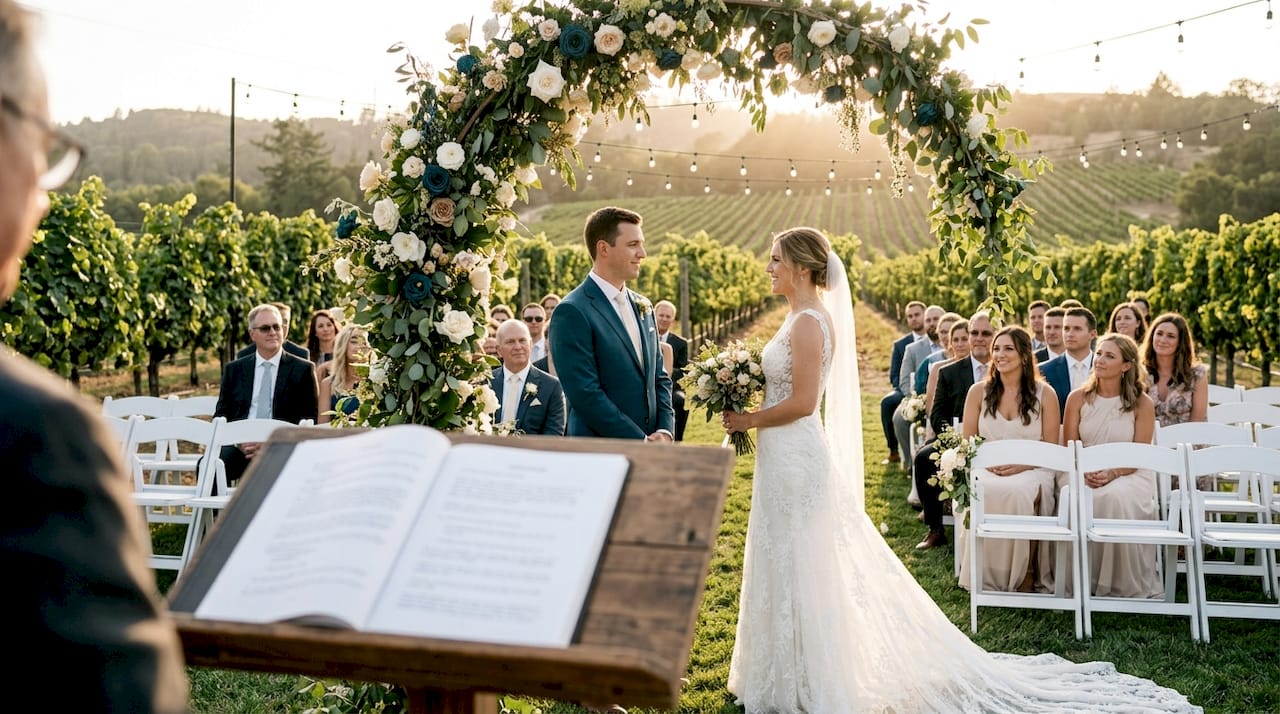
The core distinction matters for your planning. Engagement sessions give you creative freedom and a low-stakes environment to figure out what you like. Wedding sessions require precision, preparation, and a photographer who can read a room under pressure.
What is an engagement shoot and why does it matter?
An engagement shoot is the industry term for a pre-wedding portrait session, sometimes called an “e-session” by photographers. It exists to celebrate your relationship before the wedding day arrives, and the engagement session offers couples a low-pressure setting to experience being photographed together. That comfort pays off on your wedding day, when nerves are higher and time is shorter.
What to expect from the session
Most engagement sessions run between one and three hours. You choose one or two locations that feel meaningful, wear outfits that reflect your style, and let the photographer guide you through natural interactions rather than stiff poses. The result is a gallery of 50 to 100 images that capture how you actually look at each other, not how you perform for a camera.
The timing of your booking matters more than most couples realize. Scheduling your session 6 to 8 months before the wedding gives you enough lead time to use the photos in printed invitations, digital announcements, and venue signage. Booking too late means rushing the editing process or missing the window entirely.
Here are the key decisions to make when planning your engagement session:
Location: Choose somewhere meaningful to you both, whether that is a neighborhood park, a rooftop, or a destination spot you have always wanted to visit.
Outfits: Bring two looks if your session is long enough. Coordinate colors without matching exactly.
Time of day: Golden hour, the 60 minutes before sunset, produces the most flattering natural light for outdoor portraits.
Duration: One to two hours is standard. Add time if you want multiple locations or wardrobe changes.
Permits: Some parks, beaches, and public spaces require photography permits. Confirm this at least four weeks in advance.
Pro Tip: If you are planning a destination engagement shoot, factor in flights, accommodation, local transport, and permit fees when budgeting. Destination sessions require significantly more logistical planning than local ones, and travel fatigue can affect how you look and feel in photos.
What is a wedding shoot and what makes it different?
A wedding shoot is a full-day documentary and portrait event. Your photographer arrives before you get dressed and stays through the first dances, capturing every transition in between. Unlike an engagement session, there is no room for a relaxed do-over. The ceremony starts at a fixed time, the light changes whether you are ready or not, and emotional moments happen once.
The skill set required is also different. Successful wedding photographers combine emotional intelligence with the ability to anticipate moments before they happen, blending documentary journalism, portraiture, and event coverage into a single day’s work. A photographer who is excellent at studio portraits may struggle with the unpredictability of a wedding. That is why experience specifically in weddings matters.
Here is what a typical wedding photography timeline looks like:
Getting ready coverage: Candid shots of hair, makeup, and the first look at the dress or suit.
First look or pre-ceremony portraits: A private moment between you two, often used to calm nerves and capture genuine emotion.
Ceremony coverage: Full documentation of the processional, vows, rings, and recessional.
Family and bridal party formals: Structured group shots, typically 20 to 45 minutes depending on family size.
Couple portraits: Wedding shoots include 20 to 45 minutes of dedicated couple portraits at various points during the day.
Reception coverage: First dance, toasts, cake cutting, and candid guest moments.
“A calm, well-organized wedding photographer relies on a solid timeline to anticipate key moments and reduce stress for everyone involved.” — Icon Photography School
Pre-wedding preparation also separates good wedding photography from great wedding photography. Scouting venues in advance and creating detailed shot lists improves outcomes and reduces the chance of missing key moments. If your photographer has never visited your venue before the wedding day, that is a gap worth addressing. Your wedding day photography schedule should be built collaboratively with your photographer, not handed to them the morning of.
How do engagement and wedding shoots complement each other?
The two sessions are not competing investments. They are sequential chapters in the same story. Your engagement photos document who you are as a couple before the wedding. Your wedding photos document the day you became a family. Together, they create a narrative arc that neither session can produce alone.
The practical benefits of treating them as a pair are real. Using the same photographer for both sessions ensures consistent editing style, a shared visual language, and a working relationship built on trust before the highest-stakes day of your life. You will not spend the first hour of your wedding day getting comfortable with a stranger holding a camera.
Feature | Engagement shoot | Wedding shoot |
Duration | 1 to 3 hours | 6 to 12 hours |
Setting | Chosen by the couple | Venue-dependent |
Mood | Relaxed, creative, intimate | Structured, emotional, documentary |
Primary output | Save-the-dates, invitations, decor | Wedding album, prints, heirlooms |
Timeline pressure | Low | High |
Pro Tip: Ask your photographer about creative shoot ideas during your engagement session. Experimenting with angles and lighting before the wedding day helps both of you identify what works and what to avoid.
What are the planning and budgeting differences?
Engagement sessions are typically shorter and more affordable than full wedding day coverage. Pricing varies widely based on photographer experience, location, and session length, but engagement sessions generally cost less because they require fewer hours and no second shooter. Wedding photography packages reflect the full scope of the day, including editing time that often runs two to four times longer than the shoot itself.
Here is a breakdown of the key planning differences between the two sessions:
Booking timeline: Book your wedding photographer 12 to 18 months in advance for popular dates. Schedule the engagement session 6 to 8 months before the wedding.
Wardrobe: Engagement sessions allow for more personal, casual styling. Wedding attire is fixed, so beauty prep including hair and makeup trials matters more.
Second shooter: Wedding shoots often require a second photographer to cover simultaneous moments like the groom getting ready while the bride does the same. Engagement sessions rarely need one.
Permits and travel: Local engagement sessions are straightforward. Destination sessions add costs for flights, accommodation, permits, and local transport.
Buffer time: Build at least 30 minutes of buffer into your wedding day timeline for every two hours of coverage. Delays are not exceptions. They are the rule.
Understanding why photography prices vary helps you evaluate packages without defaulting to the lowest bid. A photographer who charges more often delivers faster turnaround, higher-resolution files, and a more experienced eye under pressure. When you are choosing a photographer for your budget, prioritize portfolio consistency and wedding-specific experience over price alone.
Key takeaways
Engagement and wedding shoots serve different purposes, require different planning, and produce different results. Treating them as a coordinated pair gives you the strongest possible visual record of your relationship and your wedding day.
Point | Details |
Purpose differs fundamentally | Engagement shoots capture your relationship; wedding shoots document your entire wedding day. |
Book engagement sessions early | Schedule 6 to 8 months before the wedding to use photos in invitations and save-the-dates. |
Same photographer benefits both | Consistent style and built rapport make your wedding day photography stronger. |
Wedding timelines require buffers | Build 30-minute buffers into every two hours of wedding coverage to absorb delays. |
Destination shoots need extra planning | Factor in permits, travel fatigue, and local logistics when budgeting a destination engagement session. |
Why I think most couples underestimate the engagement session
Most couples treat the engagement shoot as optional. I think that is a mistake, and not just because of the photos. The real value of an engagement session is what it does to your working relationship with your photographer before the wedding day arrives.
I have seen couples arrive at their wedding morning visibly tense around the camera. They have never been photographed together in a relaxed setting, and it shows in the first hour of coverage. Couples who did an engagement session first move differently. They know how to stand, they trust the process, and they stop performing for the lens. That shift produces better photos across the entire wedding day.
The other thing I would push back on is the idea that formal and candid moments are opposites. The best wedding photography blends both. Your shot list should include the must-have formals, but leave room for the photographer to work without direction. The moments that end up in frames on your wall are almost never the ones you planned. They are the ones your photographer anticipated because they knew you well enough to be in the right place at the right time. That knowledge comes from the engagement session, not from a questionnaire.
— Kellie
Capture both chapters of your story with Pixelgroves
[
Pixelgroves specializes in telling the full story of your relationship, from your engagement session to the last dance at your reception. As the 2025 Best of Florida Wedding Photographer Award winner, the Pixelgroves team brings both technical skill and genuine storytelling instinct to every shoot. Whether you are planning a relaxed local engagement session or a full-day wedding coverage package, Pixelgroves builds a personalized plan around your timeline, style, and vision. Explore wedding photography styles to find the approach that fits your day, or review pricing and packages to understand exactly what is included. Contact Pixelgroves to start planning both sessions together.
FAQ
What is the main difference between an engagement and wedding shoot?
An engagement shoot is a relaxed, couple-focused portrait session held before the wedding, while a wedding shoot documents the full ceremony, portraits, and reception on the wedding day itself. The two sessions differ in duration, scope, and emotional intensity.
Do I need both an engagement session and wedding photography?
You do not need both, but combining them produces a more complete visual story and helps you build comfort with your photographer before the wedding day. Many couples find the engagement session improves the quality of their wedding photos as a result.
When should I book my engagement session?
Book your engagement session 6 to 8 months before your wedding date. This gives you enough time to use the photos in printed invitations and save-the-dates without rushing the editing process.
Should I use the same photographer for both sessions?
Using the same photographer for your engagement and wedding sessions ensures consistent editing style and a stronger working relationship. Many couples choose the same photographer for both to match style and workflow across both shoots.
How long does a wedding shoot typically last?
Wedding photography coverage typically spans 6 to 12 hours depending on your package, and includes 20 to 45 minutes of dedicated couple portraits at various points throughout the day.
Recommended
Comments