The Role of Post-Production in Wedding Video
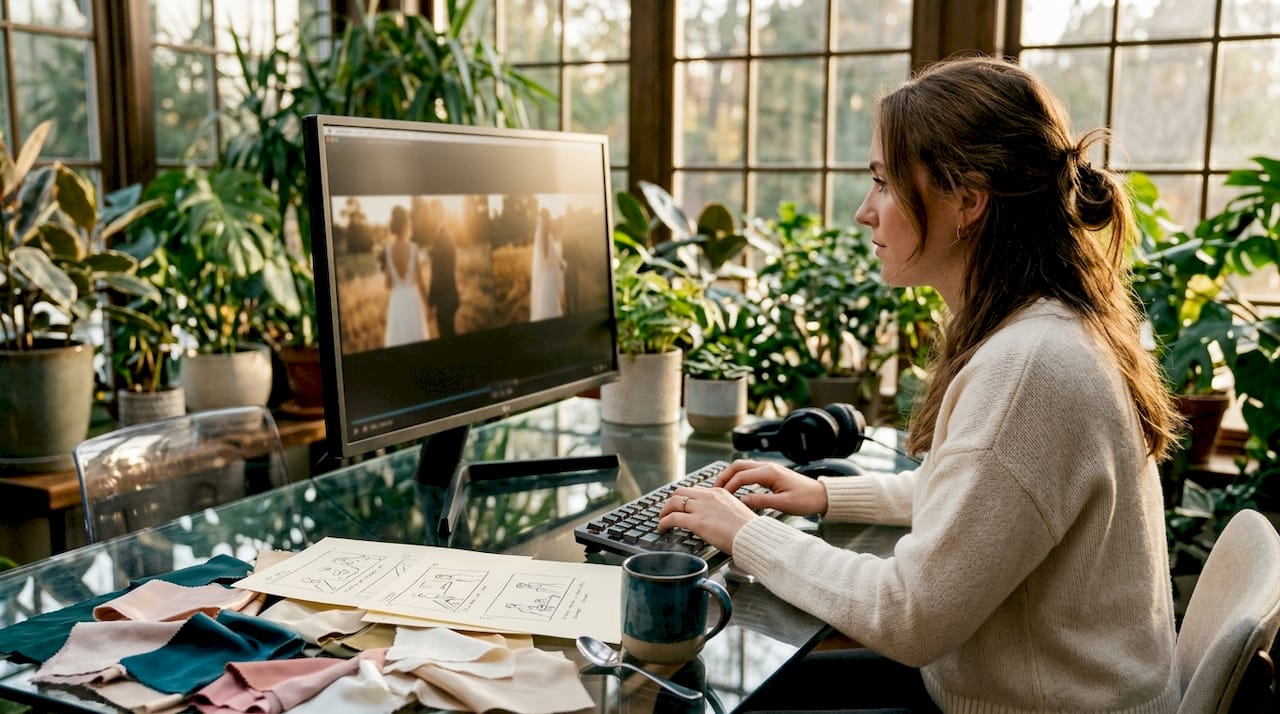
Post-production in wedding video is the editing phase where raw footage becomes a finished cinematic story. This is not the final step in a long process. It is where the film is actually made. The role of post-production in wedding video covers everything from organizing hundreds of gigabytes of footage to color grading, audio mixing, and shaping the emotional narrative couples will watch for decades. Without this phase, even the most beautifully filmed wedding day is just unedited clips on a hard drive.
What are the key steps in the wedding video post-production process?
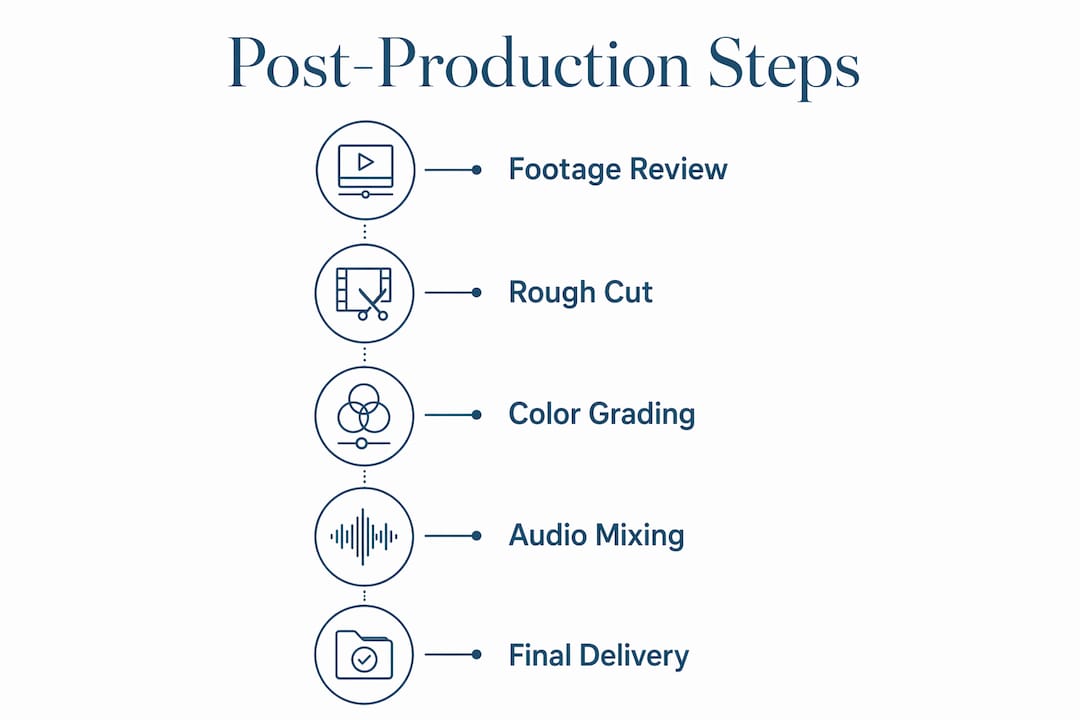
The wedding video editing process follows a structured sequence. Each phase builds on the last, and skipping any one of them shows in the final film.
Footage ingest and organization. A dual-shooter wedding produces 500GB–1TB of footage, which must be backed up, labeled, and sorted before a single edit begins. This takes 1–2 days and protects against data loss.
Rough cut assembly. The editor builds the first version of the film by selecting the strongest moments from multiple camera angles. This stage takes 2–3 weeks and establishes the narrative spine of the video.
Color grading. This phase typically takes 3–5 days and adjusts the visual tone of every shot. Warm, romantic tones are the most common choice for wedding films because they reinforce the emotional mood of the day.
Audio mixing. The editor cleans dialogue, balances music, and layers ambient sound. Vows must be clear and present. Reception speeches need to cut through background noise. This takes 2–3 days and shapes how emotionally immersive the film feels.
Final export and delivery. The finished film is rendered and delivered in the agreed format, typically as a high-resolution digital file. This takes 1–2 days.
The full post-production timeline runs 8–12 weeks from the wedding date. Videographers often manage 15–20 weddings simultaneously in post-production during peak season. That context explains why delivery takes months, not days.
Pro Tip: Ask your videographer for a rough cut preview around the 4–6 week mark. Seeing an early version helps you give useful feedback before the final grade and mix are locked.
How does post-production shape the emotional story of your wedding film?
Post-production is where storytelling decisions get made. The shoot collects raw material. Editing shapes what that material means.

Editing controls narrative through shot selection, timing, and music placement. These are not mechanical choices. They determine whether the film feels joyful, tender, or bittersweet. A skilled editor reads the emotional arc of your day and builds the film around it.
Music is structural to the edit, not decorative. Music choice affects rhythm, energy, and emotional arc throughout the film. A slow, piano-driven track under the ceremony creates a completely different experience than an orchestral swell. Editors source music from licensed libraries or original compositions, and the selection happens early because it drives the pacing of every cut.
Color grading communicates mood at a subconscious level. Warm, romantic color grading increases emotional impact by 34% and rewatching engagement by 63%. That is a significant effect from a technical process most couples never see happening.
Sound design goes beyond just making dialogue audible. Audio quality accounts for roughly 50% of the audience’s emotional experience in wedding films. Layering ambient audio, like the sound of a church bell or guests laughing during cocktail hour, creates the feeling of being present in the moment.
Specific editing techniques that shape emotional impact include:
Match cuts that connect two visually similar shots across different moments, creating a sense of continuity
Slow motion used on key moments like the first look or the first dance to let viewers absorb the emotion
Montage sequences that compress time while preserving the feeling of a full day
Natural sound breaks where music drops out to let a laugh or a whispered vow breathe on its own
Post-production is where the wedding film is truly made. The shoot gathers raw material, but editing shapes the story and the emotional impact couples carry with them for the rest of their lives.
Rushing this phase produces a film that feels choppy and flat. The moments are there, but the meaning is not.
Pro Tip: When you share music preferences with your editor, give them 3–5 songs that make you emotional rather than songs you simply like. Editors build better films from emotional reference points than from genre labels.
Why do professional standards in post-production matter?
The importance of video post-production shows up most clearly in budget allocation. Post-production represents 30–50% of the total production budget. That share reflects the skill, time, and software required to do the work properly.
Professional editors use software like DaVinci Resolve for color grading because it offers frame-level control over tone, contrast, and skin color accuracy. Consistent color grading prevents the amateur mistake of shifting skin tones between shots or letting lighting inconsistencies break the visual flow. Every shot in a professional film looks like it belongs to the same story.
Proxy file workflows allow editors to work smoothly with 4K and higher resolution footage without performance slowdowns. This matters because it frees the editor to focus on creative decisions rather than waiting for renders. The final export still uses the full-resolution files, so quality is never sacrificed.
Poor audio is the top reason viewers stop watching a video, regardless of how good the footage looks. Professional audio post-production balances dialogue, removes noise, and builds an immersive sound environment. An amateur edit with muddy audio will lose viewers during the vows, the most important moment in the film.
Quality level | Color grading | Audio mixing | Delivery time |
Entry-level editing | Basic exposure adjustments | Minimal noise reduction | 2–4 weeks |
Professional post-production | Full grade with DaVinci Resolve | Dialogue cleaning, music balance, ambient layering | 8–12 weeks |
Pro Tip: When reviewing videography packages, ask specifically what software is used for color grading and whether audio mixing is included. These two details reveal the quality level of the post-production workflow faster than any demo reel.
How can couples work effectively with their videographer during post-production?
The wedding film post-production phase goes better when couples come in with clear expectations and realistic timelines. Most couples underestimate how much communication shapes the final product.
Start by sharing your style preferences before the wedding, not after. If you love cinematic storytelling through interview footage, say so early. If you want a documentary feel over a highlight reel, your editor needs that direction before the rough cut is built.
Here is what effective collaboration looks like in practice:
Share a style reference. Send 2–3 wedding films you love. Editors read visual references faster than written descriptions.
Understand the revision process. Most professional packages include one or two rounds of revisions. Use them thoughtfully, not impulsively.
Respect the timeline. The 8–12 week delivery standard exists because quality post-production cannot be rushed. Pressing for faster delivery usually means cutting corners on color or audio.
Trust the pacing decisions. Editors make cuts that feel counterintuitive in isolation but work within the full film. Give feedback on the overall emotional experience, not individual shot choices.
Prepare for the emotional experience. Watching the first cut of your wedding film is intense. Give yourself time and space to watch it without distractions.
Understanding the wedding videography process for couples also helps you ask better questions when choosing a videographer. Couples who understand what post-production involves make better hiring decisions and have better experiences.
AI tools now assist editors with mechanical tasks like syncing multi-camera footage and noise reduction. They do not replace the creative decisions that define a film’s quality. The emotional intelligence of a skilled editor is still the most important factor in the final product.
Key Takeaways
Post-production is where the wedding film is actually made, and its quality depends entirely on the skill, time, and tools invested in the editing, grading, and mixing process.
Point | Details |
Post-production defines the film | Editing, color grading, and audio mixing shape the story more than the shoot itself. |
Timelines are long for good reason | The 8–12 week delivery standard reflects the volume of footage and depth of work required. |
Audio quality drives engagement | Poor audio is the top reason viewers stop watching, making sound mixing as critical as visuals. |
Color grading sets emotional tone | Warm, consistent grading increases emotional impact and rewatching engagement significantly. |
Collaboration improves outcomes | Sharing style references and revision feedback early leads to a more personal final film. |
What I’ve learned about post-production that most couples never hear
Most couples focus almost entirely on the wedding day itself. They spend months choosing flowers, venues, and menus. Then they hand over the footage and wait, without fully understanding that the most important creative work is just beginning.
I have seen the difference between a film that was shot beautifully and edited carelessly, and one where the footage was imperfect but the editing was exceptional. The second film wins every time. The edit is where the emotion lives. A perfectly timed cut to a parent’s face during the vows, a music swell that hits exactly as the couple walks back down the aisle, a moment of ambient silence before the first dance. None of that happens in the camera. It happens in the edit suite.
The misconception I hear most often is that post-production is just “cleaning up” the footage. It is not. It is the act of deciding what your wedding day means and how that meaning gets communicated to everyone who watches the film. That is a creative responsibility, not a technical one.
My honest advice: when you are choosing a videographer, ask to see their full films, not just highlight reels. A highlight reel can hide weak storytelling behind great music and fast cuts. A full film shows you whether the editor understands pacing, emotional arc, and how to hold a viewer’s attention for 20 minutes. That skill is what you are actually paying for.
The wait during post-production is not a delay. It is the craft period. Embrace it.
— Kellie
How Pixelgroves delivers wedding films worth watching for a lifetime
Pixelgroves brings the same award-winning attention to post-production that it brings to every moment captured on your wedding day. Every film goes through a full editing, color grading, and audio mixing workflow built to deliver a cinematic result that reflects your specific story.
[
The Pixelgroves team, recognized with the 2025 Best of Florida Wedding Photographer Award, treats post-production as the creative heart of every project. Editors work closely with each couple to match the film’s tone, pacing, and music to the emotions of the day. You can explore wedding photography and video styles to find the approach that fits your vision, or review pricing and packages to find the right level of service for your wedding.
FAQ
What is video post-production in wedding filmmaking?
Video post-production is the editing phase after filming, covering footage organization, rough cut assembly, color grading, audio mixing, and final export. It is the phase where raw footage becomes a finished, emotionally resonant wedding film.
How long does wedding video post-production take?
The industry standard is 8–12 weeks from the wedding date. That timeline reflects the volume of footage, the number of weddings editors manage simultaneously, and the depth of work required for a quality result.
Why does color grading matter for my wedding video?
Color grading sets the emotional tone of the film and creates visual consistency across all shots. Warm, romantic grading increases emotional impact and keeps all footage looking like part of one cohesive story rather than a collection of clips.
How much of the wedding video budget goes to post-production?
Post-production represents 30–50% of the total production budget. That share covers the editor’s time, software licensing, and the detailed work of grading and mixing a full wedding film.
Can I give feedback on my wedding film during post-production?
Most professional packages include one or two revision rounds after the first cut is delivered. Sharing style references and wedding videography style preferences before editing begins produces better results than waiting to react to a finished cut.
Recommended
Comments