How to Prepare for Your Engagement Session: A Checklist
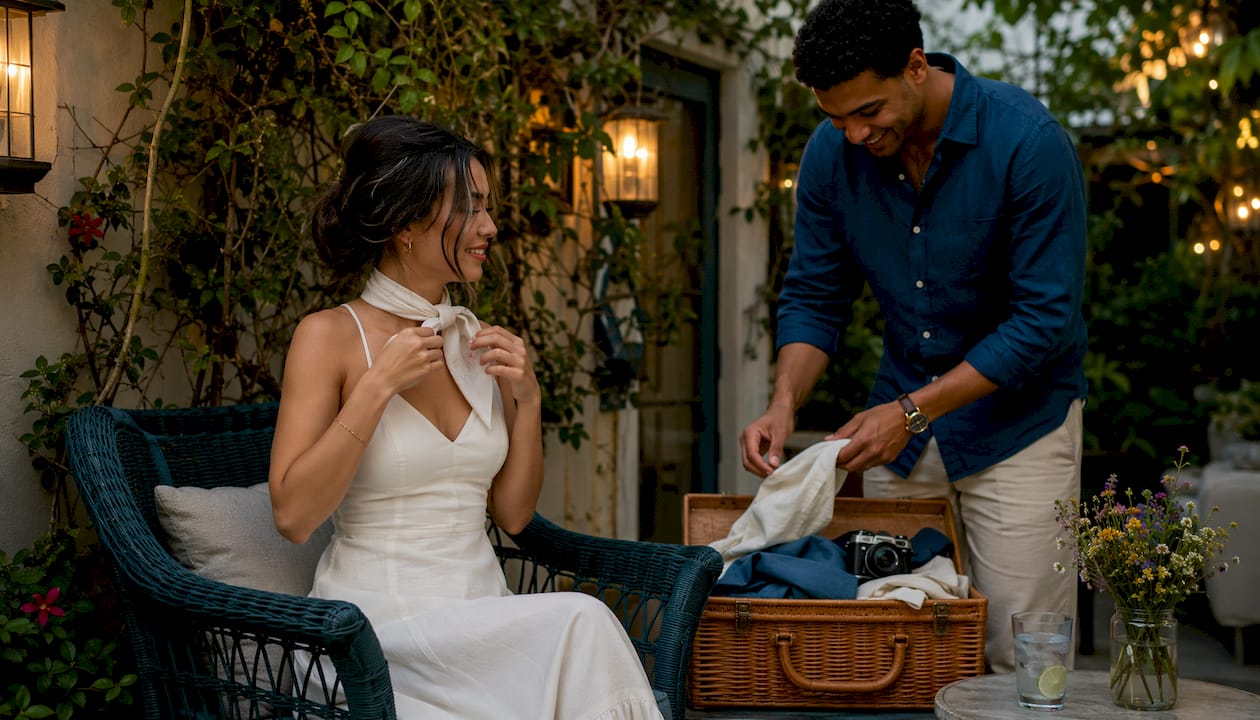
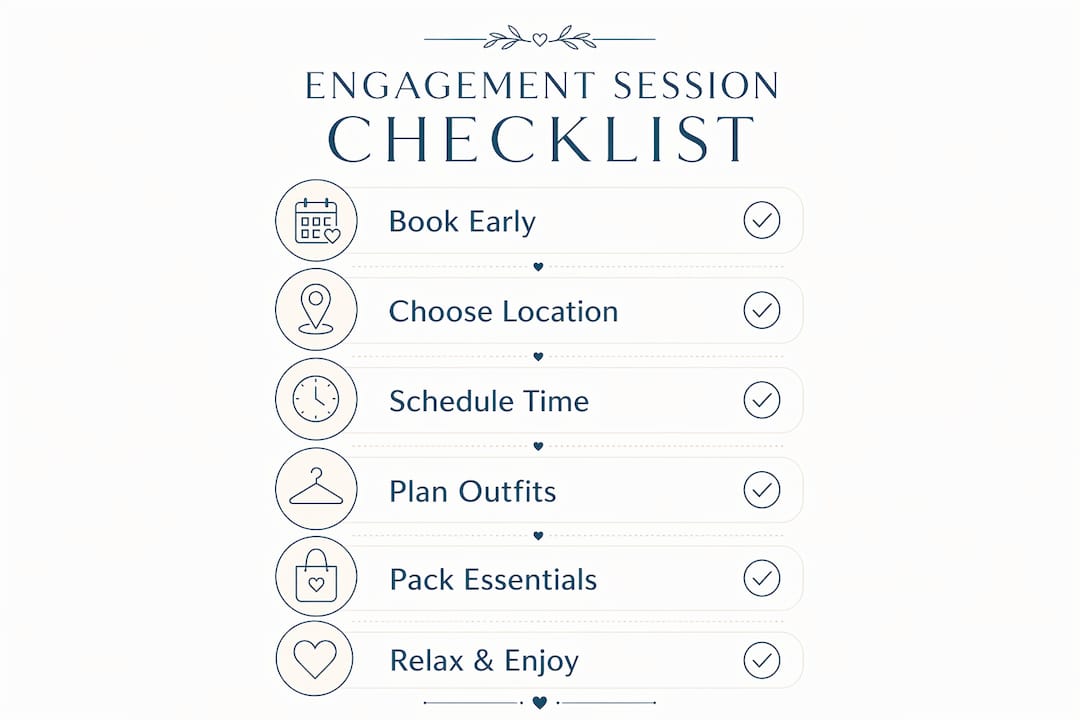
To prepare for your engagement session, confirm your photographer and date, choose one or two outfits, pick a location with golden-hour timing, and pack a small session bag. That covers the essentials. Everything else is detail.
Quick checklist:
Book your photographer (3–9 months before the wedding if you need save-the-date images; 2–3 months otherwise)
Lock in your location and a backup
Plan a small number of outfits and test them for movement at home
Pack water, snacks, a touch-up kit, and comfortable shoes
Share a shot list or moodboard with your photographer well in advance
Arrive early on the day of your session
Most sessions run 1–3 hours. Plan for 60–90 minutes of active shooting. The sections below go deeper on each item: location and timing first, then outfits, what to pack, how the session flows, and what to expect from your photographer.
Table of Contents
How do you pick the right location and time?
Location sets the mood for every image. The best approach is to start with meaning, then filter for logistics. Ask yourselves: where did you get engaged, where you go on weekends, or what kind of scenery actually reflects your relationship? A rooftop in the city, a trail you hike together, or a beach you visit every summer will produce more authentic photos than a generic “pretty park” you found on Instagram.
Once you have two or three candidates, narrow them down with this framework:
Light direction: Coordinate with your photographer on which way the location faces. West-facing spots work for sunset golden hour; east-facing ones suit sunrise sessions.
Crowd levels: Popular parks and waterfronts fill up on weekends. Weekday shoots reduce foot traffic and give you better light windows with fewer strangers in the background.
Permits and permissions: Many state parks, botanical gardens, and beach access points require a photography permit. Check with the venue or park authority at least two weeks before your session. Your photographer may already have a permit or know the process.
Parking and access: Scout the walk from the parking area to your spot. A 10-minute hike in heels is a problem you want to solve before the shoot, not during it.
Photographer familiarity: Ask whether your photographer has shot at that location before. Someone who knows where the light falls at 6:45 PM will position you better than someone scouting it for the first time.
If you want two locations, keep them within a 15-minute drive of each other. Anything farther and you lose 20–30 minutes of shooting time to transit.
When should you schedule the session?
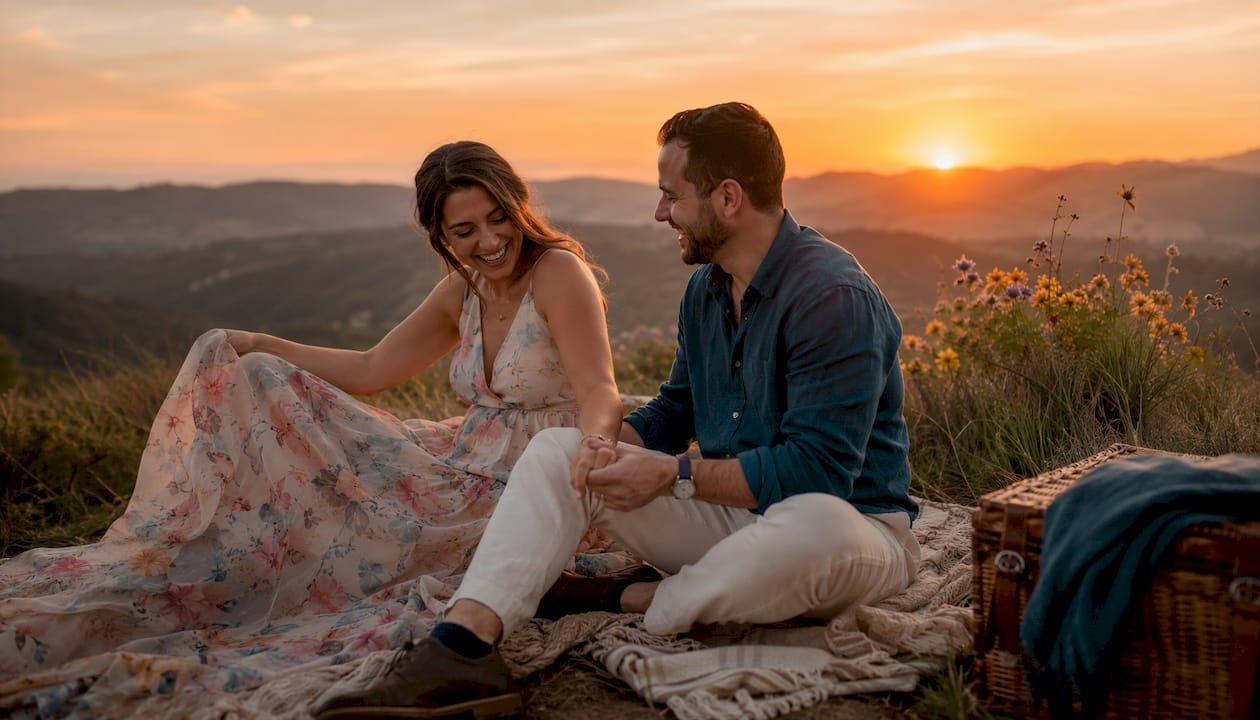
Golden hour runs roughly 45–60 minutes before sunset and gives you warm, directional light that flatters skin tones and creates depth. It is the most requested window for a reason. Overcast days are a legitimate backup: clouds act as a natural diffuser, eliminating harsh shadows and giving you even, soft light across the frame. Avoid midday sun between 11 AM and 3 PM unless your photographer has a specific plan for shade.
For timing relative to your wedding: book 3–9 months out if you want to use the images for mailed save-the-dates. If the session is purely for memories or a website, 2–3 months ahead is plenty.
Pro Tip: Book a weekday session at a popular location and you may find the spot entirely to yourselves. Saturday golden hour at a well-known beach can mean navigating around other photographers and their clients.
What should you wear to your engagement session?
Outfits are the single thing couples stress about most and overthink the hardest. The goal is simple: look like yourselves on a good day, not like you raided a department store window display.
The core rules:
Start with neutral base colors (cream, navy, sage, warm gray, dusty rose) and add one or two accent colors through accessories or a second outfit.
Coordinate, do not match exactly. Identical outfits read as costumes. Complementary tones read as intentional.
Plan for one to two looks in a 60–90 minute session. A third outfit change eats into shooting time and often produces rushed photos.
Avoid busy small-scale prints, loud neon, and large logos. These distort in photos and pull the eye away from your faces.
Choose shoes you can actually walk in. Stilettos on a gravel path will limit where you can stand and how relaxed you look.
Seasonal adjustments:
Summer: Lightweight fabrics like linen or chiffon photograph well and breathe. Avoid anything that wrinkles badly when you sit.
Fall: Layers work beautifully. A jacket or cardigan gives the photographer something to work with and adds visual interest.
Winter: Coats, scarves, and textured knits add warmth and dimension. Plan for a quick warm-up spot nearby.
Spring: Florals can work if the scale is large enough. Small, busy floral prints are the same problem as any other busy print.
The most important step: test your outfits at home before the shoot. Sit down, walk across the room, lift your arms. If you are constantly tugging at the hem or adjusting a strap, that discomfort will show in every photo. What feels fine standing in front of a mirror often behaves differently when you are walking, leaning, or laughing.
What should you pack in your session bag?
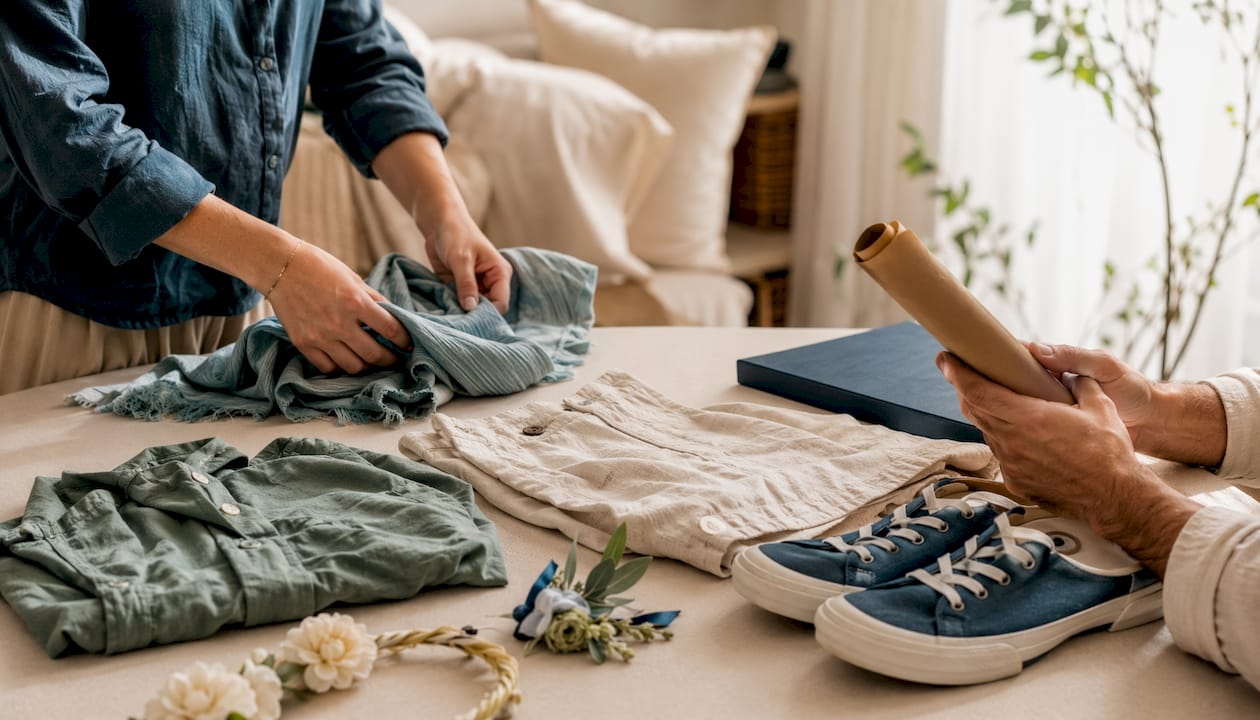
Think of the session bag as a small emergency kit. You will not need most of it, but the one time you do, you will be glad it is there.
Must-haves:
Water (for both of you, not just one bottle)
Non-messy snacks (granola bars, nuts, fruit — nothing that stains)
Small makeup touch-up kit: powder, lip color, concealer, blotting papers
Hairbrush or travel comb
Deodorant
Breath mints
Safety pins (for a gap in a button-down or a strap that slips)
Stain wipes or a Tide pen
Comfortable walking shoes for moving between spots, even if you shoot in heels
Optional but worth considering:
A meaningful prop: a book you both love, a blanket from your first apartment, a bottle of wine with two glasses
A spare outfit piece (a second blouse or a jacket that changes the look without a full change)
Pet supplies if your dog is joining the session: leash, treats, waste bags, a towel if there is water nearby
Keep the bag with whoever is not being photographed at a given moment, or ask your photographer if there is a spot to stash it nearby. A bag sitting in the frame is a distraction. For beach sessions, a beach session checklist covers additional items specific to sand and water environments.
What does a typical engagement session look like?
Knowing the flow ahead of time takes a lot of the pressure off. Here is what a standard 90-minute session looks like:
Arrival (15–20 minutes before start time): Park, walk to the spot, settle in. Your photographer uses this time to assess the light and finalize positioning.
Warm-up poses (first 15–20 minutes): Simple, low-pressure prompts. Walking together, standing close, a slow turn. This is the awkward phase — everyone goes through it.
First candid set (20–30 minutes): Once you have found your rhythm, the photographer shifts to more natural, movement-based prompts. This is where the best images usually come from.
Outfit change (10 minutes): Quick swap, touch up hair and makeup, back into position.
Second look and golden-hour sequence (final 20–30 minutes): The light is at its best. Your photographer will move quickly and direct you through a series of positions to capture the warmth before it fades.
For a 60-minute session, skip the outfit change or keep it to a single accessory swap. The structure stays the same; the pacing is tighter.
Share a shot list of 10–15 images or a Pinterest moodboard with your photographer at least one week before the shoot. This is not a rigid script; it is a reference point that helps your photographer understand your style and make sure nothing important gets missed. After the session, editing and gallery delivery timelines vary by photographer, but two to four weeks is a common turnaround for a standard session.
Pro Tip: The first 20 minutes are almost always a little stiff. Plan for it. The candid moments that make it into your favorites almost always happen after you have stopped thinking about the camera.
How do you look natural in front of the camera?
Most couples have never been photographed for an hour straight. Posing feels unnatural because it is. The fix is movement, not stillness.
Prompts that actually work:
Walk toward each other slowly, then stop when you are close enough to whisper something
Tell your partner one specific memory from your relationship — not a general “I love you,” but a real moment
Slow dance with no music (your photographer will direct the pace)
Touch foreheads and close your eyes for a few seconds
One partner picks up or dips the other (only if that feels natural to you)
Small adjustments that change everything:
Tilt your chin slightly down and forward rather than lifting it up. Lifting creates tension in the neck.
Shift your weight to one hip instead of standing square to the camera.
Keep your hands active: hold each other’s hand, rest a hand on a shoulder, or interlock fingers.
On expressions: laugh at something real, not on command. If your photographer asks you to laugh and nothing comes naturally, try whispering something ridiculous to your partner instead. Forced smiles read as forced. For more creative photo prompts that spark genuine interaction, a good shot list goes a long way.
How should you prep your hair, skin, and grooming?
A simple timeline prevents the most common day-of surprises.
One week out:
Avoid trying any new skincare products or treatments for the first time. Reactions take days to resolve.
Schedule a haircut 1–2 weeks before the session, not the day before. Hair needs a few days to settle after a cut.
If you are considering a professional skin treatment before the session, book it at least three weeks out to allow time for any redness or peeling to clear.
48–72 hours before:
Eyebrow waxing or threading is fine at this point. Any redness will fade within 24 hours.
Avoid aggressive exfoliants or chemical peels. Flaky or irritated skin is harder to retouch.
Hydrate consistently. Skin that is well-hydrated photographs more evenly.
Day of:
Wash your hair the night before, not the morning of. Day-old hair holds styles better and has less flyaway frizz.
Eat a real meal before the session. Low blood sugar makes people irritable and tired, and it shows.
Bring your touch-up kit (see the session bag section above).
For men: Shave or trim two days before the session, not the morning of. Fresh shaving can leave redness or small irritation that shows on camera. If you wear a beard, trim it to your preferred length 2–3 days out and use a light beard oil the morning of the shoot.
Is $500 a lot for engagement photos?
Session fees typically run between $200 and $800 depending on the photographer’s experience, your market, and what is included. In major metro areas like New York, Los Angeles, or Miami, $500 sits comfortably in the mid-range. In smaller markets, it may be toward the higher end.
What matters more than the number is what you get for it. Before you book, ask:
How many final edited images are delivered?
What is the turnaround time for the gallery?
Are travel fees included, or charged separately?
What is the rescheduling and cancellation policy?
Are the images licensed for personal use, print, and social media?
Does the session fee apply toward a wedding package if you book both?
A photographer charging $400 who delivers 20 heavily edited images with a two-week turnaround may offer more value than one charging $300 who delivers 10 images in six weeks. Price is one data point. Deliverables, communication, and style match are the others. For a detailed look at what Pixelgroves includes in its packages, the pricing page breaks it down clearly.
What happens if the weather turns bad?
Weather is the one variable you cannot control, so build a plan for it before the session day.
When to shoot anyway:
Overcast skies are genuinely good for portraits. Soft, diffused light is flattering and consistent.
Light rain can produce beautiful, moody images if you have an umbrella and your photographer is game.
Cold temperatures are manageable with the right layers and a warm spot nearby for breaks.
When to reschedule:
Thunderstorms or lightning: reschedule, no exceptions.
High winds that make hair and clothing unmanageable and affect audio or equipment.
Extreme heat advisories that would make outdoor shooting uncomfortable or unsafe.
Building your backup plan:
Identify an indoor alternative at the time of booking: a coffee shop, a covered market, a hotel lobby, or a museum.
Rank your location options by weather resilience. A covered park pavilion beats an open beach in a rainstorm.
Confirm your backup plan with your photographer 24–48 hours before the session if weather looks uncertain.
Check your photographer’s rescheduling policy before you sign the contract. Most require 24–48 hours notice to avoid a cancellation fee.
For terrain-specific sessions (trails, beaches, fields), bring footwear that handles mud or wet ground. Ruined shoes are a minor problem; slipping on a wet trail mid-shoot is a bigger one.
What do experienced photographers wish couples knew?
A few things come up repeatedly from photographers who have shot hundreds of sessions.
Top tips:
Treat the session like a date, not a performance. Photographers consistently note that couples who approach the shoot as a mini-adventure produce more genuine, relaxed images than those who are focused on “getting it right.”
Arrive early. Fifteen to twenty minutes gives you time to park, walk to the spot, and decompress before the camera is on you.
Keep outfit changes simple. One full change is plenty. Two is ambitious. Three is almost always too many for a 90-minute session.
Eat before you arrive. Hunger makes people short-tempered and unfocused.
Common mistakes to avoid:
Wearing shoes you cannot walk in at an outdoor location
Skipping the at-home outfit test and discovering a wardrobe problem on the day
Over-directing your own expressions (“smile more,” “look happier”) instead of letting the photographer prompt you
Bringing too many people. Guests and family members watching the shoot add pressure and distract from the connection between the two of you.
If something goes wrong on the day:
Wardrobe issue: safety pins, stain wipes, and a spare piece in the session bag handle most problems.
Running late: text your photographer immediately. A 10-minute delay is manageable; a 30-minute delay without notice is not.
One of you is not feeling it: tell your photographer. A good one will shift to a lower-pressure prompt sequence and give you time to settle in.
Pro Tip: Skip the mirror check between every shot. Trust your photographer to tell you when something is off. Constantly checking your phone for previews breaks the flow and pulls you out of the moment.
What does Pixelgroves do before, during, and after your session?
Understanding what your photographer handles takes a significant amount of planning off your plate.
Before the session
Client consultation: Pixelgroves schedules a pre-session call to discuss your style preferences, location ideas, and any specific shots you want. This is the time to share your moodboard or shot list.
Location scouting: For unfamiliar locations, the team scouts light direction, access points, and permit requirements in advance.
Shot-list alignment: Your photographer reviews your 10–15 image list and flags anything that needs special timing or positioning.
During the session
Warm-up prompts to ease the first 20 minutes of camera-shyness
Continuous light and composition adjustments as you move through the location
Candid prompting: giving you something to do or say rather than asking you to hold a pose
Outfit-change coordination and quick repositioning to maximize the golden-hour window
Crowd and permit navigation if the location requires it
After the session
Professional editing with attention to light, color, and skin tone consistency
Gallery delivery with personal-use licensing for save-the-dates, wedding websites, and social media
Images sized and formatted for both print and digital use
Pixelgroves holds the 2025 Best of Florida Wedding Photographer award and brings that same storytelling approach to engagement sessions. The difference between an engagement session and wedding-day coverage is worth understanding before you book. A breakdown of how engagement sessions differ from full wedding coverage helps set the right expectations for both.
What Pixelgroves needs from you:
Confirmed location and backup at least one week out
Shot list or moodboard shared before the session
Arrival 15–20 minutes early
One point of contact for day-of logistics
What you can expect in return:
A pre-session consultation and location plan
Active direction throughout the shoot so you are never just standing there
A delivered gallery within the agreed turnaround window
Images that reflect your actual relationship, not a stock-photo version of it
Key Takeaways
Preparing well for your engagement session comes down to five things: book early, pick a golden-hour location, pack a session bag, test your outfits at home, and share a shot list with your photographer at least one week before the shoot.
Point | Details |
Book at the right time | Book 3–9 months before the wedding for save-the-date images; 2–3 months works for standalone sessions. |
Golden hour is worth it | Schedule 45–60 minutes before sunset for the most flattering natural light. |
Test outfits before the day | Sit, walk, and reach in your full outfit at home to catch any mobility or fit issues early. |
Pack a session bag | Bring water, snacks, a touch-up kit, safety pins, and comfortable walking shoes. |
Pixelgroves handles the rest | From pre-session consultation and location scouting to gallery delivery, Pixelgroves manages the photographer’s side of the process. |
The first 20 minutes are always the hardest
Every couple I photograph goes through the same thing in the first 20 minutes: stiff smiles, slightly awkward hands, a general sense of “I don’t know what to do with my face.” It is completely normal, and it passes faster than you think.
What I have found works better than any posing trick is giving couples something real to do. Whisper a memory. Walk somewhere together. Argue (gently) about where to stand. The moment you stop thinking about the camera and start thinking about each other, the photos change. That shift usually happens around the 20-minute mark, sometimes sooner, occasionally a little later.
The couples who come in relaxed and treat the session like an afternoon out together almost always end up with their favorite photos. Not because they posed perfectly, but because they forgot to perform. Nerves are part of the process. They do not ruin photos. Trying too hard to suppress them does.
Ready to book your engagement session with Pixelgroves?
Pixelgroves offers engagement sessions built around your story, not a template. From the first consultation through gallery delivery, every step is handled with the same care that earned the 2025 Best of Florida Wedding Photographer award.
[
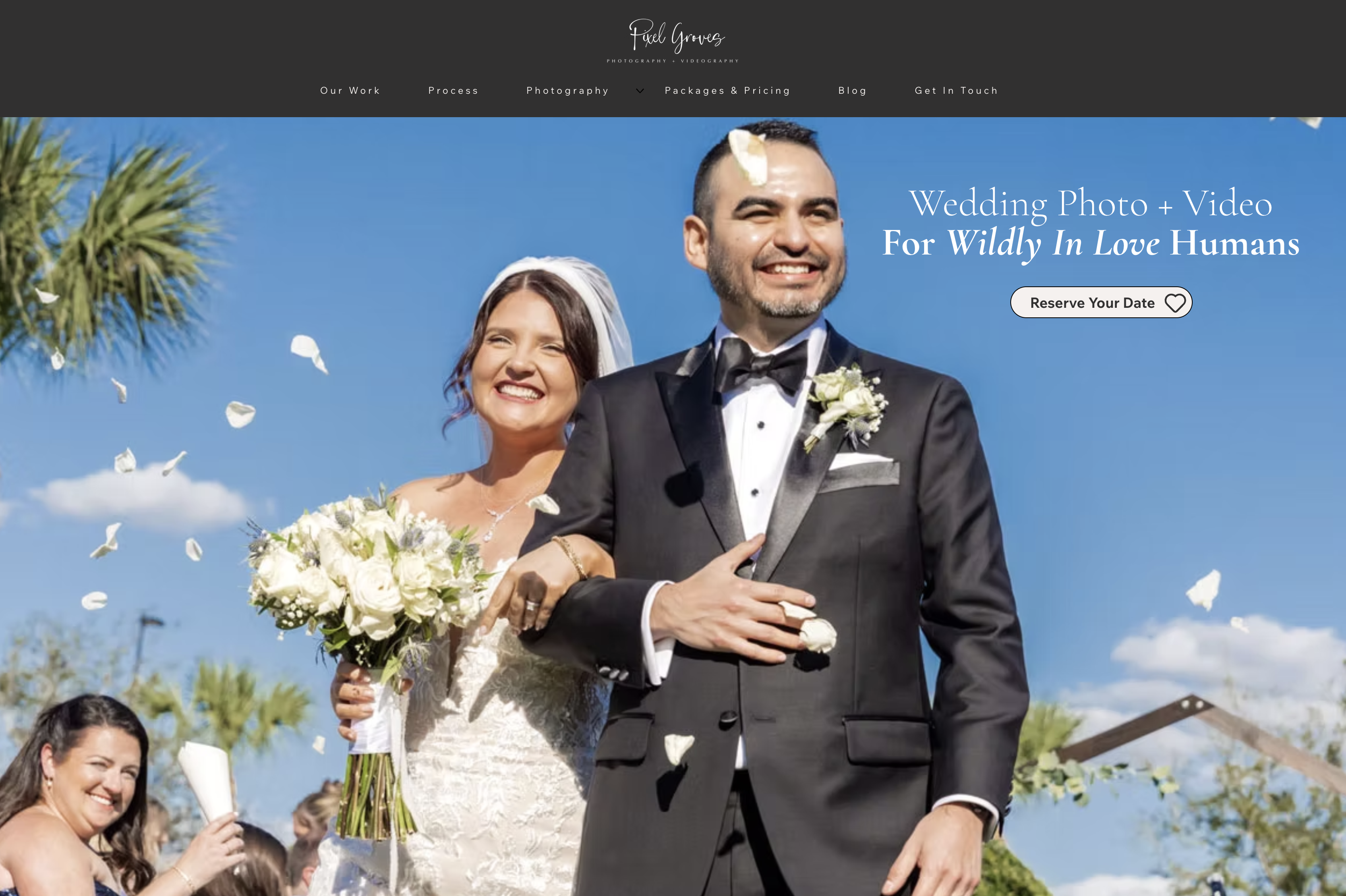
Sessions include a pre-shoot consultation, location planning, active direction throughout the shoot, and a fully edited gallery delivered with personal-use licensing. Whether you are planning a golden-hour beach session in Florida or something more intimate and urban, Pixelgroves adapts the approach to fit your relationship. Travel and permitting logistics are handled as part of the process, so you show up and focus on each other.
Browse photography styles and packages to find the right fit, or reach out directly to check availability for your preferred date.
Useful sources and further reading
These are the resources used to build this guide. Each one goes deeper on a specific part of the prep process.
Kelly Tareski Photography: Complete Engagement Photo Planning Guide — Detailed planning guide covering session bag essentials, arrival timing, and location logistics.
Paperlust: Engagement Photoshoot Guide — Covers poses, outfits, locations, pricing ranges, and golden-hour timing in one thorough resource.
Light and Love Photo: Engagement Shoot Prep Guide — Practical prep advice from a working photographer’s perspective.
Hanna Walkowaik: Tips for Your Engagement Session — Concise, photographer-tested tips on what to expect and how to feel comfortable.
Eva Waltz Photography: Photoshoot Checklist — A thorough checklist format covering everything from skincare to what to bring on the day.
Pixelgroves: Creative Engagement Photo Ideas — Inspiration for poses, props, and locations that reflect your specific story.
Pixelgroves: How to Feel Comfortable in Wedding Photos — Practical advice on managing nerves and building confidence in front of the camera.
Recommended
Comments