Get 400–800 Wedding Photos: Contract Phrases Couples Should Use
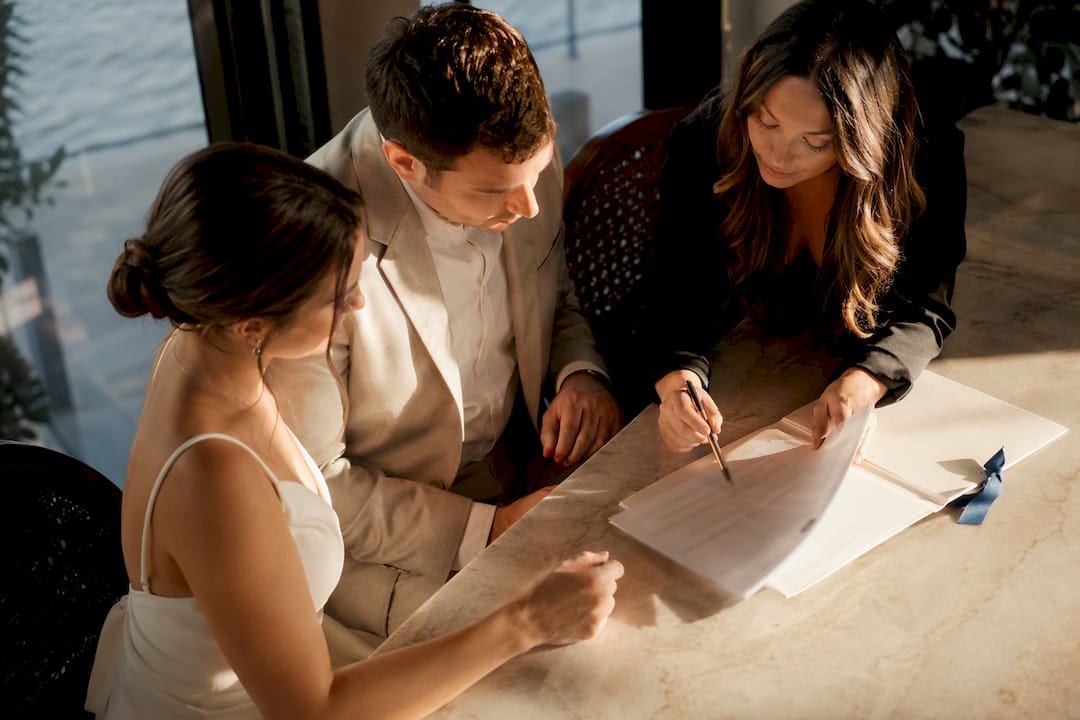
For a typical full-day wedding, plan on roughly 400–800 finished images. The simplest way to estimate your own gallery is the 50–100 edited photos per hour rule, adjusted up for a second shooter or a documentary shooting style, and down for tightly curated fine-art coverage. Coverage length, guest count, and how many people are behind cameras all move that number.
TL;DR:
Full-day weddings typically result in 400 to 800 edited photos, depending on coverage length, shooting style, and team size.
Adding a second shooter can increase the final count to between 700 and 1,200 images, especially for longer or multi-event coverage.
Photographers often shoot thousands of raw frames but only deliver a curated, edited selection based on judgment and culling philosophy.
Clarifying deliverable ranges, team composition, and scope upfront helps align expectations and avoid surprises after the wedding.
Photographic quality and storytelling matter more than raw photo counts; reviewing full galleries provides a better understanding of what you’ll receive.
Table of Contents
How Many Wedding Photos Do You Get by Coverage Length?
The per-hour rule works, but it gets more useful once you map it to actual coverage blocks. Here’s what couples typically see delivered, based on hours booked and team size:
Elopement or micro-wedding (2–4 hours): around 100–300 edited images. Small guest lists and fewer scheduled moments mean less to capture.
Short celebration (4–6 hours): a moderate number of edited images typical for backyard weddings or courthouse-to-reception days.
Full day (6–8 hours): about 400–800 edited images, the range most full-service photographers land in and the one most couples should budget around.
Long day or multi-event coverage (8–10+ hours): 700–1,200 or more edited images, especially when a second shooter is working the room alongside the lead.
One exception worth flagging: a fine-art or heavily curated photographer might deliver only 200–400 images from a full day, and that’s not a red flag. Some studios intentionally shoot less and edit harder, treating the gallery more like a magazine spread than a documentary archive. Ask which philosophy your photographer follows before you assume a smaller number means less coverage.
What Factors Change Your Final Photo Count?
Coverage hours set the baseline. Everything else is a lever that pushes your count up or down from there.
Shooting style: Documentary-leaning photographers tend to shoot continuously and deliver more images than photographers who work slower, more composed setups.
Second shooter: Adding a shooter roughly doubles the vantage points during ceremony and reception, which usually raises the delivered count noticeably. Two-person teams often land in the 700–1,200 image range even on a standard full day.
Guest count and event density: More guests generally means more candid moments, more table shots at the reception, and a bigger group-photo list.
Timeline and logistics: A day with multiple locations, a first look, and a tight schedule pushes the shutter more often than a single-venue day with a relaxed pace.
Culling philosophy: Some photographers hand-select ruthlessly and only deliver true keepers. Others include more variety so you have options.
Extras: Photo booths, guest-photo apps, and add-on sessions like a next-day shoot or rehearsal dinner coverage all pad the final total separately from your ceremony and reception gallery.
Pro Tip: Ask your photographer directly whether they shoot to “cover everything” or “curate tightly.” Neither answer is wrong, but it changes what number you should expect, and it tells you a lot about how they’ll edit your day.
Why Isn’t Every Photo Taken Delivered?
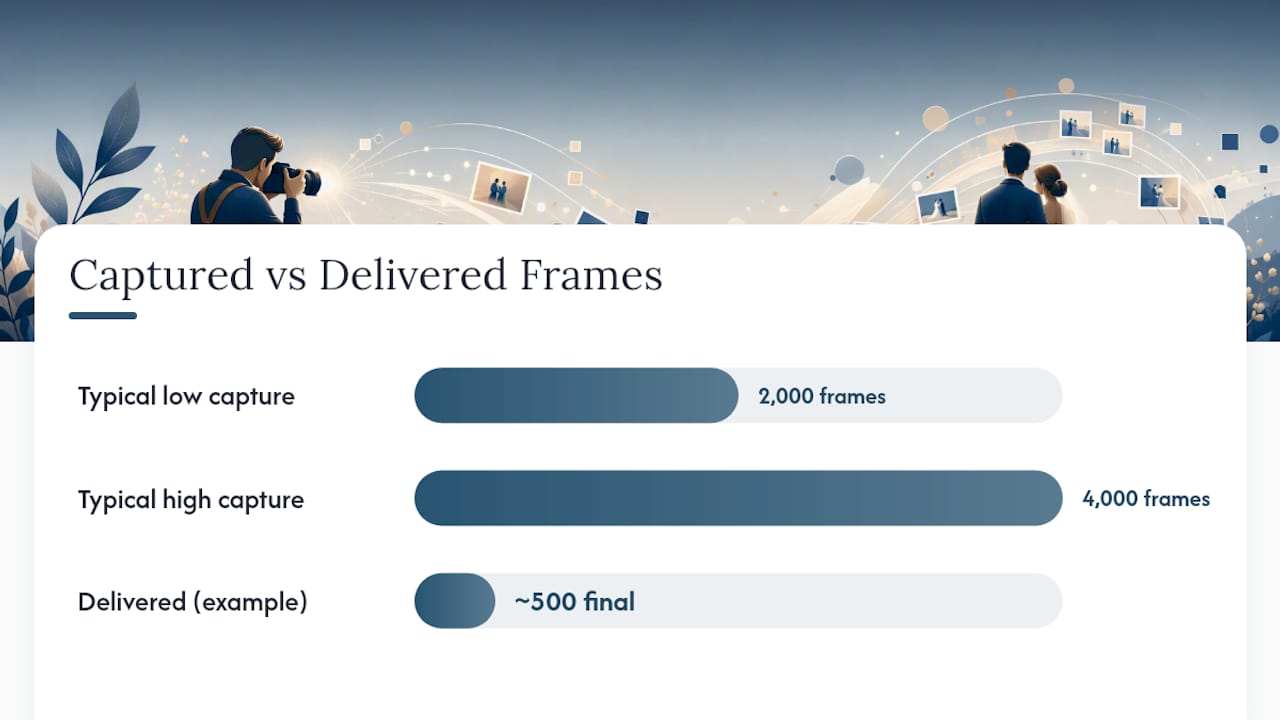
Photographers don’t hand over every frame they shoot, and there’s a good reason for that. On a full wedding day, a professional might capture 2,000 to 4,000 raw frames, a number that includes duplicates, test shots, blinks, and images where someone’s expression just didn’t land. Culling is the process of cutting that pile down to the ones worth editing.
What survives culling then goes through actual editing:
Color correction to keep skin tones and whites consistent across the whole gallery
Exposure and contrast adjustments, especially for mixed lighting between an outdoor ceremony and a dim reception hall
Cropping and straightening for composition
Spot retouching for stray hairs, blemishes, or background distractions
A bigger raw capture count doesn’t guarantee a better gallery. A photographer who shoots 4,000 frames and delivers a tightly edited 500 has done the same essential job as one who shoots 2,500 and delivers 500. What separates them is judgment during that culling stage, not shutter speed.
What Should You Ask Your Photographer Before Signing?
Get these answers in writing before you book, not after the wedding when there’s nothing left to negotiate.
Ask for an estimated delivery range tied to your hours. A photographer should be able to say something like “400 to 600 images for your 7-hour package” and put it in the contract.
Find out if there’s a hard cap. Some studios deliver until they run out of usable images; others cut off at a set number regardless of what else was captured.
Confirm the team. Solo coverage and a two-shooter team produce meaningfully different counts, so know exactly who’s showing up.
Request a full sample gallery, not just portfolio highlights, from a wedding similar in length to yours. Highlight reels show skill; full galleries show consistency.
Clarify deliverables: file formats, resolution, download rights, how many images are allowed in your printed album, and turnaround time for the final gallery.
Negotiate add-ons up front: extra hours, rush editing, or a bigger album allowance are far easier to price before the contract is signed than after.
Bringing your own priorities helps here too. A shot list built ahead of time gives your photographer a clear sense of what matters most to you, so the final gallery reflects your priorities and not just a generic checklist.
Pro Tip: If your photographer hesitates to give you a number in writing, that’s worth asking about directly. A studio confident in its process usually has no problem stating a range.
Sample Gallery Sizes by Coverage and Team Size
How Pixel Groves Sets Photo Count Expectations
A studio that won’t talk numbers before your wedding is asking you to trust a blank check. Some studios state an expected delivery range in the contract before booking, tied directly to coverage hours and whether a second shooter is included. Couples can also review full sample galleries from real weddings of similar length rather than a curated highlight reel, which gives a much more honest picture of what your own gallery will look like. Coverage hours, team size, and your preferred style (documentary, editorial, light and airy, or candid) all factor into that estimate before you sign anything.
Is the Number of Photos the Wrong Thing to Focus On?
Couples fixate on the number because it’s the easiest thing to compare across quotes, but it’s a weak proxy for what actually matters. I’d rather see 500 images that tell the full arc of the day, from nervous hands during vows to the last dance, than 900 that repeat the same moment from three angles. Use the ranges here to sanity-check a quote, then spend your real energy reviewing full galleries and locking your priorities into a shot list.
— Kellie
Ready to Book Photography That Delivers What You Expect?
You now know the ranges, the variables, and the questions to ask. Some studios build that clarity into every package from the start: coverage hours, team size, and shooting style (documentary, editorial, light and airy, or candid) are all outlined before you sign, and you can review full sample galleries instead of guessing from highlight reels alone.
[
Browse wedding photography styles to see which approach fits your day, then check pricing and packages to compare coverage hours against expected delivery counts. If you’re also planning a printed keepsake, a partner guide on album page counts is worth a look before you decide how many images to reserve for that album. When you’re ready, request a sample full gallery and a written delivery range for your date.
Sources
Recommended
Comments