Florida Beach Wedding Photo Tips for Stunning Results
Updated: 1 day ago
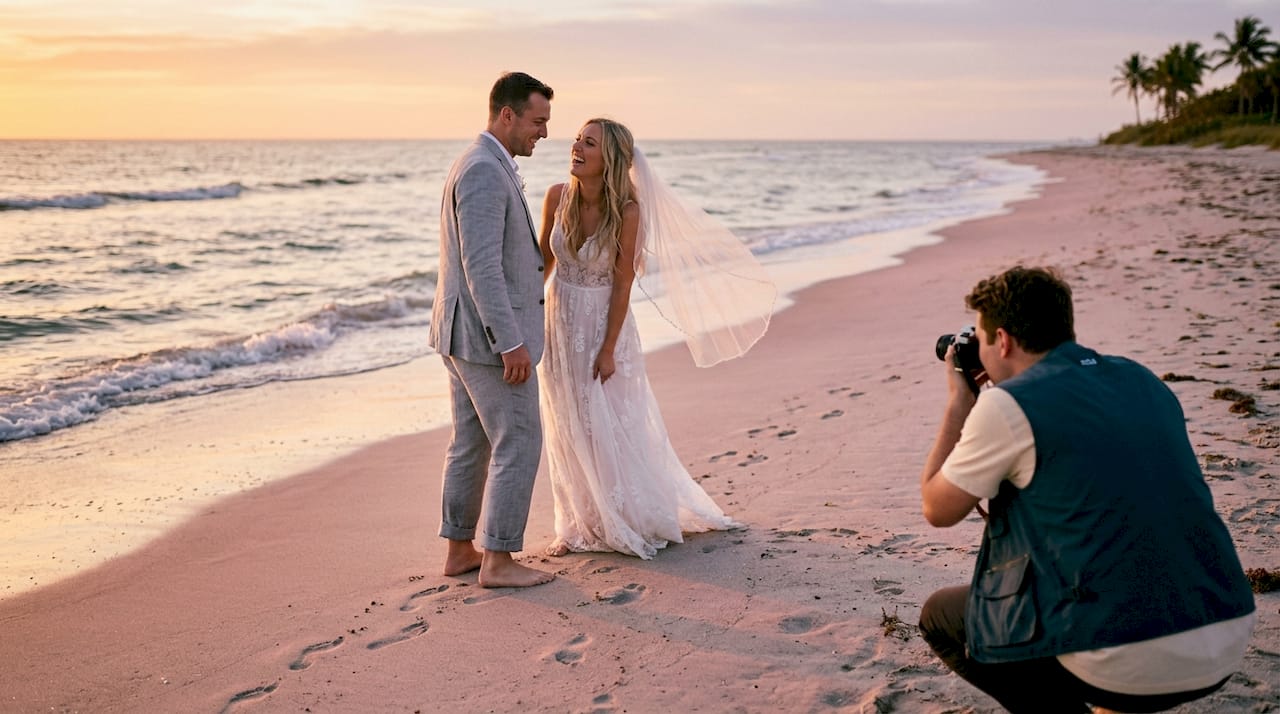
Florida beach wedding photography is defined as the practice of capturing coastal ceremonies under conditions that demand specific technical preparation, legal compliance, and timing precision. The combination of reflective sand, salt air, unpredictable weather, and strict municipal permit requirements makes Florida one of the most demanding but rewarding locations for wedding portraits. Couples who understand these factors before their wedding day walk away with galleries that genuinely reflect the beauty of the Florida coast. This guide covers the core florida beach wedding photo tips that professional photographers rely on, from permit logistics to golden hour timing and post-shoot editing.
What are the key challenges in Florida beach wedding photography?
Florida beach wedding photo challenges fall into four categories: light, weather, gear damage, and legal restrictions. Each one is manageable with the right preparation, but ignoring any one of them produces results that disappoint.
Light is the most immediate problem. Midday sun on a white sand beach creates harsh shadows under the eyes and chin, and the reflective surface tricks camera meters into underexposing subjects. Golden hour, just before sunset or after sunrise, produces the softest and most flattering light for beach portraits. That warm, directional glow improves skin tones and adds depth that midday shooting simply cannot replicate.
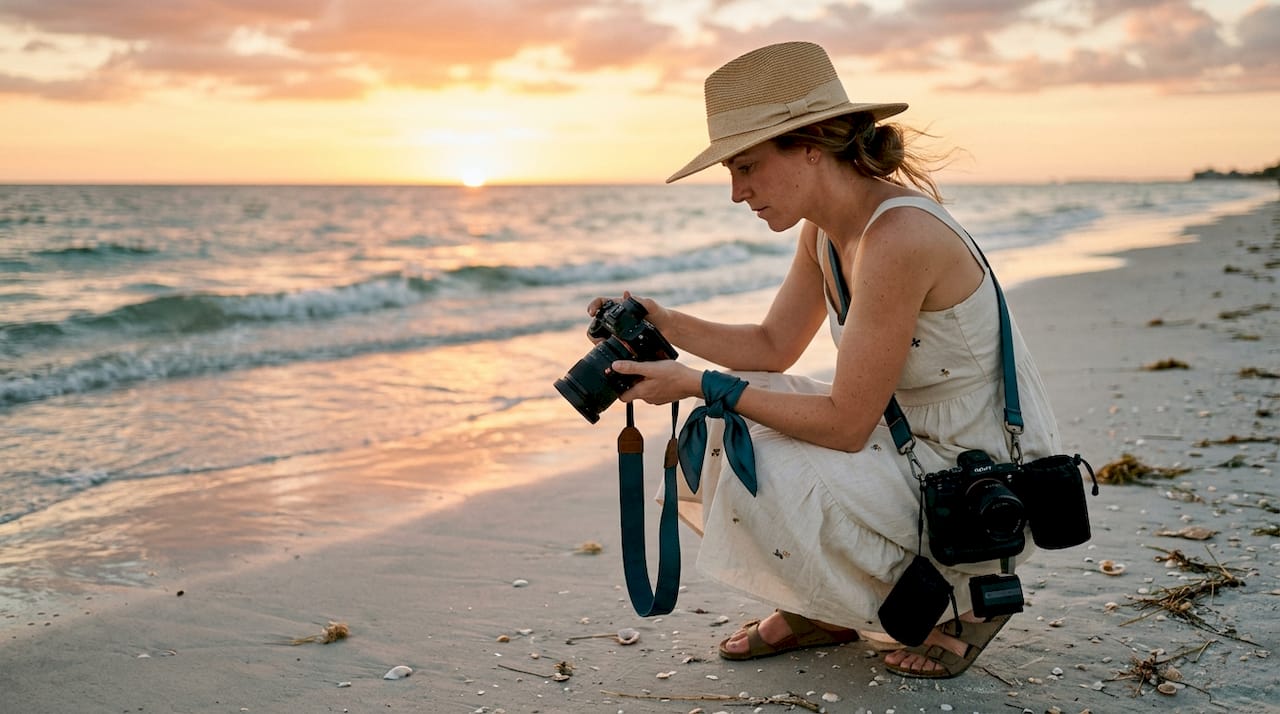
Weather in Florida changes fast. Humidity fogs lenses, and afternoon thunderstorms can arrive within minutes during summer months. Build a 30-minute weather buffer into your timeline and identify a covered backup location near the beach before the wedding day.
Gear damage is a real risk. Sand and salt spray are abrasive and can penetrate non-weather-sealed camera bodies. Lens hoods and microfiber cleaning cloths are minimum protection. Weather-sealed bodies are the professional standard for Florida coastal shoots.
Legal restrictions catch many couples off guard. Many Florida beaches require permits starting at $50 for small gatherings, with fees and rules varying by municipality. Walton County, Miami-Dade County Parks, and other jurisdictions each have their own application processes and timelines. Apply at least 30 days before your wedding date.
Confirm permit requirements with your specific beach municipality at least four weeks out.
Ask your photographer whether they carry their own permit or whether the couple is responsible.
Check whether your permit covers videography as well as photography, since many municipalities treat them separately.
Identify a rain plan and communicate it to all vendors before the wedding day.
Pro Tip: Schedule a venue walkthrough with your photographer two to three weeks before the wedding. Walk the exact ceremony spot at the same time of day to see exactly where shadows fall and where the sun will be during your vows.
Which equipment settings produce the best beach wedding photos?
The right gear and settings separate sharp, well-exposed beach portraits from blown-out or muddy images. Florida’s reflective environment demands deliberate technical choices.
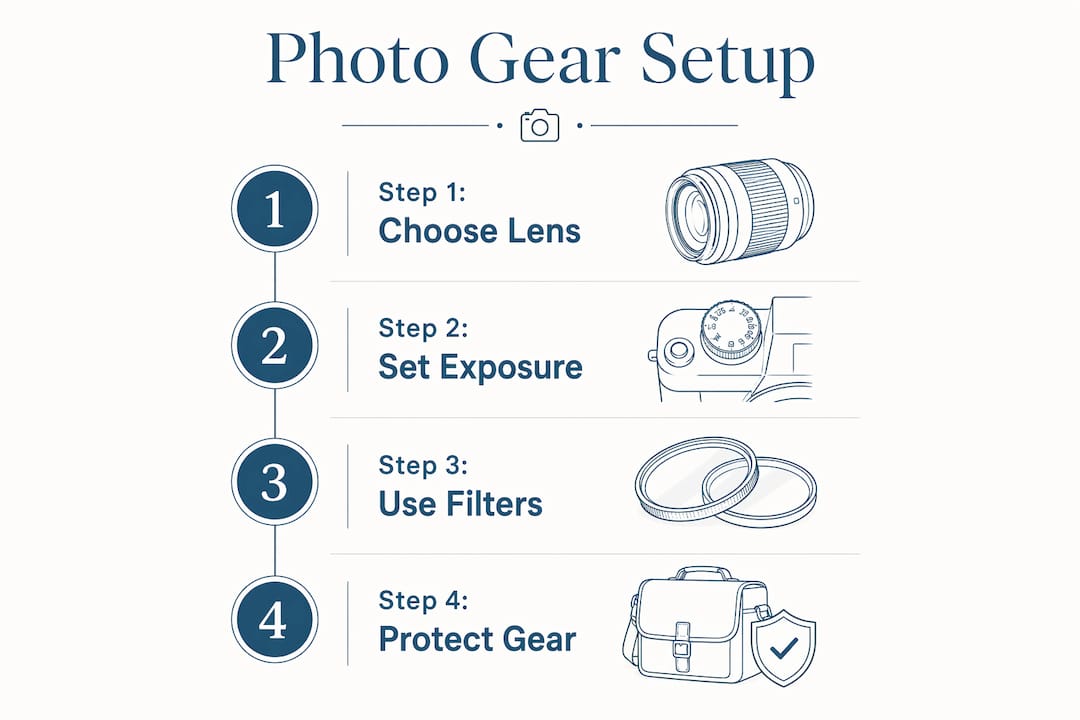
Lens selection
A 24–70mm lens covers ceremony wide shots and mid-range couple portraits. A 70–200mm telephoto lets the photographer compress the background, pulling the ocean or sky into a soft blur behind the couple. Both focal lengths are standard for professional beach wedding coverage.
Exposure control
Manual exposure keeps skin tone and clothing exposure stable across varying beach light conditions. Auto modes chase the bright sand and consistently underexpose faces. Set exposure for the subjects, not the background, and let the sand go slightly brighter than neutral.
Filters and flash
A UV filter protects the front element from salt spray. A circular polarizing filter cuts glare off water and wet sand, deepening the color of the sky without affecting skin tones. Backlighting with fill flash improves facial illumination and reduces squinting caused by direct sunlight. This technique positions the couple with the sun behind them, then uses a portable flash or reflector to light their faces from the front.
Gear Item | Purpose | Priority |
24–70mm lens | Ceremony and mid-range portraits | High |
70–200mm lens | Compressed backgrounds, candid moments | High |
Circular polarizing filter | Reduces glare, deepens sky color | Medium |
Weather-sealed camera body | Protects against salt spray and humidity | High |
Portable fill flash | Balances facial light in backlit setups | High |
Microfiber cleaning cloths | Removes salt residue from glass and body | Medium |
Pro Tip: Bring a second camera body to every beach shoot. Salt air and sand create failure conditions that do not appear until the worst possible moment. A backup body is not optional on a Florida beach.
How should you plan your timeline and pose for beach portraits?
Timing and posing are the two variables couples control most directly. Both have a bigger impact on the final gallery than any single piece of equipment.
Timing your shoot around Florida light
Scheduling early morning or late afternoon reduces crowds on Florida beaches and aligns naturally with the best light. A ceremony starting at 5:00 PM in october or november places formal portraits squarely in golden hour. Summer weddings need a later start, since sunset falls closer to 8:00 PM. Work backward from your local sunset time and block 45 minutes for couple portraits before the light fades.
Avoid scheduling formal portraits between 11:00 AM and 3:00 PM. The sun sits directly overhead, creating unflattering shadows and forcing guests and the couple to squint.
Posing strategies that work on the beach
Wind is constant on Florida beaches. Use it. Ask the couple to walk toward the camera, letting the dress and veil move naturally. Movement shots look more authentic than rigid standing poses and eliminate the stiffness that plagues forced smiles.
Position the couple so the taller partner shields the shorter one from direct wind, creating a natural lean.
Use the waterline as a leading line. Walking shots along the surf edge give the photographer a dynamic foreground and a clean horizon.
Ask the couple to look at each other rather than the camera for at least half the portrait session. Candid interaction produces the images couples actually hang on their walls.
Keep posing directions simple. “Walk slowly and talk to each other” produces better results than complex choreography.
For photo-ready skin that holds up under Florida’s humidity and bright light, prepare well in advance of the wedding day.
Pro Tip: Ask your photographer to shoot from a low angle during waterline walks. A camera position at knee height with the horizon behind the couple creates a dramatic, editorial look that standard eye-level shots cannot match.
What editing approaches protect your Florida beach wedding gallery?
Post-production for beach weddings requires more care than studio or indoor work. The combination of bright sand, moving water, and white fabric creates exposure challenges that carry into editing.
Highlight recovery on white wedding dresses is the most common editing task in beach wedding galleries. Direct Florida sunlight clips dress detail easily. Editors pull highlights down in post to recover texture in the fabric, but this only works if the photographer protected the exposure during the shoot. Overexposed dress detail cannot be recovered after the fact.
Color balance is the second major challenge. Sand reflects warm tones, water reflects cool tones, and skin sits in the middle. Restrained editing that maintains natural skin tones and avoids over-saturation produces galleries that look timeless rather than trend-driven. Heavy orange or teal color grading dates beach wedding photos quickly.
Pull highlights down first before adjusting overall exposure in editing.
Use selective color adjustments to cool the sand tones without affecting skin.
Match the white balance across the full gallery before making individual image corrections.
Avoid heavy vignetting on beach images. The open sky and water already frame the couple naturally.
Use AI culling tools to sort the full shoot before manual editing. This cuts editing time significantly and keeps the selection process objective.
A consistent editing style across the gallery matters as much as any individual image correction. Couples who flip through their album should see a unified visual story, not a collection of individually processed photos with mismatched tones.
Key Takeaways
Florida beach wedding photography succeeds when couples and photographers prepare specifically for coastal light, gear risks, permit requirements, and editing demands before the wedding day.
Point | Details |
Secure permits early | Many Florida beaches require permits starting at $50; apply at least 30 days before your date. |
Shoot during golden hour | Schedule portraits before sunset or after sunrise for the most flattering, natural light. |
Protect your gear | Use weather-sealed bodies, lens hoods, and cleaning cloths to guard against salt and sand damage. |
Use fill flash for portraits | Backlighting with fill flash eliminates squinting and balances facial light in direct sun. |
Edit with restraint | Recover dress highlights and maintain natural skin tones; avoid heavy color grading that dates the gallery. |
What I’ve learned after years of Florida beach wedding shoots
The most common mistake I see is couples and photographers treating the beach as a backdrop rather than an active participant in the shoot. The wind, the waves, the shifting light. These are not obstacles. They are the story. The couples who get the most memorable images are the ones who stop trying to control every element and start working with what the beach gives them.
The second mistake is underestimating how much preparation the legal side requires. I have seen weddings where the photographer showed up without a permit and had to move the entire shoot 200 yards down the beach to avoid a citation. That kind of disruption costs you 20 minutes of golden hour light you cannot get back.
Simple direction beats elaborate posing every time on a beach. When I tell a couple to “walk toward the water and forget I’m here,” the resulting frames are almost always the ones they choose for their album cover. The beach creates natural movement and emotion. The photographer’s job is to stay out of the way and capture it.
Florida’s natural beauty is genuinely extraordinary. The light here does things that photographers in other states travel specifically to find. Respect the environment, prepare for the logistics, and let the coast do the heavy lifting.
— Kellie
How Pixelgroves approaches Florida beach wedding photography
Pixelgroves holds the 2025 Best of Florida Wedding Photographer Award and brings that experience directly to every coastal shoot.
[

Pixelgroves works with couples across Florida’s beaches, from the Space Coast to the Gulf, handling permit logistics, timing coordination, and lighting challenges so couples can focus on the day itself. The team offers a range of wedding photography styles suited to different beach wedding aesthetics, from editorial to documentary. Couples can review pricing and packages to find coverage that fits their budget, with full-day and elopement options available. Every package includes personalized pre-shoot planning to address the specific conditions of your chosen beach location.
FAQ
How much do Florida beach wedding photography permits cost?
Permit costs start at $50 for small gatherings, with fees varying by municipality. Apply at least 30 days before your wedding date to avoid delays.
What is the best time of day for beach wedding photos in Florida?
Golden hour, just before sunset or after sunrise, produces the softest and most flattering light. Avoid scheduling formal portraits between 11:00 AM and 3:00 PM when overhead sun creates harsh shadows.
How do I protect my wedding photographer’s gear on a Florida beach?
Weather-sealed camera bodies, lens hoods, UV filters, and microfiber cleaning cloths are the standard protection against salt spray and sand abrasion. Ask your photographer whether they use weather-sealed equipment before booking.
How much does Florida beach wedding photography cost?
Full-day coverage on Florida’s 30A coast averages $3,000, while elopement packages start at $850. Costs vary by location, coverage length, and photographer experience.
How should couples pose for beach wedding photos?
Walking shots along the waterline, looking at each other rather than the camera, and using natural wind movement produce the most authentic results. Simple directions outperform complex choreography on a beach. For additional preparation, a beach wedding checklist covers attire and styling details that affect how photos turn out.
Recommended
Comments