2700K Lighting and Vendor Ready Checklist for Dark and Moody Weddings

A dark and moody wedding is a romantic, cinematic aesthetic built on deep color, texture, and candlelight rather than gloom. The single factor that decides whether it works is light control: warm bulbs, layered glow, and deliberate contrast between shadow and highlight. Get that right, and everything else, from palette to photography, follows naturally.
TL;DR:
Deep saturation in color palettes favors a luxurious look, with dominant tones like burgundy or forest green paired with lighter or metallic accents for contrast.
Controlling ambient light with warm bulbs, layered candlelight, and textured venues enhances the cinematic and romantic mood of a dark wedding.
Floral arrangements require contrasting lighter blooms to avoid muddiness, with varying heights and candle clusters adding depth and dimension.
Photographers need experience shooting in low light, using fast lenses and balanced highlights to preserve the rich, textured atmosphere without overusing flash.
Guest attire should incorporate rich, deep fabrics and colors that complement the setting, avoiding bright white or busy patterns to protect the visual harmony.
Table of Contents
Lighting and venue: where to stage the mood and how to light it
Florals and tablescapes: keep dark flowers defined and dimensional
Textures, attire, and small decor details that sell the mood
Photography and timeline: capture the look without losing detail
Practical checklist and example from a photographer’s perspective
Signature color palettes and pairing rules
The palettes behind this style read as luxurious because they combine one dominant tone with two supporting shades instead of stacking every dark color into one room. According to StyledMood’s overview of the aesthetic, deep saturated tones like burgundy, forest green, plum, and oxblood form the backbone, paired with textured materials and candlelight to keep the look from feeling flat.
A dependable rule: choose one dominant tone, then add a lighter or neutral shade for contrast and a metallic or mid-tone for warmth. Skipping the lighter shade is what makes rooms photograph as one dark blur instead of a layered scene.
Burgundy, antique blush, and gold for a classic romantic feel.
Forest green, ivory, and bronze for a garden-inspired moody look.
Oxblood, dusty mauve, and black accents for a bolder, editorial palette.
Plum, champagne, and pewter for a softer variant that still reads dramatic.
Fall and winter weddings can lean into the deeper end of these palettes since shorter days and indoor venues naturally support the mood. Spring and summer versions tend to swap oxblood or black for dusty mauve or clay tones, keeping the drama while staying seasonally appropriate.
Lighting and venue: where to stage the mood and how to light it
The venue does half the work before a single candle is lit. Prioritize spaces that let you control daylight, whether through heavy drapery, shutters, or a naturally low-light interior, and look for textured surfaces such as exposed brick, aged wood, or stone that catch warm light instead of reflecting it flat.
Once the venue is set, the lighting itself needs a specific approach:
Use warm bulbs around 2700K throughout the space; Room for Tuesday’s guide to light temperature notes that cooler or fluorescent bulbs wash out rich colors and flatten the mood.
Layer your sources: candles as the primary glow, string lights or edison bulbs for ambient fill, and uplighting along walls to add depth.
Add a few focused spots near key areas, like the sweetheart table or cake, to create separation from the darker background.
Build in an entrance transition, such as a dimly lit hallway, so guests’ eyes adjust gradually from daylight to a candlelit room, a tactic designers behind a dark garden wedding use to keep the shift from feeling jarring.
Confirm the venue’s candle and open-flame policy early, since many spaces cap real flame counts or require enclosed lanterns.
Bars and service areas need their own plan. Light the back bar warmly enough for staff to work safely while keeping the guest-facing side moody, so the room still functions without breaking the atmosphere.
Pro Tip: Order more candles than feels necessary. A tablescape lit for “just enough” glow almost always reads too dim in photos.
Florals and tablescapes: keep dark flowers defined and dimensional
Dark florals collapse into a muddy mass without contrast. Start with one deep anchor color, such as burgundy or oxblood, then add lighter transitional blooms in ivory, champagne, or mauve to keep individual flowers visible. Fiore Designs’ guidance on monochromatic arrangements points to this pairing as the fix for arrangements that otherwise flatten into one dark shape.
Anchor with dahlias, garden roses, or plum calla lilies, which hold their color well in low light.
Mix in dried elements like pampas grass or preserved eucalyptus for texture without adding more saturated color.
Vary heights: low centerpieces keep conversation open, while a few taller focal arrangements punctuate the room.
Choose patterned dark linens with simple pale florals, or solid dark linens with a more elaborate floral centerpiece, not both busy at once.
Candles read as luxurious in clusters. Designers recommend roughly double the candle count you initially estimate, arranged in odd-numbered groupings at varied heights, so tables glow instead of sitting in shadow.
Textures, attire, and small decor details that sell the mood
Texture is what separates a moody wedding from a room that is simply dim. A few well-chosen materials go further than covering every surface in dark fabric.
Use velvet table runners, damask napkins, or a leather guest book to add depth without overwhelming the space.
Favor aged wood and layered rugs in lounge areas to ground the room visually.
Choose gowns in deep hues or with textured details like lace overlays and velvet trims, paired with warm-toned makeup that holds up under candlelight.
Suits in charcoal, forest green, or deep burgundy tie into the palette without matching it exactly.
Add dark glassware, gold or antique flatware, and dark menu cards, balancing the metallics so the table still feels warm rather than cold.
For couples drawn to a more dramatic or gothic-leaning version of the aesthetic, styling guides for bold, dark looks offer useful direction on fabrics and silhouettes that stay elegant rather than costume-like.
Photography and timeline: capture the look without losing detail
A moody wedding photographs well only when the photographer plans for low light rather than fighting it. Ask directly whether they have experience shooting candlelit or dimly lit weddings, since the technique differs from standard daylight coverage.
Avoid heavy direct flash, which flattens shadows and erases the texture you built into the room.
Expose for the highlights and let shadow areas stay dark, which is what preserves the cinematic feel rather than a washed-out one.
Shoot with fast lenses, f/1.8 or wider, to gather enough light without relying on flash.
Use spot light or backlight, including candlelight itself, to separate subjects from dark backgrounds, a method StyledMood outlines for moody portraits as more effective than broad flash.
Reserve off-camera strobes for moments that truly need fill, used carefully so they do not overpower the ambient glow.
Timeline matters as much as gear. Lock in formal portraits and family photos earlier in the day while natural light is still available, then schedule candlelit or golden hour portraits later, once the light has warmed and the room’s ambiance is fully set.
Pro Tip: Build a 20-minute buffer before sunset into the timeline. That window produces the portraits couples usually love most.
Practical checklist and example from a photographer’s perspective
A short checklist handed to your planner and photographer keeps everyone aligned before the day arrives.
Confirm bulb temperature (2700K) and layered lighting plan with the venue and rental company.
Get the venue’s candle and open-flame policy in writing.
Share the floral contrast plan (anchor color plus transitional blooms) with your florist ahead of the final walkthrough.
Give your photographer a shot list that flags low-light portrait locations and preferred timing.
Pixel Groves’ photography team treats these details as planning priorities rather than afterthoughts, and client testimonials consistently point to that attention as the difference in how the final gallery feels.
Music and atmosphere suggestions to match the theme
Sound shapes a moody wedding as much as candlelight does. A string quartet or a small jazz trio during cocktail hour suits the cinematic feel better than an upbeat playlist, since slower tempos give guests permission to settle into the atmosphere instead of rushing past it.
For the reception, consider a band or DJ who can shift smoothly from lower-energy dinner music into a fuller dance set, rather than staying at one volume and tempo all night. Deeper, richer instrumentation, cello, brass, or a warm-toned vocalist, tends to pair better with the visual palette than bright, high-energy pop arrangements.
Ambient sound outside the ceremony and reception matters too. A quiet acoustic set during golden hour portraits, or even just the sound of a crackling fire pit in a lounge area, reinforces the mood between formal moments. If the venue allows it, a live saxophonist walking through candlelit spaces during cocktail hour adds a cinematic touch that photographs and sounds like it belongs to the aesthetic.
Keep transitions in mind the same way you would with lighting. A sudden jump from a hushed ceremony into a loud, bright dance floor breaks the atmosphere you spent months building. Easing guests from quiet strings into a warmer, fuller sound as the night progresses keeps the emotional arc intact from ceremony to last dance.

Guest attire guidance to coordinate with the theme
Couples often wonder how much to direct guest attire without overstepping. A simple note on the invitation, such as requesting jewel tones or deep neutrals, gives guests enough direction to complement the palette without feeling like a costume requirement.
Suggest colors that sit within or near the wedding palette: burgundy, forest green, navy, charcoal, or deep plum all photograph well against candlelit backdrops. Ask guests to avoid bright white, neon shades, or busy patterns, which pull focus in photos and clash with the room’s tone.
Fabric matters more than most guests realize. Richer textures like velvet, silk, or wool crepe catch warm light the way the couple’s own attire does, while shiny synthetic fabrics can look harsh under uplighting. A short line on the invitation or wedding website, framed as a suggestion rather than a strict dress code, usually gets better results than a long list of rules.

Outdoor or destination moody weddings should also flag practical guidance, since deep colors in heavy fabrics can be uncomfortable in warmer climates. Recommending lighter-weight versions of the same palette, like a linen suit in deep green rather than heavy wool, keeps guests comfortable without breaking the visual theme.
Why restraint and intentional contrast win
Dark and moody works when it feels romantic, not somber, and that comes down to restraint. The rooms that succeed give guests’ eyes a transition, layer light instead of removing it, and let a few bold details carry the mood rather than piling darkness onto every surface. Control the light before you chase “darker everything.”
— Kellie
How Pixel Groves brings the moody aesthetic to life
[
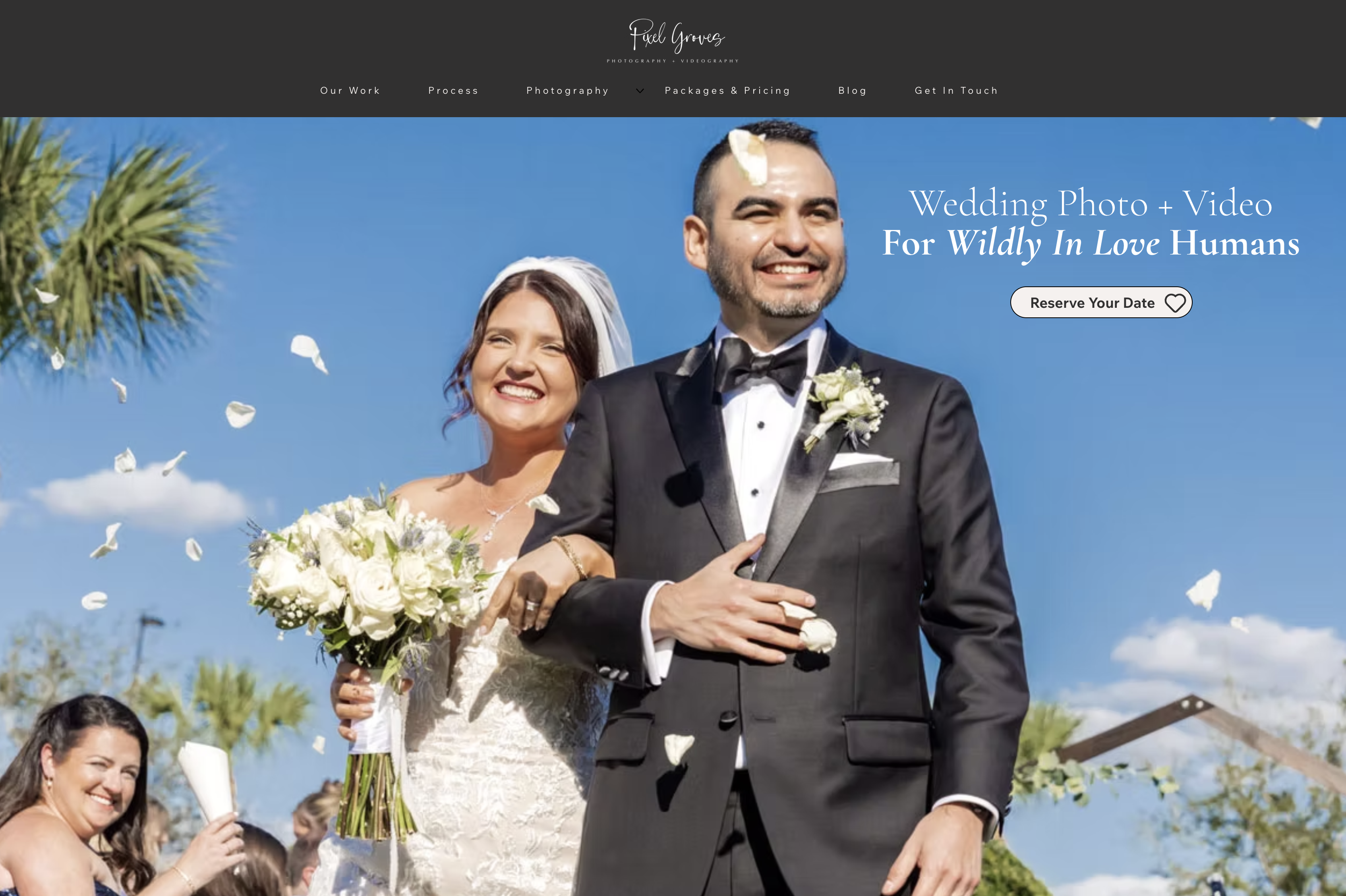
If you’re building this look for your own day, Pixel Groves photographs and films weddings across the aesthetic spectrum, including the candlelit, low-light style this guide covers. The team’s photography and videography packages are designed to accommodate the kind of light control this article describes, and photobooth add-ons round out the reception.
Ask to see a gallery of past moody or candlelit weddings before booking.
Confirm the photographer’s comfort shooting in low light without heavy flash.
Ask about turnaround time if a sneak peek album matters to you.
Pro Tip: Book your photographer and lighting vendor around the same time, since your timeline depends on both working together.
Package | Type | Price |
Photography | $2,000 | |
Videography | $2,750 | |
Photobooth (digital + prints) | $999 |
Full details on every package are on the pricing page, and photobooth options are outlined on the photobooth rental page.
Sources
FAQ
What is a moody wedding?
A moody wedding is a style built on deep, saturated colors, layered warm lighting, and rich textures rather than bright, open spaces. It leans cinematic and romantic, using candlelight and contrast instead of relying on gloom or a somber tone.
What is the rarest month to get married?
The article does not cover marriage rate data by month, so this is not something we can answer with a sourced figure here. Seasonal suitability for a moody aesthetic specifically is easier: fall and winter naturally support the look because of earlier sunsets and more indoor settings.
What is the 50/20/30 rule for weddings?
This budgeting framework is not something this guide addresses directly. For a dark and moody wedding specifically, prioritize spending on lighting, florals, and your photographer, since these three elements carry most of the visual impact.
What colors are typically used for a dark and moody fall wedding?
Burgundy, forest green, oxblood, and dusty mauve form the core of most fall moody palettes, often paired with ivory or champagne accents for contrast. Deep floral choices like dahlias, garden roses, and plum calla lilies, as recommended in Whole Blossoms’ fall floral guide, reinforce the same tones on the table.
Recommended
Comments