Blend Candid and Posed: Lock Formals by 5:00 PM for Your Wedding
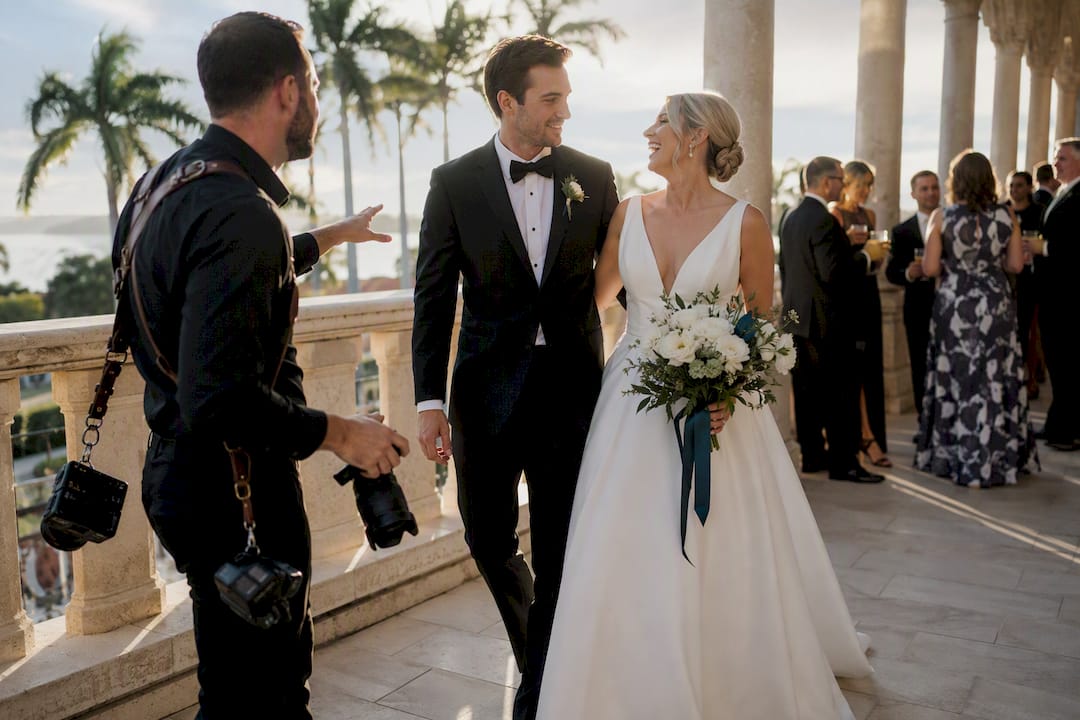
The honest answer is that you need both. Candid photography captures unscripted, authentic moments as they unfold; posed photography directs people into composed, predictable shots. For weddings and corporate events, candid wins on emotion and storytelling, posed wins on consistency and formality, and the best coverage plans use posed shots to lock in the essentials, then leaves room for candid moments to carry the story.
TL;DR:
Candid photos evoke stronger emotional connections and authenticity, especially during key moments like vows, speeches, and candid interactions.
Posed images offer consistency, flattering angles, and efficiency, making them essential for formal portraits and group shots.
Blending techniques, such as prompting and waiting for natural reactions, create lively images without sacrificing control.
Prioritizing posed shots early and reserving candid photography for emotionally charged or unrepeatable moments ensures comprehensive coverage.
Asking the photographer about their balance of candid versus posed work and lighting conditions in key zones helps optimize event photography.
Table of Contents
Candid vs Posed: The Core Differences
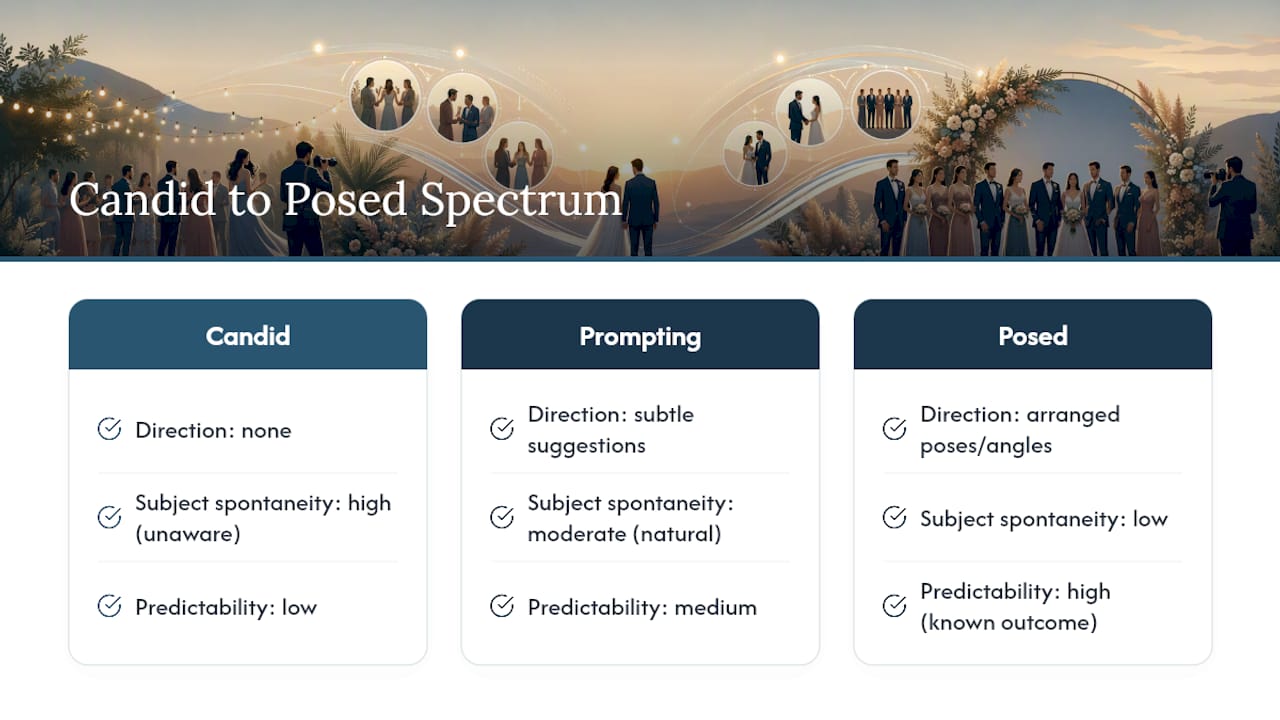
Candid photography means the subject doesn’t know, or doesn’t care, that the camera is there. Nobody is told where to stand or how to smile. That lack of direction is exactly what makes candid images feel real to the people looking at them later.
Posed photography flips that. The photographer arranges bodies, angles, and expressions before pressing the shutter, trading spontaneity for control. You know what you’re going to get before you get it.
Neither one lives in a vacuum, though. Most working photographers operate on a spectrum: fully candid on one end, fully posed on the other, and a wide middle ground called “prompting,” where a subtle suggestion, “walk toward me,” “tell her that story again,” produces a natural reaction without a rigid pose. Research backs up why candid images tend to land harder: a study in the Journal of Personality and Social Psychology found that viewers perceive candid photos as more authentic, and that perceived authenticity drives stronger interest and connection than a posed image of the same moment.
Weighing Candid Against Posed for Your Event
The trade-off boils down to control versus emotion.
Candid photography brings:
Real, unforced expressions that hold up years later
Stronger storytelling because the moment actually happened
A documentary feel that’s hard to fake with direction
Candid photography costs you:
Less control over lighting, background clutter, or someone’s mid-blink face
Uneven results. Some moments are gold, others get missed entirely
No guaranteed “everyone looks good” shot for the album cover
Posed photography brings:
Flattering angles and predictable, efficient timing
Consistency across every family grouping or executive headshot
A reliable shot list you can check off before the reception starts
Posed photography costs you:
A stiffness that reads as staged, especially with impatient kids or camera-shy relatives
Less emotional payoff if every image feels arranged rather than lived
Think about a wedding toast versus a formal family portrait. The toast is candid territory. Someone’s ugly-crying and nobody planned it that way. The family portrait is posed territory, where you actually want everyone’s eyes open at the same time.
When to Use Candid vs Posed During the Event
Timing decides whether you get both styles or lose one entirely.
Lock in posed shots first. Family formals, wedding party lineups, and corporate headshots need daylight, cooperative attention spans, and a schedule. Get these done early while everyone’s still willing to stand still.
Open a “free roam” window for candids. Once formals wrap, let the photographer move through the room unscripted, catching toasts, first dances, hallway conversations, and the moments nobody remembers happening until they see the photo.
Prioritize candid during emotionally loaded moments. Vows, the first look, speeches, and guest reactions rarely repeat themselves. Miss it live and it’s gone.
Reserve short posed windows for corporate events. Executive headshots and group photos still need five minutes of direction, but panel discussions and networking breaks are candid gold.
If time is tight, protect the posed essentials first. Candid moments happen constantly through an event, but a missed family portrait doesn’t get a second take.
How to Blend Candid and Posed Techniques
Blending starts with prompting instead of commanding. Telling someone “look at each other and laugh” produces a stiffer result than asking, “What was the first thing you said to each other this morning?” and then staying quiet with the camera up. Daily Photo Tips calls this the effective middle ground between full direction and pure chance, and it’s the technique that separates flat portraits from ones that feel alive.
A few ways to put it into practice:
Pre-compose your frame and wait for the right expression to walk into it, rather than chasing the moment after it happens.
Give people something to do. Walking, dancing, or hugging generates natural movement that reads as candid even with a photographer standing right there.
Keep shooting for 10 to 15 seconds after a posed shot wraps. That’s when people relax and drop the “camera face.”
Use a longer lens to shoot from a comfortable distance so subjects forget they’re being watched.
Switch to burst mode during high-motion moments like a first dance or a toast, since peak expressions last a fraction of a second.
Pro Tip: Ask couples to recall a specific memory, not just “look happy.” Emotional prompts produce real expressions; generic prompts produce a photo everyone recognizes as posed.
Gear matters less than positioning. A wide enough aperture separates your subject from a busy background, and continuous autofocus keeps a moving subject sharp when you don’t get a second try, as outlined in MasterClass’s technical breakdown of candid shooting fundamentals.
Questions to Ask Your Photographer Before Booking
A shot list only works if the person behind the camera can actually deliver on it. Before you sign anything, ask a few pointed questions.
How much of your portfolio is candid versus posed, and can you show examples from a full wedding day, not just highlight reels?
What’s your plan for capturing emotional moments like vows and toasts without interrupting them?
How do you build the timeline to protect both formal portraits and free-roam candid time?
Will you brief guests or family members ahead of time so candid coverage doesn’t feel invasive?
On the venue side, ask about lighting conditions in the spots where candid moments are likely to happen, the cocktail hour, the dance floor, the hallway outside the ceremony room. Good light in those zones does more for candid quality than any lens upgrade.
Consent, Privacy, and Publication Rights
Photographing people in public spaces generally carries fewer legal restrictions than shooting inside a private event, where the host controls who’s allowed to bring a camera at all. That distinction matters at weddings and corporate functions, where guests haven’t necessarily agreed to be photographed just by attending.
Good practice, according to guidance from Digital Photography School, includes announcing that photography is happening, honoring anyone who asks not to be photographed, and securing model releases before using candid images commercially, in ads, on a portfolio site, or in marketing materials beyond the couple’s own album.
The Pixel Groves Approach to Candid and Posed
We build every wedding timeline around one idea: posed shots give structure, candid moments give truth, and a wedding day needs both to feel complete. Our team, recognized as the 2025 Best of Florida Wedding Photographer, plans formal portraits during the golden light window, then hands the rest of the evening over to unscripted coverage. On a typical wedding day, that means locking in family formals by 5:00 PM, then letting the camera roam free through toasts, first dances, and the quiet moments in between that couples don’t even know happened until they see the gallery.
— Kellie
See the Blend in Action
Pixel Groves is built around a simple trade you won’t get from booking separate posed and candid shooters: one team plans your formals and your free roam coverage on the same timeline, so nothing gets sacrificed to fit the other. Our wedding photography styles range from documentary and light-and-airy to fully candid, and every package is built to protect both the structured shots your family expects and the real moments you’ll actually want to relive.
[
If you’re planning a Florida wedding or engagement shoot, browse our pricing and packages to see what’s included, then check availability for your date. If you’re further along in planning, our wedding album options show how candid and posed images come together in a finished product you’ll hand down for decades. Photographers building their own candid-and-posed portfolios can also find useful marketing guidance through SEO services for photographers.
Sources
The authenticity research and technique guidance in this article draw from a mix of academic and practitioner sources:
Recommended
Comments